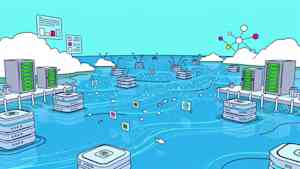
5 years in the past, Databricks coined the time period 'information lakehouse' to explain a brand new kind of information structure that mixes a knowledge lake with a knowledge warehouse. That time period and information structure at the moment are commonplace throughout the information business for analytics workloads.
Now, Databricks is as soon as once more seeking to create a brand new class with its Lakebase service, now typically obtainable in the present day. Whereas the information lakehouse assemble offers with OLAP (on-line analytical processing) databases, Lakebase is all about OLTP (on-line transaction processing) and operational databases. The Lakebase service has been in improvement since June 2025 and relies on expertise Databricks gained by way of its acquisition of PostgreSQL database supplier Neon. It was additional enhanced in October of 2025 with the acquisition of Mooncake, which introduced capabilities to assist bridge PostgreSQL with lakehouse information codecs.
Lakebase is a serverless operational database that represents a basic rethinking of how databases work within the age of autonomous AI brokers. Early adopters, together with easyJet, Hafnia and Warner Music Group, are slicing utility supply instances by 75 to 95%, however the deeper architectural innovation positions databases as ephemeral, self-service infrastructure that AI brokers can provision and handle with out human intervention.
This isn't simply one other managed Postgres service. Lakebase treats operational databases as light-weight, disposable compute operating on information lake storage somewhat than monolithic programs requiring cautious capability planning and database administrator (DBA) oversight.
"Actually, for the vibe coding pattern to take off, you want builders to imagine they will truly create new apps in a short time, however you additionally want the central IT group, or DBAs, to be comfy with the tsunami of apps and databases," Databricks co-founder Reynold Xin informed VentureBeat. "Traditional databases merely gained't scale to that as a result of they will't afford to place a DBA per database and per app."
92% quicker supply: From two months to 5 days
The manufacturing numbers display instant impression past the agent provisioning imaginative and prescient. Hafnia diminished supply time for production-ready purposes from two months to 5 days — or 92% — utilizing Lakebase because the transactional engine for his or her inner operations portal. The delivery firm moved past static BI stories to real-time enterprise purposes for fleet, business and finance workflows.
EasyJet consolidated greater than 100 Git repositories into simply two and lower improvement cycles from 9 months to 4 months — a 56% discount — whereas constructing a web-based income administration hub on Lakebase to switch a decade-old desktop app and one among Europe's largest legacy SQL Server environments.
Warner Music Group is transferring insights instantly into manufacturing programs utilizing the unified basis, whereas Quantum Capital Group makes use of it to take care of constant, ruled information for figuring out and evaluating oil and fuel investments — eliminating the information duplication that beforehand pressured groups to take care of a number of copies in numerous codecs.
The acceleration stems from the elimination of two main bottlenecks: database cloning for take a look at environments and ETL pipeline upkeep for syncing operational and analytical information.
Technical structure: Why this isn't simply managed Postgres
Conventional databases couple storage and compute — organizations provision a database occasion with connected storage and scale by including extra cases or storage. AWS Aurora innovated by separating these layers utilizing proprietary storage, however the storage remained locked inside AWS's ecosystem and wasn't independently accessible for analytics.
Lakebase takes the separation of storage and compute to its logical conclusion by placing storage instantly within the information lakehouse. The compute layer runs basically vanilla PostgreSQL— sustaining full compatibility with the Postgres ecosystem — however each write goes to lakehouse storage in codecs that Spark, Databricks SQL and different analytics engines can instantly question with out ETL.
"The distinctive technical perception was that information lakes decouple storage from compute, which was nice, however we have to introduce information administration capabilities like governance and transaction administration into the information lake," Xin defined. "We're truly not that totally different from the lakehouse idea, however we're constructing light-weight, ephemeral compute for OLTP databases on prime."
Databricks constructed Lakebase with the expertise it gained from the acquisition of Neon. However Xin emphasised that Databricks considerably expanded Neon's unique capabilities to create one thing essentially totally different.
"They didn’t have the enterprise expertise, they usually didn’t have the cloud scale," Xin stated. "We introduced the Neon group's novel architectural concept along with the robustness of the Databricks infrastructure and mixed them. So now we've created an excellent scalable platform."
From lots of of databases to tens of millions constructed for agentic AI
Xin outlined a imaginative and prescient instantly tied to the economics of AI coding instruments that explains why the Lakebase assemble issues past present use instances. As improvement prices plummet, enterprises will shift from shopping for lots of of SaaS purposes to constructing tens of millions of bespoke inner purposes.
"As the price of software program improvement goes down, which we're seeing in the present day due to AI coding instruments, it’ll shift from the proliferation of SaaS within the final 10 to fifteen years to the proliferation of in-house utility improvement," Xin stated. "As an alternative of constructing possibly lots of of purposes, they'll be constructing tens of millions of bespoke apps over time."
This creates an unattainable fleet administration downside with conventional approaches. You can not rent sufficient DBAs to manually provision, monitor and troubleshoot hundreds of databases. Xin's resolution: Deal with database administration itself as a knowledge downside somewhat than an operations downside.
Lakebase shops all telemetry and metadata — question efficiency, useful resource utilization, connection patterns, error charges — instantly within the lakehouse, the place it may be analyzed utilizing customary information engineering and information science instruments. As an alternative of configuring dashboards in database-specific monitoring instruments, information groups question telemetry information with SQL or analyze it with machine studying fashions to determine outliers and predict points.
"As an alternative of making a dashboard for each 50 or 100 databases, you possibly can truly take a look at the chart to know if one thing has misbehaved," Xin defined. "Database administration will look similar to an analytics downside. You take a look at outliers, you take a look at traits, you attempt to perceive why issues occur. That is the way you handle at scale when brokers are creating and destroying databases programmatically."
The implications lengthen to autonomous brokers themselves. An AI agent experiencing efficiency points may question the telemetry information to diagnose issues — treating database operations as simply one other analytics process somewhat than requiring specialised DBA data. Database administration turns into one thing brokers can do for themselves utilizing the identical information evaluation capabilities they have already got.
What this implies for enterprise information groups
The Lakebase assemble indicators a basic shift in how enterprises ought to take into consideration operational databases — not as treasured, fastidiously managed infrastructure requiring specialised DBAs, however as ephemeral, self-service sources that scale programmatically like cloud compute.
This issues whether or not or not autonomous brokers materialize as shortly as Databricks envisions, as a result of the underlying architectural precept — treating database administration as an analytics downside somewhat than an operations downside — modifications the talent units and group buildings enterprises want.
Information leaders ought to take note of the convergence of operational and analytical information taking place throughout the business. When writes to an operational database are instantly queryable by analytics engines with out ETL, the normal boundaries between transactional programs and information warehouses blur. This unified structure reduces the operational overhead of sustaining separate programs, however it additionally requires rethinking information group buildings constructed round these boundaries.
When lakehouse launched, rivals rejected the idea earlier than finally adopting it themselves. Xin expects the identical trajectory for Lakebase.
"It simply is smart to separate storage and compute and put all of the storage within the lake — it permits so many capabilities and potentialities," he stated.