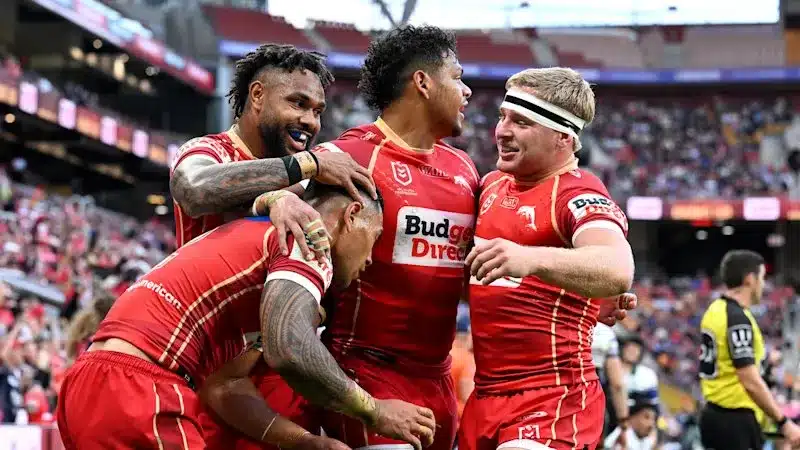
The Dolphins’ strategic investment in their player development academy is beginning to yield significant results, providing a crucial pipeline of emerging talent that is bolstering the NRL squad and fostering sustainable success. This focus on nurturing young players, spearheaded by coach Kristian Woolf and supported by club leadership, mirrors the model of consistently dominant teams like the Penrith Panthers.
Building a Talent Factory for the Future
Kristian Woolf’s arrival as coach was marked by a forward-thinking vision: to transform the Dolphins into a formidable talent production hub. His initial discussions with CEO Terry Reader and inaugural coach Wayne Bennett centered on the club’s academy structure and the personnel leading it. The involvement of Kurt Richards, a figure with extensive experience in junior representative programs for the Queensland Maroons and a long tenure with the Brisbane Broncos, was a key factor in Woolf’s decision to join the club.
“It’s definitely something I was interested in. One of my first conversations with Terry and Wayne was about what we were doing with our academies and who was in charge of that,” Woolf explained. “When I knew that Kurt Richards was in charge of it, I knew we were in good hands, and it was a big part of me wanting to come to the club. When you’ve got those things right, and you’ve got the right people there, you tend to be able to build things for the future.”
Academy Graduates Make Their Mark
Club CEO Terry Reader had anticipated that the fourth season would be when the academy’s efforts would start to pay dividends. This prediction has proven accurate, with several young players making their NRL debuts and contributing significantly. Winger Tevita Naufahu and versatile forward Brian Pouniu are the first to emerge from the academy system into the top grade. Pouniu, in particular, made an immediate impact in his first start in the back row, recording an impressive 179 running metres and 39 tackles against the Parramatta Eels.
Lock Lewis Symonds and hooker John Fineanganofo have also earned their NRL debuts, showcasing the depth of talent being developed. Naufahu and Pouniu are slated to feature against the Gold Coast Titans, with Selwyn Cobbo and Kulikefu Finefeuiaki being rested to manage minor injuries, highlighting the increasing reliance on the club’s homegrown talent.
Woolf expressed his satisfaction with Pouniu’s progression: “We were obviously really impressed with how he played last time, and what I liked about his performance was he got better as the game went on. He got more and more confident and realised he’s right up to that level.” He also lauded Naufahu’s consistent performances, stating he had been “one of our best players every time he’s played for us.”
A Promising Future Talent Pool
Beyond the current debutants, the Dolphins’ junior ranks are brimming with potential. The next wave of talent includes Noah Fien, son of assistant coach Nathan Fien, and Adaquix Luke, whose father Issac is a South Sydney legend. Preseason trial standouts Zac Garton and LJ Nonu are also poised to make their mark.
The success of the academy is further evidenced by the performance of the club’s junior teams. The Dolphins’ under-21s team remained undefeated throughout their inaugural series last year. In the expanded 2026 competition, they finished the regular season at the top of the table before narrowly losing the grand final 24-22 to the North Queensland Cowboys.
Internal Competition and Squad Depth
The influx of young talent is creating a competitive environment within the NRL squad, pushing established players and improving overall training intensity. Dolphins lock Kurt Donoghoe noted the positive impact of the emerging players:
- “We’ve got a good patch of young blokes coming through, and they challenge us all the time.”
- “I think that’s definitely helping out a lot, it makes our training sessions better and the older boys try a little harder.”
- “Everyone’s fighting for spots, everyone’s fighting for each other’s positions.”
Donoghoe highlighted Brian Pouniu’s rapid development after his debut: “Brian had his debut earlier in the year, and in his second game you could just tell how much better he was for that. They’ve got so much potential and are really comfortable they can jump in and do a job when we need them.”
Overcoming Past Obstacles
Squad depth was a significant challenge for the Dolphins in their opening three seasons. The team often faltered in the latter half of campaigns due to injuries and suspensions, despite strong starts. However, the current season’s top-four standing, bolstered by academy graduates like Naufahu stepping up in Cobbo’s absence and Pouniu’s emergence during Lemuelu’s recovery from injury, indicates a marked improvement in resilience.
Woolf emphasized the importance of this homegrown core: “I think it does make a difference. I look at our squad, and Max Plath plays 50 games this week, a couple of weeks ago it was Jack Bostock, a couple of weeks before that it was Kurt Donoghoe. We’ve got a nucleus of guys there who all debuted at this club.”
He continued, “They’ve all become first-graders at this club, some of those have gone on and played representative footy, they all love playing together – you can see when they’re on the field, there’s a real care factor for each other. That’s what we want the club to be about. We put a lot of time and effort and finances into our academy to make sure it’s strong and to make sure we’ve got good young players coming through who are well-developed, well-coached, and know what it means to be a Dolphins player.”
The strategic development of the Dolphins’ academy is not just about filling roster spots; it’s about cultivating a culture of sustained success, driven by players who understand and embody the club’s values from their formative years.