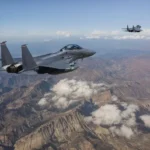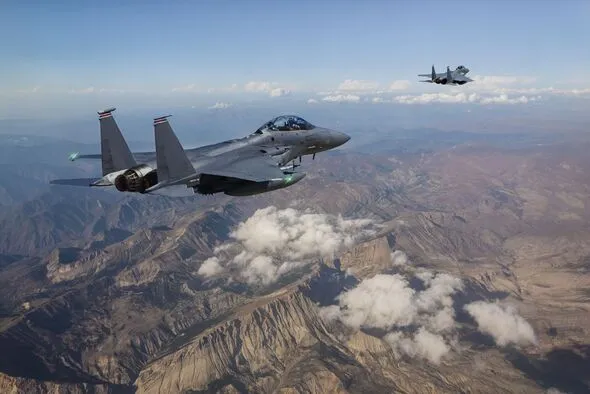
A US F-15 Eagle fighter jet went down over Iran on Friday, April 3, placing the surviving pilot in a critical race against time to avoid capture following ejection from the aircraft. Jonathan Singh, a former RAF pilot with experience flying rescue helicopters in Afghanistan, warns that the pilot’s survival window remains perilously short, as rescue teams could take more than an hour to arrive.
Ejection Trauma and Mobility Challenges
The pilot’s condition immediately after ejection represents a major uncertainty. Ejections prove extremely violent, particularly if the jet sustained missile damage beforehand. “An ejection can be extremely violent,” Singh stated. “If they’ve been hit by a missile, they could already be injured—and the act of ejecting itself often causes significant physical trauma.”
Even minor injuries drastically impair evasion efforts across Iran’s rugged terrain. Reports suggest one crew member has been rescued, but the remaining pilot must prioritize signaling their position to incoming forces. Singh emphasized, “If they are able to move, their first priority will be to alert rescue crews to their position. But even then, it becomes a race against time.”
Rescue Delays and Local Threats
Rescue operations demand at least an hour under optimal conditions, leaving the pilot vulnerable to discovery by Iranian military or civilians. A television anchor in Iran’s Kohkilouyeh and Boyer-Ahmad province broadcast an announcement offering rewards: “If you capture the enemy pilot or pilots alive and hand them over to the police, you will receive a precious prize.”
“You don’t know if they’re going to be friendly in this situation or not,” Singh noted. Capture inflicts severe blows to troop morale, fuels propaganda, and risks exploitation, including interrogation or mistreatment, drawing from precedents in prior conflicts.
SERE Training and Real-World Unpredictability
Aircrew in hostile zones undergo intensive SERE training—Survive, Evade, Resist, Extract. “It’s one of the toughest courses you’ll do,” Singh described. “The aim is to survive, avoid capture, and get extracted as quickly as possible.” Training covers evasion routes, coded signals, and coordination with allies.
However, combat defies simulations. “You could eject perfectly and still break a leg on landing. There are a million things that could go wrong,” he cautioned.
High-Stakes Rescue Risks and Terrain Hurdles
Mounting a rescue endangers numerous personnel: “You could end up putting dozens of personnel into danger to save one or two people,” Singh warned, citing threats like helicopters being downed. Iran’s landscape intensifies dangers: “It’s hostile in every sense. This isn’t open farmland—it’s mountainous.”