The Ebola outbreak in the Democratic Republic of Congo (DRC) is escalating, with health officials warning it is on track to become one of the most severe on record. The World Health Organization (WHO) has stated that the current epidemic is already the second-largest Ebola outbreak in history and is progressing at an unprecedented pace. This highly contagious virus, characterized by initial flu-like symptoms that can advance to severe vomiting, diarrhea, and organ failure, is straining the health system in the DRC’s northeastern region. This area is already grappling with armed conflict and food insecurity, creating a complex and dangerous environment for containment efforts.
Fears are mounting that the virus could spread beyond the immediate region, as new infections are outpacing the capacity of contact tracers. Cases have already been detected in neighboring Uganda, highlighting the urgent need for robust international cooperation and swift action.
The Unprecedented Pace of the Outbreak
The speed at which the current Ebola epidemic is unfolding is a primary concern for health authorities. According to data, it took just 37 days for the outbreak to reach 250 deaths, a grim milestone that took 78 days during the devastating West African epidemic of 2014-2016 and 130 days during a previous DRC outbreak from 2018-2019. Similarly, the current outbreak surpassed 1,000 confirmed cases within a mere 38 days, a stark contrast to the more than 230 days it took for the 2018 DRC outbreak to reach the same number.
Researchers believe the outbreak may have had a significant head start, with some early cases likely misdiagnosed as malaria or typhoid in February. This delayed initial recognition has left health authorities in a constant state of “playing catch-up,” as Dr. Tedros Adhanom Ghebreyesus, Director-General of the WHO, has stated. Unless testing, contact tracing, and isolation efforts are drastically scaled up, the death toll is projected to surpass that of the West African epidemic, which claimed at least 11,308 lives from 28,610 infections.
As of recent reports, the DRC outbreak has resulted in 2,214 deaths from 4,727 confirmed infections, with the majority concentrated in the northeastern Ituri province, the outbreak’s epicenter. While the current death toll is lower than the West African epidemic’s total, the rapid increase in both cases and fatalities is a significant cause for alarm.
Challenges in Containment: ‘Hidden’ Transmission and Resource Gaps
A critical factor complicating containment efforts is the evidence of widespread “hidden” transmission occurring outside official surveillance. In July, over 80 percent of new cases presented for treatment could not be linked to known contact lists, indicating a substantial number of infections were occurring within communities without the knowledge of health authorities. Interrupting these unknown transmission chains is paramount to gaining control of the epidemic.
While contact tracing rates for known contacts have improved, their effectiveness is limited if the outbreak is primarily driven by transmission outside these networks. The majority of deaths have also occurred within communities rather than treatment centers, suggesting both hidden transmission and difficulties in ensuring safe handling of deceased individuals, a critical factor in Ebola’s spread.
Further complicating matters, initial diagnostic challenges arose due to the use of testing kits designed for the more common Zaire strain of Ebola, while the current outbreak involves the Bundibugyo strain. Delays in diagnosis, compounded by a backlog of samples and a shortage of necessary reagents, hinder the timely isolation of suspected cases.
Underpaid and Endangered Health Workers
The health workers on the front lines face immense challenges, exacerbated by under-resourcing and overwhelming caseloads. Many have reportedly gone on strike due to unpaid wages, attributed by the government to logistical issues intensified by the outbreak. Experts also point to funding shortfalls from reduced international aid, leading to a scarcity of specialized international staff.
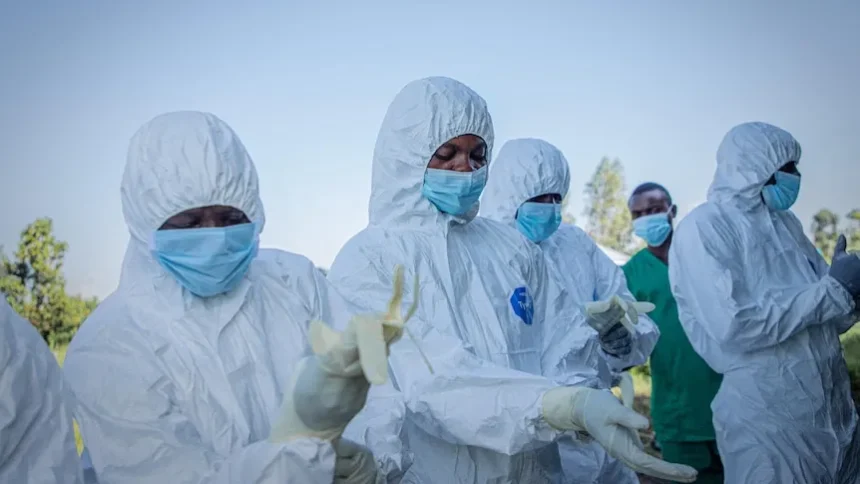
Even in areas with a visible medical response, health workers often lack basic protective equipment, putting them at significant risk. Dozens of health workers have already succumbed to the virus, and the closure of clinics for disinfection after infections occur further disrupts care.
The situation is particularly dire in the eastern DRC, a region plagued by ongoing civil war involving numerous armed groups. This volatile environment makes travel extremely difficult, with militia checkpoints hindering access for health workers. Suspicion towards government health workers, coupled with local beliefs that Ebola is a ruse or caused by witchcraft, can lead to resistance and even attacks on treatment clinics. Traditional funeral practices, involving close contact with the deceased, are also identified as significant drivers of transmission, and efforts to promote safer burials are often met with protests.
Mass Movement and Cross-Border Risks
Preventing the movement of people within the DRC and across its borders is another major hurdle. While Ituri remains the epicenter, sustained community transmission has been recorded in at least five other provinces. Cases have also been confirmed in Uganda, and there is a significant risk of spread into South Sudan, a country already facing instability and lacking adequate health infrastructure.
The DRC’s large internally displaced population, with approximately 900,000 people from Ituri alone displaced by violence, contributes to mass movement. Many individuals travel for work, including in the mining sector, making them reluctant to isolate or engage with health authorities. Refugee flows into neighboring countries, such as Uganda, have continued unabated since the epidemic was declared.
The WHO advises against border closures or travel restrictions, fearing they could encourage clandestine crossings and discourage the reporting of cases. The outbreak itself is now contributing to population displacement, with aid workers observing people fleeing heavily affected areas.
The Longevity of ‘Walking Ebola’
The duration of the current outbreak remains a critical question. The WHO anticipates a peak in approximately six months, but a more prolonged scenario could extend the outbreak to 12 months. The specific strain of Ebola involved, Bundibugyo, presents unique challenges.
While the Bundibugyo strain has a lower case fatality ratio (CFR) compared to the Zaire strain, its slower replication rate allows infected individuals to remain mobile and spread the virus for a longer period before severe symptoms manifest. This characteristic has earned it the nickname “walking Ebola.” The lack of approved vaccines for this rare strain adds another layer of complexity, although human trials for a candidate vaccine are underway.
The current outbreak’s CFR is around 46.8 percent, higher than some recent Sudan strain outbreaks. However, researchers attribute this initially higher rate to delayed detection and challenging conditions rather than the inherent deadliness of the pathogen. The race against time is on, with ongoing efforts to develop and deploy effective countermeasures against this persistent and evolving threat.