February 16, 2026 — The European Union counters claims from the Trump administration predicting the continent’s “civilisational erasure” due to social and economic shifts, exposing divisions on security amid tensions over Greenland and Ukraine.
Munich Security Summit Clash
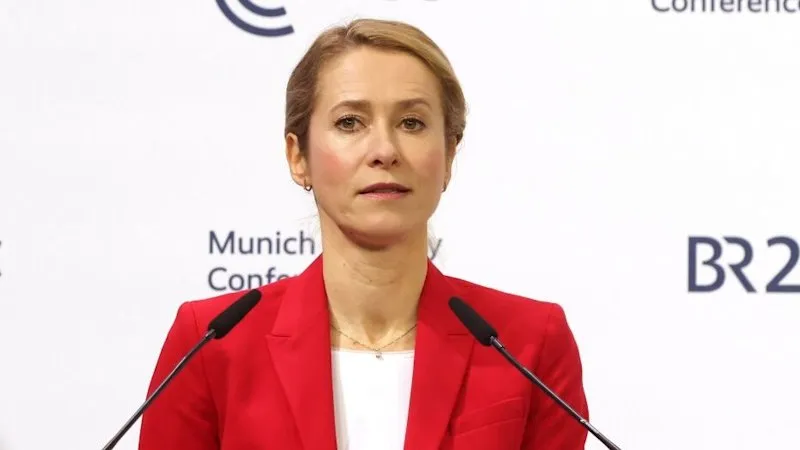
EU foreign policy chief Kaja Kallas dismisses the U.S. assertion during a key address at the Munich security summit. “Contrary to what some may say, woke, decadent Europe is not facing civilisational erasure,” Kallas states. “In fact, people still want to join our club.”
Her comments follow U.S. Secretary of State Marco Rubio’s speech at the same event, where he urges trans-Atlantic cooperation on a “sane” foreign policy to counter shared threats. “It will restore a place in the world, and in so doing, it will rebuke and deter the forces of civilisational erasure that today menace both America and Europe alike,” Rubio declares. He adds, “For us Americans, our home may be in the western hemisphere, but we will always be a child of Europe.”
European Leaders Push Back
U.S. President Donald Trump previously labeled European leaders “weak” and highlighted insufficient economic growth in the national security strategy, warning of “civilisational erasure.”
German Chancellor Friedrich Merz, a conservative, rejects the Trump agenda. “The culture war of the MAGA movement is not ours,” he asserts. French President Emmanuel Macron calls for Europe to emerge as a stronger geopolitical power, proposing shared nuclear deterrence with Germany against threats like Russia.
Europe depends on U.S. weapons and hosts 85,000 American troops under NATO, while nations like Germany and France face recruitment challenges for defense expansion.
Tensions Over Ukraine Talks
Frustration mounts among EU leaders as U.S. envoys Steve Witkoff and Jared Kushner advance Ukraine ceasefire discussions in Geneva without full European involvement. Polish Foreign Minister Radosław Sikorski highlights the imbalance: “We are now paying for this war. The American outlay for the war last year was zero. We are buying American weapons to deliver to Ukraine.” He adds, “If we are paying, if this is affecting our security, not just Ukraine’s, then we deserve a seat at the table.”
Kallas advocates a firm stance in negotiations, noting Russia’s weaknesses. “Russia is no superpower. After more than a decade of conflict, including four years of full-scale war in Ukraine, Russia has barely advanced beyond the 2014 lines. The cost? 1.2 million casualties,” she says. “Today, Russia is broken, its economy in shreds… The greatest threat Russia presents right now is that it gains more at the negotiation table than it has achieved on the battlefield.”
Rubio mentions Ukraine briefly, expressing hope for peace without strong sovereignty support. “What we can’t answer – but we’re going to continue to test – is whether there is an outcome that Ukraine can live with and that Russia will accept,” he notes.
Broadening Defense Partnerships
California Governor Gavin Newsom, a vocal Trump critic, urges Europeans to resist. “Donald Trump is temporary. He’ll be gone in three years,” he predicts.
Kallas announces expanding security ties, including 10 new partnerships this year with nations like India and Australia. A defense agreement with Australia nears finalization alongside trade talks.