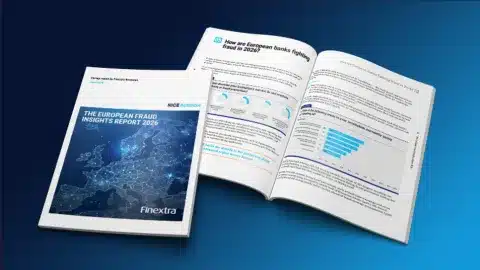
European Banks Shift Fraud Focus: Beyond Financial Risk
A comprehensive survey focusing on fraud professionals within European banks reveals a significant evolution in how financial institutions perceive and address fraud. The findings indicate that fraud is no longer viewed solely as a financial risk but as a multifaceted challenge impacting customer trust, operational resilience, and a bank’s competitive standing.
Key Findings from the European Fraud Landscape
The survey, conducted in March 2026, gathered insights from 203 fraud experts across various European regions, including DACH, Benelux, the UK, Nordics, CEE, and Southern Europe. Expert commentary from prominent institutions such as Santander UK, Banque de France, Klarna, and Lloyds Banking Group provided additional depth to the analysis.
Emerging Threats and Shifting Priorities
A striking revelation is that customer attrition and erosion of trust now rank as more significant impacts of fraud than direct financial losses. This shift underscores the growing importance of customer relationships in the banking sector. Furthermore, nearly half of UK banks anticipate a substantial increase in AI-initiated payment fraud, highlighting the growing sophistication of fraudulent activities.
Challenges in AI Adoption and Fraud Prevention
Despite the recognized need for advanced fraud prevention, the integration of AI into existing fraud platforms presents a significant hurdle for many institutions. While a vast majority of banks (97%) express at least some confidence in their fraud prevention capabilities, only 35% are highly confident about their near-future preparedness. Limitations in data quality and access are identified as primary roadblocks to enhancing these capabilities.
Consolidation and Future Strategies
In response to the persistent challenge of fragmentation, a significant majority of banks (four out of five) are actively engaged in consolidating multiple fraud risk engines into unified platforms. This strategic move aims to streamline operations and improve the overall effectiveness of fraud detection and prevention.
Expert Perspectives on Fraud Prevention
Henna Cheema, a research analyst involved in the survey, stated, “Our survey findings highlight that fraud prevention has moved away from being a balance sheet exercise and has turned into a competitive differentiator. The banks that will be the most effective are the ones that move away from point-in-time controls and detection-led approaches towards real-time authentication and monitoring.”
Anurag Mohapatra, director of product marketing and strategy, noted, “AI-initiated payment fraud is the threat gaining ground fastest, and the banks that worry most are the ones investing most aggressively. The biggest obstacle is not technology. It is the data fragmentation and organisational silos that prevent banks from seeing the whole picture at once.”
The report emphasizes that regional differences in priorities, maturity levels, and investment strategies continue to shape the evolving fraud landscape across Europe.