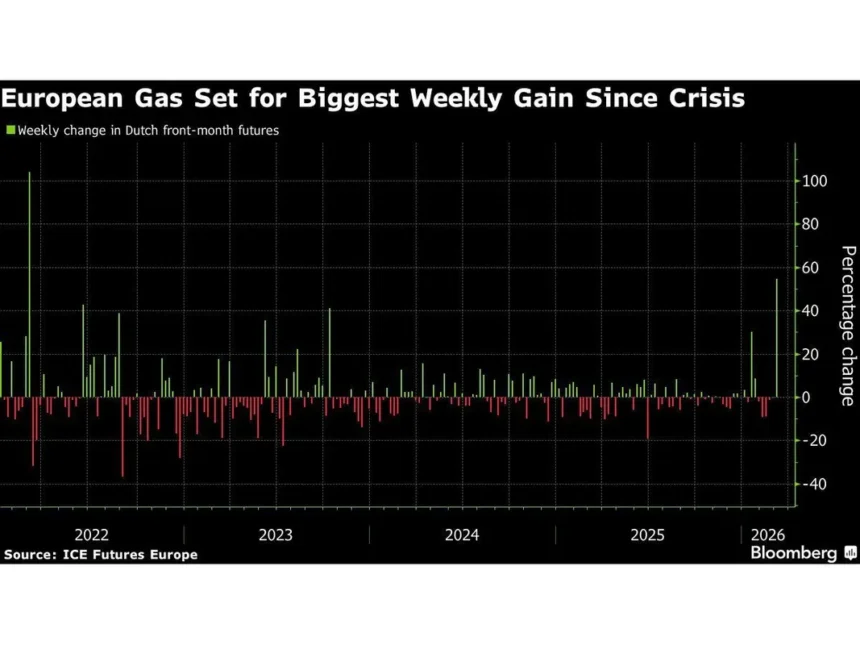
European natural gas prices head for their steepest weekly increase since the energy crisis, driven by ongoing conflict in the Middle East that disrupts global supply chains. Benchmark futures eased slightly on Friday but remain on course for a more than 50% rise over the week.
Middle East Tensions Escalate Supply Fears
The conflict involving Iran marks its seventh day, with no end in sight. Energy trade disruptions heighten concerns over fierce global competition for limited supplies and rising inflation risks, especially in Europe.
Europe’s Storage Challenges
Europe exits winter with critically low gas storage levels, necessitating heavy imports of seaborne cargoes this summer to rebuild reserves. This pits European buyers against Asian markets for scarce resources if Middle Eastern exports falter.
Bernstein analysts, including Irene Himona, highlighted the bidding wars ahead: “If you want an extra ship of US gas in Berlin, you have to bid high enough to divert it away from Tokyo.”
Current Market Snapshot
Prices hover near €50 per megawatt-hour, far below the energy crisis peak exceeding €300 per megawatt-hour. Yet, shipping through the Strait of Hormuz has nearly stopped, stranding dozens of loaded oil and gas tankers inside the Persian Gulf—a key route for about one-fifth of global LNG supplies.
Implied volatility in benchmark gas futures has surged over fourfold since early 2026, reaching levels unseen since summer 2023.
Dutch front-month futures, the European benchmark, dipped 3.5% to €48.98 per megawatt-hour by 8:36 a.m. in Amsterdam.