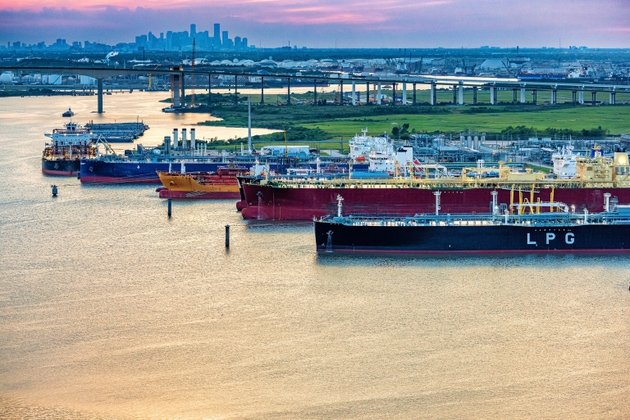
European refiners are increasingly turning to U.S. crude oil, amplifying the global significance of the NYMEX WTI benchmark. This shift, accelerated by geopolitical events, underscores the expanding role of American oil in international markets.
The Growing Appeal of U.S. Crude in Europe
Since Russia’s invasion of Ukraine in 2022, European refiners have diversified their crude supplies in unprecedented volumes, moving away from traditional Russian sources. The United States has emerged as a primary beneficiary, with shipments of North American crude grades rising sharply to meet this demand.
U.S. and Canadian crude production has expanded dramatically, climbing from a low of 8 million barrels per day in 2008 to approximately 19 million barrels per day in 2025. This surge stems from lifting the 40-year export ban in 2015, which spurred infrastructure development to transport oil efficiently to global markets.
In 2023, WTI Midland—a key U.S. grade—joined the Brent basket, forging a direct pricing link between NYMEX WTI and the North Sea benchmark. This integration has enhanced liquidity, boosted trading during European hours, and heightened worldwide interest in WTI futures.
Global Impact and Price Dynamics
The expansion of U.S. export infrastructure has reshaped global oil pricing. The WTI-Brent futures spread, which captures the differential between U.S. and North Sea crudes, has narrowed from a peak of $25 per barrel to around -$4 per barrel below Brent by late 2025.
Trading in this spread remains strong, averaging 61,000 contracts daily through December 2025—a fivefold increase from 2024 levels, according to CME Group data. This reflects its growing use as a hedging tool for surging U.S. crude flows abroad.
North Sea production has seen mixed results, with core Brent grades (Brent, Forties, Oseberg, Ekofisk, and Troll) declining by about 100,000 barrels per day over the past year. Recent discoveries like Johan Sverdrup and Johan Castberg have lifted overall output, but they have not significantly altered Dated Brent’s pricing, which now incorporates WTI Midland deliveries.
U.S. crude exports to northwest Europe have doubled the volume of traditional North Sea grades, reaching 1.1 million barrels per day compared to 550,000 barrels per day for the core basket, based on Vortexa analytics. This influx of light, sweet U.S. oil allows European refiners to substitute for heavier Russian crudes, yielding more diesel and gasoline—vital for regional transport needs.
Boost in Trading Activity During European Hours
NYMEX WTI futures now see substantial activity outside U.S. trading times, with volumes during London sessions and pre-U.S. hours hitting 200,000 contracts per day in 2025—a 16% rise from 2024. In three months of 2025, these trades accounted for 25% of total volume.
The Brent basket inclusion drives much of this growth, alongside rising exports. Related contracts, like CME Group’s WTI Midland and Argus WTI Houston differentials against NYMEX WTI, have also surged. For instance, Argus WTI Houston vs. NYMEX WTI (HTT) trading in European mornings tripled its previous peak in October 2025, signaling deeper liquidity for managing quality and location risks.
Overall, WTI Houston and Midland volumes versus NYMEX WTI climbed 14% year-over-year to 18,000 contracts per day in 2025. Open interest neared a record 705,000 contracts by December, positioning WTI Midland as a premier swing barrel for northwest European refiners, who often hedge via NYMEX WTI plus differentials against Brent futures.
Record U.S. Production Fuels Export Boom
The shale boom has propelled U.S. output to new heights. Total crude production across the five Petroleum Administration for Defense Districts (PADDs) stands at 14 million barrels per day, with PADD III—encompassing the Permian Basin and WTI Midland—achieving a record 10.2 million barrels per day in the fourth quarter of 2025, per U.S. Energy Information Administration figures.
This production surge enhances the U.S.’s influence on global oil pricing. Exports to Europe and Asia continue to grow, drawing more international traders to NYMEX WTI. As refiners worldwide process higher volumes of American crude, the benchmark’s adoption expands, solidifying its status in the global energy landscape.