[ad_1]
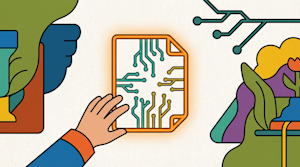
Tel Aviv-based startup Factify emerged from stealth at the moment with a $73 million seed spherical for an bold, but quixotic mission: to carry digital paperwork past the usual codecs most companies use — .PDF, .docx, collaborative cloud information like Google Docs — and into the intelligence period.
For Matan Gavish, Factify’s Founder and CEO, this isn't only a software program improve—it’s an inevitability he has been obsessive about for years.
"The PDF was developed after I was in elementary faculty," Gavish instructed VentureBeat. "The bedrock of the software program ecosystem hasn't actually advanced… somebody has to revamp the digital doc itself."
Gavish, a tenured professor of laptop science and Stanford PhD, admits that his fixation on administrative file codecs is an anomaly for somebody along with his credentials.
"It's a really uncool downside to be obsessive about," he says. "Given the truth that my educational background is AI and machine studying, my mother wished me to begin an AI firm as a result of it's cool. I'm undecided why I'm obsessed after which possessed by paperwork."
However that obsession has now attracted a sizeable seed spherical led by Valley Capital Companions and backed by AI heavyweights like former Google AI chief John Giannandrea.
The wager is easy the static rigidity of most digital information has restricted their utility, and a greater, extra clever doc that truly shares its edit historical past and possession with customers as meant, will not be solely doable — it's a multi-billion-dollar alternative.
The historical past of digital paperwork
To grasp why a seed spherical would balloon to $73 million, it’s a must to perceive the dimensions of the lure companies are in. There are at the moment an estimated three trillion PDFs in circulation. "Some individuals see the PDF greater than they see their children," Gavish jokes.
The historical past of the digital doc will not be a linear development the place one format replaces one other. As a substitute, it’s a story of "speciation," the place completely different codecs advanced to fill distinct ecological niches: creation, distribution, and collaboration.
The period of information: Microsoft Phrase (Nineteen Eighties–Nineteen Nineties)
Digital paperwork started as remoted artifacts. Within the Nineteen Eighties, the "doc" was inextricably linked to the {hardware} that created it. A file created in WordPerfect on a DOS machine was successfully gibberish to a Macintosh consumer.
Microsoft Phrase, which traces its lineage to the pioneering WYSIWYG editors at Xerox PARC, modified this by leveraging the dominance of the Home windows working system. By the Nineteen Nineties, the binary .doc format grew to become the default container for editable skilled paperwork. Nevertheless, these information have been structurally complicated "reminiscence dumps" designed for the restricted {hardware} of the time, typically resulting in corruption or privateness leaks the place deleted textual content remained hidden within the file's binary information.
The period of digital 'stone': the PDF (Nineteen Nineties-2006)
The PDF didn’t originate as a instrument for writing; it was a instrument for viewing. In 1991, Adobe co-founder John Warnock penned the "Camelot Undertaking" white paper, envisioning a "digital envelope" that may look an identical on any show or printer.
Not like Phrase information, which have been malleable, PDFs have been designed to be immutable. They used the PostScript imaging mannequin to put characters at exact coordinates, guaranteeing visible constancy. Whereas adoption was initially gradual, Adobe’s 1994 resolution to launch the Acrobat Reader at no cost established PDF as the worldwide normal for "digital concrete"—the format of finality used for contracts, authorities types, and archives.
The collaborative cloud docs period (2006-present)
In 2006, Google disrupted the mannequin once more by transferring the doc from the laborious drive to the browser. Utilizing "Operational Transformation" algorithms, Google Docs allowed a number of customers to edit the identical stream of textual content concurrently.
This shifted the paradigm from "sending a file" to "sharing a hyperlink." Whereas Google Workspace now claims over 3 billion customers (largely shoppers and training), it essentially modified how we work—turning paperwork into dwelling, collaborative processes fairly than static artifacts.
The established order: fragmentation
Regardless of these advances, the enterprise world stays fragmented. We draft in Google Docs (the "Digital Stream"), format in Phrase (the "Digital Clay"), and register PDF (the "Digital Stone").
However this fragmentation has a value. "The issue will not be the doc. It’s all the pieces round it," the corporate notes. "As soon as a PDF leaves your system, management is gone. Variations drift. Entry is unclear. Nothing is seen."
Turning digital paperwork into clever infrastructure
Factify’s wager is that within the age of AI, this fragmentation is now not simply annoying—it’s a crucial failure. AI fashions want structured, verifiable information to perform.
When an AI "reads" a PDF, it’s basically guessing, utilizing optical character recognition to scrape textual content from what’s successfully a digital photograph.
"What we're coping with here’s a megalomaniac imaginative and prescient, but it surely's on the similar time in all probability one thing that’s inevitable," Gavish says.
Factify’s resolution is to deal with paperwork not as static information, however as clever infrastructure. Within the "Factified" normal, a doc carries its personal mind. It possesses a novel identification, a reside permission system, and an immutable audit log that travels with it.
"We wrote a brand new doc format that supplants the PostScript," Gavish explains. "We created a brand new information layer that helps the doc as a firstclass citizen… and it's at all times out there contained in the group and doubtlessly outdoors."
This distinction—between a File and an API—is the core of the corporate's pitch"
Recordsdata are liabilities: They accumulate, get misplaced, and might be stolen. "It goes again to a brick standing," Gavish says. "Recordsdata are liabilities, if something, as a result of they only accumulate there, it’s a must to guard them."
APIs are property: A Factify doc is an lively object. You possibly can ask it questions: "Who has seen you? When do you expire? Are you essentially the most up-to-date model?"
'Folks don't change', however codecs do
Historical past is affected by codecs that attempted to interchange the PDF (like Microsoft’s XPS). They failed as a result of they demanded an excessive amount of behavioral change from customers. Gavish is keenly conscious of this lure.
"Once I discuss to enterprise software program entrepreneurs, I inform them the 2 legal guidelines to find out about beginning an organization in enterprise software program is that folks don't care, and nobody modifications," he says.
To skirt this, Factify has constructed deep backwards compatibility. A Factified doc can look precisely like a PDF, full with web page breaks and margins. Customers don't must be taught a brand new interface to get worth; they only want to unravel a particular ache level—like an govt who desires to make sure an funding memo can’t be forwarded.
"All they’ve to inform their staff is, 'Pricey Chief of Employees, employment agreements and funding memoranda… are going to be Factified. The remainder keep on,'" Gavish says. "They see quick profit… however then they uncover that they've crossed the Rubicon."
What's subsequent for Factify?
The capital from this spherical shall be used to deepen the platform's core engineering—which Gavish describes as a "heavy engineering elevate" requiring them to rebuild the doc format, information layer, and software layer from scratch. The corporate can also be establishing a significant operational hub in Pittsburgh to help its U.S. enlargement.
Finally, Factify isn't attempting to construct one other collaboration instrument like Google Docs. They’re attempting to construct the immutable document of the long run—the usual for "reality" in a digital world.
"The PDF… grew to become an ordinary that means I can’t file my taxes utilizing some other format. That is how victory seems to be like," Gavish says. "We’re making a doc normal that isn’t particular for well being care or for insurance coverage, however is simply doc as such."
For the three trillion static information at the moment sitting in cloud storage, the writing could lastly be on the wall.
[ad_2]