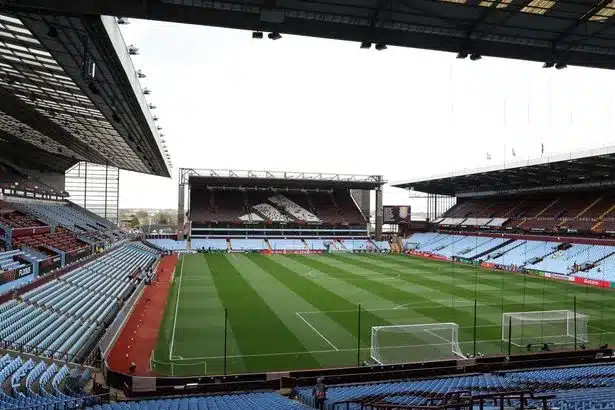
On October 9, 1976, Villa Park and the heart of Birmingham became the stage for some of the United Kingdom’s most disturbing incidents of football-related violence. The chaos unfolded during a so-called friendly match between Aston Villa and Rangers, which was ultimately halted after 53 minutes due to widespread crowd disorder.
A Day of Unprecedented Violence
Eyewitness accounts paint a grim picture of the day’s events. One observer described seeing a young fan being brutally attacked on the pitch by multiple assailants, left unconscious. “It was the most sickening episode I saw in the midst of disgraceful scenes which caused the abandonment of the match,” the witness recounted, detailing the shocking atmosphere.
reports that weekend indicate that a significant number of Rangers supporters arrived in Birmingham via an overnight train from Glasgow. Disturbances were noted even during the journey, with some fans being removed from the train at Wigan. Coaches began arriving at Villa Park as early as 3 a.m., with some offering heavily discounted travel packages.
Alcohol and Early Disturbances
Concerns were raised by law enforcement regarding coach operators potentially breaching regulations by arriving hours before the scheduled kick-off. As soon as licensed premises opened, fans began consuming large quantities of alcohol, contributing to an atmosphere of debauchery that alarmed hundreds and disrupted public transportation for thousands. Many supporters were visibly intoxicated, with one 15-year-old collapsing after consuming alcohol.
Even hours before the match, two teenage Rangers fans were brought before Birmingham Magistrates Court and fined for using threatening language and behavior. Chief Superintendent Colin Sutton, leading the Aston Division, identified alcohol as a primary catalyst for the day’s events, stating, “Drink was the major factor. They had been drinking most of the day – wine, spirits, beer and even champagne.”
Violence Erupts on the Pitch
While some minor incidents occurred during the first half, with Aston Villa leading 1-0 thanks to a Dennis Mortimer goal, the situation escalated dramatically at halftime. Hundreds of Rangers fans congregated at the Holte End, and as supporters pushed towards the front, a surge caused terrified fans to spill onto the pitch. By this point, injured individuals were already being attended to.
The second half had commenced before the pitch was cleared. Violence escalated on the Holte End, with bricks, stones, and bottles being thrown indiscriminately. When Frank Carrodus scored Aston Villa’s second goal in the 52nd minute, the violence exploded. It’s estimated that over 200 Rangers fans invaded the pitch, leading to violent confrontations. Tragically, two supporters were stabbed amidst the chaos.
Match Abandonment and Evacuation
To prevent further escalation and protect their players, Aston Villa manager Ron Saunders and Rangers boss Jock Wallace directed their teams back to the dressing rooms. Referee Derek Civil ultimately called off the match for safety reasons. Authorities were granted emergency powers to open stadium gates, facilitating the evacuation of distressed fans. A loudspeaker announcement urged everyone to leave Villa Park and the surrounding areas.
Edna Thorpe, a resident living near the stadium, expressed her shock: “I have lived here all my life but never have I seen anything like this. They were behaving like wild animals, fighting and running riot all over the place. I was petrified and just didn’t know what to do.”
Widespread Injuries and Damage
The match resulted in over 70 injuries, with 18 suffering serious harm. Several fans, including young women, received treatment for severe cuts and head injuries sustained from projectiles. Two individuals sustained stab wounds, and others suffered suspected broken bones. The violence also impacted law enforcement, with 30 police officers injured, four requiring hospitalization, one with a suspected fractured skull.
St. John Ambulance personnel were overwhelmed, with first aid rooms filled to capacity. Eighteen individuals were transported to local hospitals. The roads surrounding the stadium were described as resembling a war zone, with casualties scattered across the tarmac and in nearby car parks. Alfred Eggington, a division superintendent for St. John Ambulance, stated, “I have never seen anything like it in over 30 years of nursing.”
Police Response and City Centre Chaos
At the height of the disorder, 130 officers were stationed at Villa Park, with an additional 90 officers deployed to the city. Police seized numerous cans and bottles and made 50 arrests throughout the day. When the violence erupted inside the stadium, helmeted police engaged in physical altercations to clear the ground. Mounted police pursued troublemakers through the streets, while officers formed lines along the track to maintain order.
The hooliganism was not confined to the stadium. Birmingham city centre also experienced significant disruption. Shopkeepers were urged to close their businesses for safety. While some businesses reported no trouble, others faced vandalism. Eight buses were damaged, leading to the suspension of bus services on nine routes towards the ground, stranding many shoppers.
Pubs and Shops Targeted
A gang of fans reportedly threw bread at shoppers after snatching a basket of rolls. In one incident, a woman and her daughter had their hair pulled and milk thrown at them. Many pubs and bars in the city centre shut their doors. A city centre pub was cleared by police after a mass glass-throwing incident. The front door of another pub was torn off its hinges, and other establishments also suffered damage.
Michael Evans, landlord of a pub in Aston, described the terrifying scene: “I have never been more terrified in my life. They went berserk. The language they used was vile, they grabbed bottles from the shelves, wouldn’t pay for drinks and ripped down the curtains.”
Club and Official Reactions
Aston Villa club secretary Alan Bennett defended the decision to arrange the friendly, noting the historical significance of the fixture between two of Britain’s oldest clubs, playing each other for the first time in 90 years. However, Aston Villa chairman Sir William Dugdale expressed regret over the ensuing trouble. Rangers vice chairman Willie Waddell conveyed his disgust, calling the perpetrators “louts” and the events a “bloody tragedy.”
Sports minister Dennis Howell, who witnessed the events firsthand, described the behavior as “absolutely appalling” and stated the need for a strong response. An inquiry into the violent scenes was immediately ordered by the Home Secretary.
Match Summary
Prior to the abandonment, Aston Villa had demonstrated a tactically superior performance. Dennis Mortimer opened the scoring in the 29th minute with a well-executed move. In the 52nd minute, Frank Carrodus doubled Villa’s lead with a powerful volley. The match was officially recorded as Aston Villa 2, Rangers 0, abandoned after 53 minutes.