[ad_1]
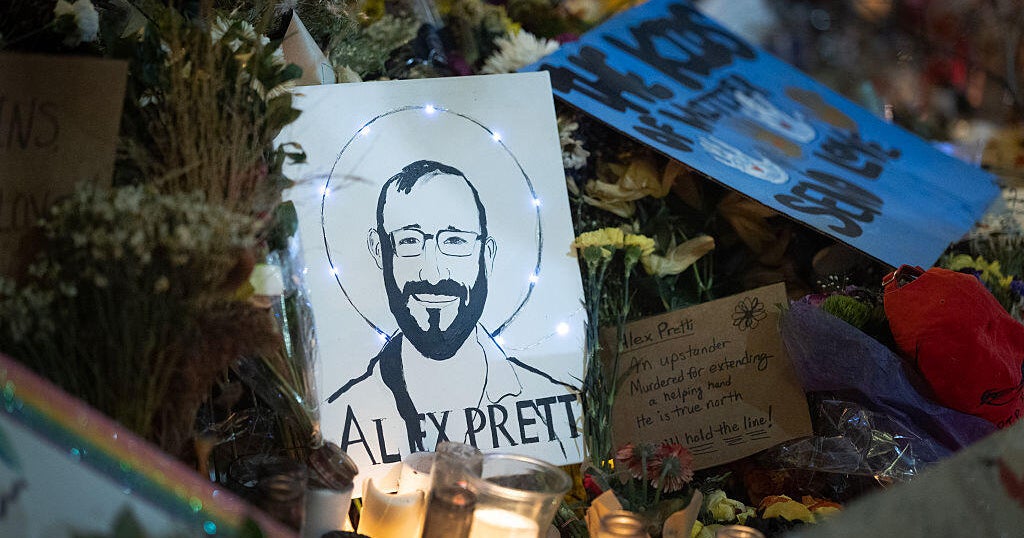
A former federal regulation enforcement coach says the deadly capturing of Alex Pretti by U.S. Customs and Border Safety officers raises severe considerations about their tactical decision-making and use of drive.
Marc Brown, who spent 5 years coaching officers on the Federal Legislation Enforcement Coaching Facilities, mentioned video of the confrontation leaves “quite a lot of unanswered questions,” notably about why officers confronted Pretti, who gave the impression to be filming a deportation operation utilizing solely his cellphone.
“We dwell in a digital age. Persons are going to file regulation enforcement,” Brown mentioned. “So the query is, what was the necessity to have interaction him within the first place?”
Brown, now the tutorial director of College of South Carolina’s Excellence in Policing and Public Security Program, criticized the officers’ choice to deploy Oleoresin Capsicum spray — or OC spray — in a crowded space, calling it each tactically dangerous and doubtlessly harmful.
“OC is an aerosol,” Brown mentioned. “All people round goes to get uncovered — demonstrators, bystanders, and different officers. Now everybody has chemical irritant of their eyes.”
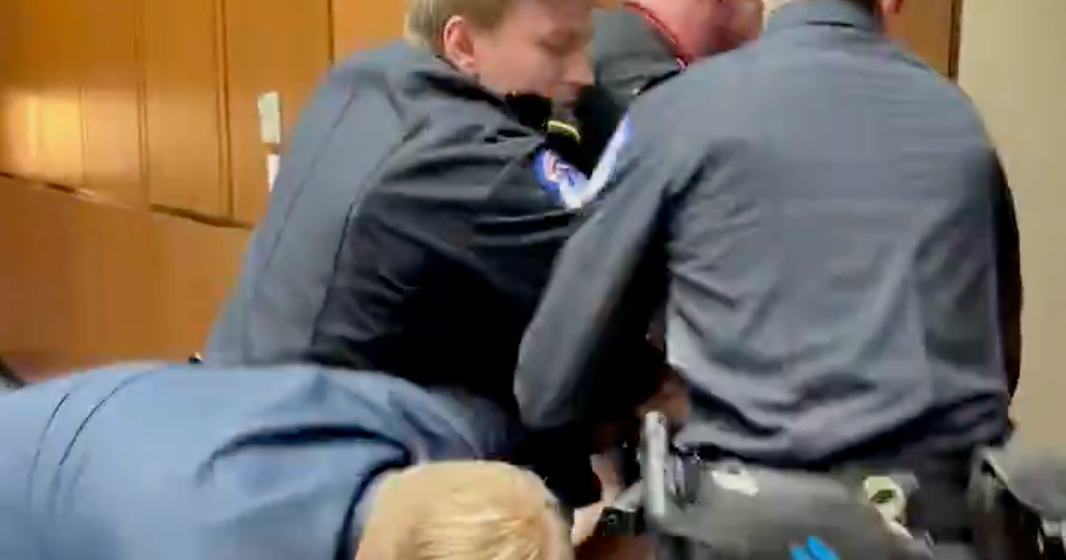
Brown additionally questioned the escalation that adopted, notably the second officers opened fireplace after Pretti’s firearm appeared to have been faraway from his waistband.
“A firearm in somebody’s waistband is a priority,” Brown mentioned. “A firearm in somebody’s hand is a direct menace. However these are very various things.”
The previous police officer additionally famous that video seems to indicate a number of officers restraining Pretti on the time of the capturing. This, he mentioned, raises doubts about whether or not the authorized threshold for lethal drive had been met.
“Use-of-force coverage usually requires an imminent menace,” he mentioned. “I do not know if that threshold was met right here… Simply because somebody has a gun would not routinely justify deadly drive. You want extra details.”
Extra of the details emerged Tuesday, after a authorities report despatched to Congress and obtained by CBS Information revealed two U.S. Customs and Border Safety brokers fired their weapons in the course of the deadly capturing of Minneapolis ICU nurse Alex Pretti over the weekend. Extra details about their identities has not been launched.
The report, shared with congressional officers Tuesday and authored by CBP’s Workplace of Skilled Duty revealed {that a} Border Patrol agent discharged his CBP-issued Glock 19, and a CBP officer additionally discharged his CBP-issued Glock 47 at Pretti, after making an attempt to apprehend him.
The brand new data supplied by CBP differs from the preliminary accounts provided by the Division of Homeland Safety, which mentioned in an announcement over the weekend that one Border Patrol agent had fired “defensive pictures.”
Past the capturing itself, Brown questioned the broader tactical method, saying officers might have didn’t disengage as soon as their mission was full.
“As soon as you’ve got completed your goal — whether or not it is an arrest or serving a warrant — it is time to depart,” he mentioned. “There isn’t any cause to remain and have interaction with crowds or protesters.”
ICE coaching ramp-up
The coaching of Division of Homeland Safety regulation enforcement officers is underneath heavy scrutiny after the capturing deaths of Renee Good and Pretti this month, each by federal brokers in separate incidents throughout deportation operations in Minneapolis.
U.S. Immigrations and Customs Enforcement has been ramping up its recruitment efforts since late final summer time, and officers say they shortened and restructured its primary coaching program as a part of their hiring push. By mid-November, about 1,600 recruits had accomplished six weeks of primary coaching and had been amongst these despatched into U.S. cities, together with Minneapolis, to hold out the Trump administration’s deportations.
Total, roughly 3,000 ICE, Homeland Safety Investigations and U.S. Customs and Border Safety brokers have been working within the Twin Cities. The ICE agent who shot Good was not a current recruit, however fairly a 10-year regulation enforcement veteran with ICE and was significantly injured in June in a separate incident within the Minneapolis space when he was dragged by a automotive throughout an tried arrest, courtroom data present.
Caleb Vitello, who was performing ICE director and is now the company’s assistant director for the Workplace of Coaching and Improvement, spoke with CBS Information late final yr, previous to “Operation Metro Surge” in Minneapolis. Vitello mentioned how recruits are educated to deal with encounters with protesters and the way they need to method de-escalating tensions, together with how and underneath what circumstances they need to apply use-of-force and less-than-lethal weapons.
“Our use of drive continuum is officer presence, verbal instructions, delicate methods, exhausting methods and lethal drive,” he instructed CBS Information.
“We all the time need to de-escalate,” he mentioned, including, “we simply do not need to combat.”
“Say ‘Police’ upon engagement”
Vitello mentioned, “All of our officers are educated to say ‘Police’ upon engagement. It undoubtedly helps after they see a badge, however No. 1 phrase is ‘Police. Police. Police. Police.'”
He pressured that brokers needs to be figuring out themselves if their firearms are seen.
“That is rule No. 1: If I can see the gun, I must also be capable of see the badge,” he mentioned.
Brown additionally instructed CBS Information that CBP coaching instructs officers to alert others when a weapon is seen, not instantly open fireplace.
In response to the report submitted to Congress, in the course of the battle that preceded Pretti’s deadly capturing, one Border Patrol agent yelled, ‘He is acquired a gun!’ a number of instances.
“Roughly 5 seconds later, a [Border Patrol agent] discharged his CBP-issued Glock 19 and a [CBP officer] additionally discharged his CBP-issued Glock 47 at Pretti. After the capturing, a BPA suggested he had possession of Pretti’s firearm,” the CBP report added.
“Coaching is to name out ‘gun’ — to not begin capturing simply since you see one,” Brown instructed CBS Information. “Seeing a firearm would not routinely justify pulling the set off.”
ICE leaders have additionally famous their brokers might conduct deportation operations with out sporting name-identifying badges, and they typically put on masks. DHS officers enable them to hide their identities out of concern the brokers shall be doxxed, regardless of the dangers that their masking may very well be exacerbating tensions with civilians.
“With the quantity of cameras on the market, social media, so on and so forth, they’ll get doxxed,” Vitello mentioned. “And I can inform you having to name your spouse and inform her to lock the door ‘trigger you simply acquired a menace is a horrible feeling.”
Utilizing “OC” or pepper spray
Oleoresin Capsicum, additionally referred to as OC spray or pepper spray, is what’s thought of a “delicate method,” says Vitello, which means “it hurts, nevertheless it would not injure.”
A delicate method “is acceptable when a topic is passively non-compliant,” he mentioned. In that state of affairs, brokers have given “very clear verbal instructions” to folks to place their palms up. Once they fail to take action, Vitello says, “you’ve got demonstrated your self to be passively non-compliant.”
Trainees are instructed to create a distance from a topic “better than six ft” and to purpose for the eyes as a result of “that is what will incapacitate you.”
Deploying pepper balls
Pepper balls, that are full of OC, are meant to be fired from launchers, and so they burst on influence. They’re most frequently used throughout protests.
Vitello mentioned, “You need to purpose for the chest. You need to purpose for the abdomen. You need to purpose for these areas. We educate our of us to not purpose on the face, proper?” As a result of that “will do a big quantity of injury.” The face and groin areas are to be averted, he mentioned.
In October, pressed on whether or not firing from elevated positions violates DHS coverage, CBP Commander at Giant Gregory Bovino insisted, “It would not matter the place you fireplace from… that could be a much less deadly machine for space saturation.” As for pictures hanging protesters above the waist, he mentioned, “If somebody strays right into a pepper ball, then that is on them. Do not protest and do not trespass.”
Requested to weigh in on Bovino’s assertion, on the time, DHS Assistant Secretary for Public Affairs Tricia McLaughlin mentioned, “ICE and CBP are educated to make use of the minimal quantity of drive essential to resolve harmful conditions to prioritize the protection of the general public and themselves.”
The baton, “a incredible de-escalation software”
Officers are educated to make use of the baton for less-lethal drive functions round giant muscle teams and the peroneal stress factors across the legs.
However “the pinnacle, neck, sternum and backbone are what we name lethal drive areas,” Vitello mentioned. “So that could be a much less deadly software that may grow to be deadly as essential,” if, for example, a topic attracts a knife.
He calls the baton “a incredible de-escalation software,” and instructed CBS Information, “I’ve drawn my Baton numerous instances within the subject. I’ve by no means needed to hit anyone with it,” as a result of coupled with “a robust command…, they pay attention.”
Many high-profile incidents underneath scrutiny have concerned CBP brokers, who’re historically educated for border enforcement and interdiction fairly than focused immigration operations in main U.S. cities or civil unrest conditions.
“A totally completely different atmosphere”
John Sandweg, who was performing normal counsel of the U.S. Division of Homeland Safety and performing director of ICE, mentioned CBP additionally trains its brokers in New Mexico alongside the border and operates in a really completely different atmosphere from different companies, typically in harmful conditions within the desert apprehending teams of smugglers and members of drug cartels.
“Of all of the companies, probably the most regarding to me and others has been the border patrol presence. You are simply educated that it is okay to be so aggressive since you’re simply working in a totally completely different atmosphere,” Sandweg mentioned.
“CBP and ICE personnel are being requested to do a unique form of enforcement mission, which is de facto giant scale sweeps of densely populated civilian areas with much less coaching and maybe not the appropriate coaching versus the extra focused set of enforcement actions that they’ve traditionally engaged in,” mentioned CBS Information nationwide safety contributor Sam Vinograd. “And if they’ll transfer into these giant scale sweeps and at giant arrests in civilian areas, they want a unique form of coaching to attenuate danger to the general public and decrease danger to themselves.”
In response to present and former DHS officers, together with Vinograd, operations in Minneapolis additionally mirror a broader shift in how the federal authorities is working throughout protests, counting on immigration brokers and officers to carry out widening sweeps in public areas similar to gasoline stations and eating places. The sweeps, along with crowd-management duties, are sometimes handled by native police, who typically have extra expertise and coaching in de-escalating giant demonstrations and tamping down civil unrest.
Sandweg additionally mentioned the Border Patrol has no enterprise working in a metropolis like Minneapolis as a result of their coaching is geared extra towards encountering drug cartels and migrants alongside the border.
“They’re educated to function with a excessive diploma of aggression as a result of that is what you must prepare them, to allow them to do their job safely to maximise their safety,” he mentioned. “However you are taking these experiences and that coaching and also you say, ‘okay, now your job is to determine the place is that line? What constitutes illegal impeding a federal agent within the efficiency of his duties versus what constitutes first modification protected speech?’ That is an extremely troublesome factor I feel for any regulation enforcement officer, particularly for one who simply by no means encounters that in his profession and isn’t actually educated to cope with that.”
Sandweg thinks the Trump administration has inspired a extra aggressive method to those operations.
“They had been very a lot supportive of this,” he mentioned. “They had been fast to, you recognize, say every part the officers did was utterly justified. I really feel like [it] created an ‘us versus them’ mentality. We overpassed the truth that DHS and ICE and CBP are companies that serve the USA of America — they’re to advertise public security.”
Accountability
In December, Democrats on the Home Homeland Safety Committee formally requested the Authorities Accountability Workplace to look at DHS’s fast hiring and coaching surge, signaling rising congressional oversight curiosity as expands enforcement staffing at an unprecedented tempo.
A number of Home Democrats are pushing to incorporate language on this yr’s DHS funding invoice that may improve coaching necessities for ICE officers, and Senate Democrats are threatening to dam a package deal to fund main elements of the federal government this week, following the lethal shootings of Alex Pretti in Minneapolis on Saturday.
However a partial authorities shutdown would seemingly have little influence on the administration’s ongoing immigration enforcement operations, because the related DHS companies acquired an enormous funding infusion in President Trump’s One Massive Stunning Invoice Act final yr.
Leaders of the three main immigration enforcement companies are set to testify earlier than a pair of Home and Senate committees in February.
Todd Lyons, the performing head of Immigration and Customs Enforcement; Rodney Scott, the commissioner of Customs and Border Safety; and Joseph Edlow, the director of U.S. Citizenship and Immigration Providers, are scheduled to look earlier than the Home Homeland Safety Committee on Feb. 10, after which testify earlier than the Senate Homeland Safety Committee two days in a while Feb. 12.
[ad_2]