[ad_1]
The physique of only one Israeli hostage stays in Gaza, nearing the achievement of a key plank of President Donald Trump’s 20-point ceasefire plan for the enclave, however main hurdles exist to a deliberate second part.
Doubts stay over whether or not negotiators can overcome these excellent obstacles, at the same time as they face renewed stress to advance into part two — a step supposed to stop any return to the excessive ranges of violence that preceded the ceasefire.
Trump famous final week that part two would begin “fairly quickly,” with out giving a extra particular timetable. Axios reported on Thursday that the White Home is hoping to announce the second part earlier than Christmas, and unveil the brand new governance construction for the enclave, citing two U.S. officers and a Western supply straight concerned within the course of.
Part two of Trump’s plan requires the institution of a brand new governing mechanism in Gaza, the disarmament of Hamas, and the formation of a world stabilization power, often called the ISF, that may take over duty from the Israel Protection Forces at the moment occupying elements of the Gaza Strip.
Qatari Prime Minister Sheikh Mohammed bin Abdulrahman al-Thani, whose nation has performed a key position in a collection of worldwide negotiations, mentioned Saturday that discussions have been at a “essential” second. Mediators have been working collectively to push the subsequent part of the ceasefire ahead, he mentioned throughout a panel on the Doha Discussion board convention in Qatar.
“A ceasefire can’t be accomplished except there’s a full withdrawal of Israeli forces, (till) there may be stability again in Gaza, folks can go out and in, which isn’t the case at present,” he mentioned.
Egypt’s International Minister Badr Abdelatty instructed the convention that the Worldwide Stabilization Power was wanted “as quickly as potential on the bottom,” whereas Norway’s International Minister Espen Barth Eide mentioned measures have to be put in place this month, warning the present ceasefire “can not maintain for a lot of extra weeks in its present part.”
Because the worldwide neighborhood hopes for progress, the ceasefire’s trajectory to this point underscores each its fragile beneficial properties and its persistent vulnerabilities.

For the reason that ceasefire got here into impact on 10 October, 20 dwelling hostages and the stays of 27 others have been returned to Israel. The physique of the ultimate hostage, Ran Gvili, a 24-year-old police officer killed throughout Hamas’ Oct. 7, 2023 assault, has but to be recovered regardless of a weeks-long search effort. Israeli authorities have steadily launched Palestinian prisoners and detainees — each dwelling and lifeless — as a part of the trade.
Israel has repeatedly mentioned all hostages have to be returned earlier than a part two deal, with Prime Minister Benjamin Netanyahu this week stressing the necessity for an “intensive and quick effort” to finish the dedication.
Israel agreed to halt its assault on the Gaza Strip through the ceasefire, however flare-ups and violence have endured, with Israeli strikes killing greater than 350 folks because the ceasefire started, taking the demise toll within the enclave past 70,000, in line with Palestinian Well being Ministry figures.
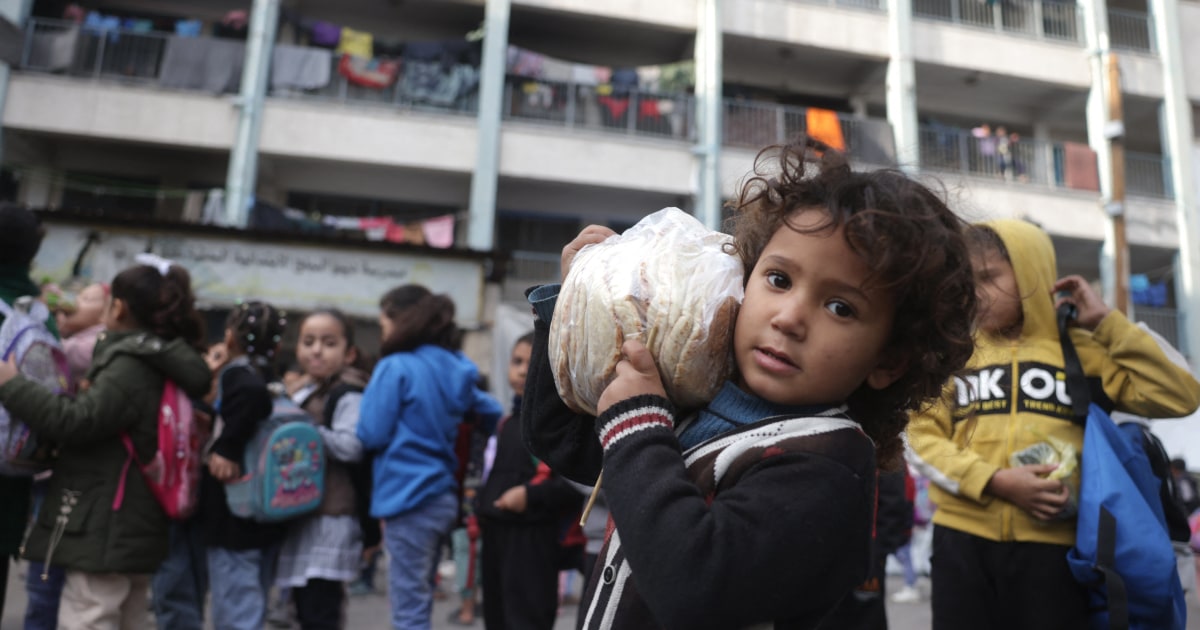
The primary part additionally included a dedication to broaden the move of help into Gaza, however U.N. consultants say the variety of vehicles permitted to enter has by no means reached the agreed goal of 600 per day.
Israel mentioned Gaza’s Rafah crossing within the south will quickly reopen to enable Palestinians to enter Egypt, however it is not going to reopen the crossing in each instructions — one other dedication beneath the deal — till Gvili’s stays are returned.
And as part one stutters alongside, analysts warn that part two presents a bunch of complicated challenges, from safety preparations to competing governance calls for, that might gradual and even stall the method.
Negotiators are “attempting to sq. circles that merely can’t be squared,” mentioned Dr H.A. Hellyer, a senior affiliate fellow on the Royal United Companies Institute, a protection and safety suppose tank in London.
He puzzled whether or not a world stabilization power might actually dismantle Hamas, a goal Israel was unable to realize by way of its two years of a “brutal” army operation. Whereas Trump’s peace plan stipulates that Hamas will disarm, the group has reasserted management of Gaza through the first part of the ceasefire and proven no quick indicators of disarmament.
Disarming Hamas by way of army intervention is “not precisely one thing that some other energy goes to be enthusiastic about,” he instructed NBC Information.
And in the case of Gaza’s governance, Hellyer added, “Trump can create his board of peace,” referring to the group that may sit atop Gaza’s governing construction beneath Trump’s plan, however “you may’t merely implement these things on the bottom with out cooperation from the inhabitants, except you simply wish to flip it into a brand new sort of occupation.”

Turkey’s International Minister Hakan Fidan mentioned on Saturday that negotiations over the Gaza stabilization power stay ongoing, together with its mandate and guidelines of engagement, and that its foremost goal ought to be to separate Israelis and Palestinians alongside the border.
“Hundreds of particulars, questions are in place,” Fidan mentioned. “I feel as soon as we deploy ISF, the remaining will come.”
However Fawaz Gerges, professor of worldwide relations on the London College of Economics, echoed Hellyer’s issues, noting that to this point, “no state has agreed to help its forces into Gaza and probably and in the end get into confrontation with Hamas.”
Gerges additionally feared that “we’ll by no means see the precise implementation of what part two is meant to be,” including it was “an phantasm” to name what’s taking place in Gaza a ceasefire, “as a result of the Palestinians, significantly civilians, proceed to be killed every day.”
“Despite the fact that the humanitarian scenario of the Palestinians has improved a bit, it’s nonetheless catastrophic,” he mentioned.
[ad_2]