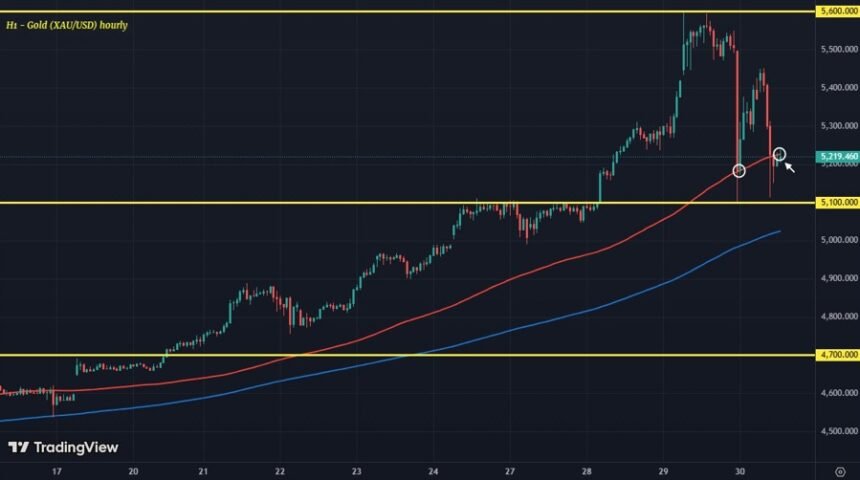
As the final trading session of January unfolds, the precious metals market remains turbulent following a sharp wave of profit-taking during yesterday’s U.S. session. Gold briefly plummeted to a low of $5,097, prompting swift intervention from bargain hunters who stabilized the price. However, ongoing swings highlight persistent uncertainty in the market.
Recent Price Movements
Dip buyers quickly defended a crucial short-term support near the 100-hour moving average, bolstered by buying interest around the $5,100 level. Despite this resilience, gold has since slipped below a key near-term threshold, intensifying the choppy trading environment. The metal’s parabolic surge this month, mirrored by silver, has left investors cautious about potential cascading sell-offs triggered by further profit-taking.
Key Technical Indicators
Traders should monitor the 100-hour moving average at $5,225 closely; a decisive breach below this level could signal heightened pressure on long positions and pave the way for a deeper correction. While current technical signals indicate that buyers are still active, a more pronounced drop below $5,100—along with the 200-hour moving average—would likely confirm risks of a substantial pullback. Such moves often accelerate in assets that have experienced rapid gains, underscoring the need for vigilance.
Seasonal Considerations for February
With January’s traditional bullish momentum waning, attention turns to February, which has historically delivered modest average gains of about 1% for gold over the past two decades. That said, the metal has declined in five of the last seven Februaries. Notably, in recent years, strong January performances have frequently been followed by reversals in the subsequent month, adding another layer of caution for market participants.