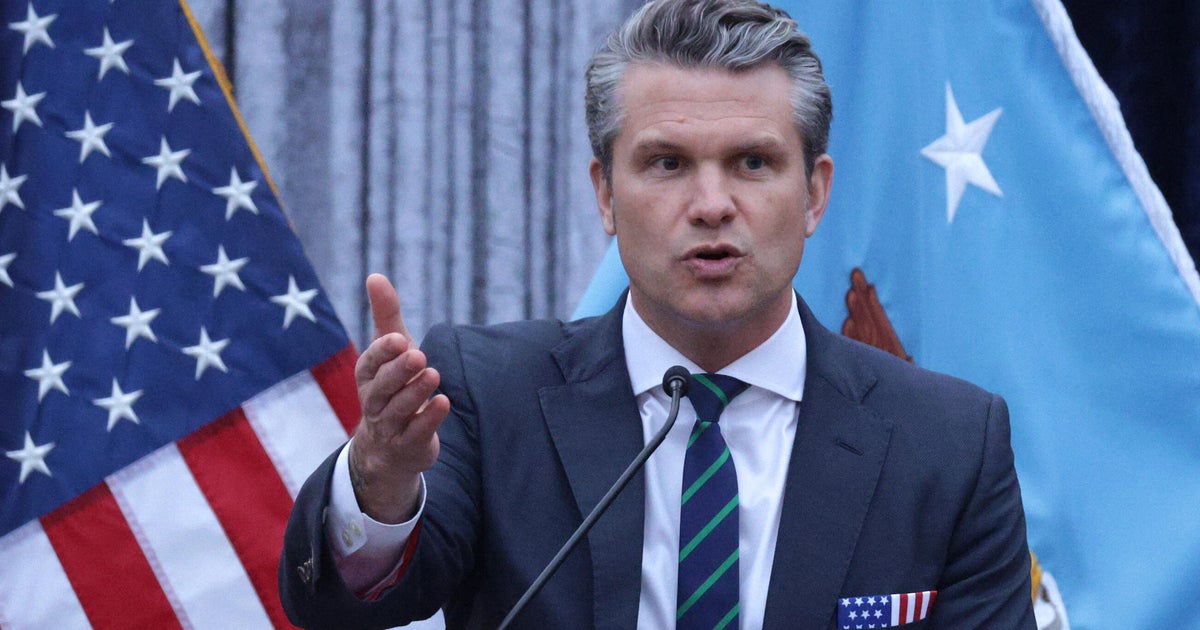
Protection Secretary Pete Hegseth deemed synthetic intelligence agency Anthropic a “provide chain danger to nationwide safety” on Friday, following days of more and more heated public battle over the corporate’s effort to put guardrails on the Pentagon’s use of its expertise.
Hegseth declared on X that efficient instantly, “no contractor, provider, or associate that does enterprise with the US navy could conduct any business exercise with Anthropic.” The choice might have a wide-ranging impression, given the sheer variety of corporations that contract with the Pentagon.
“America’s warfighters won’t ever be held hostage by the ideological whims of Large Tech. This determination is closing,” Hegseth wrote.
President Trump introduced earlier Friday that each one federal businesses should “instantly” cease utilizing Anthropic, although the Protection Division and sure different businesses can proceed utilizing its AI expertise for as much as six months whereas transitioning to different providers.
CBS Information has reached out to Anthropic for remark.
The choice to chop off Anthropic got here after a dispute with the Pentagon that highlighted sweeping disagreements in regards to the position of AI in nationwide safety and the potential dangers that the highly effective expertise might pose.
The corporate — which is the one AI agency whose mannequin is deployed on the Pentagon’s labeled networks — has sought guardrails that stop its expertise from getting used to conduct mass surveillance of Individuals or perform navy operations with out human approval. However the Pentagon insisted any deal ought to permit use Anthropic’s Claude mannequin for “all lawful functions.”
The Free Press: Will AI Doom Us All? The Market Cannot Determine
The Pentagon had given Anthropic a deadline of Friday at 5:01 p.m. to both attain an settlement or lose out on its profitable contracts with the navy.
The navy’s place is that it is already unlawful for the Pentagon to conduct mass surveillance of Individuals, and inner insurance policies prohibit the navy from utilizing totally autonomous weapons. As talks between the 2 sides broke down this week, Pentagon officers have publicly accused the corporate of searching for to impose his personal views onto the navy.
Hegseth known as Anthropic “sanctimonious” and conceited on Friday, and accused it of making an attempt to “strong-arm the US navy into submission.”
“Their true goal is unmistakable: to grab veto energy over the operational choices of the US navy. That’s unacceptable,” Hegseth alleged.
However Anthropic CEO Dario Amodei has argued that guardrails are vital as a result of Claude is just not infallible sufficient to energy totally autonomous weapons and a strong AI mannequin might elevate critical privateness considerations. He says the corporate understands that navy choices are made by the Pentagon and has by no means tried to restrict using its expertise “in an advert hoc method.”
“Nevertheless, in a slim set of circumstances, we imagine AI can undermine, fairly than defend, democratic values,” Amodei stated in a press release Thursday. “Some makes use of are additionally merely outdoors the bounds of what in the present day’s expertise can safely and reliably do.”
Amodei has been outspoken for years in regards to the potential dangers posed by unchecked AI expertise, and has backed requires security and transparency laws.
On Thursday, the eve of the navy’s deadline to achieve a deal, the Pentagon’s chief expertise officer Emil Michael instructed CBS Information that the Pentagon had made concessions, providing written acknowledgements of the federal legal guidelines and inner navy insurance policies that prohibit mass surveillance and autonomous weapons.
“At some degree, it’s a must to belief your navy to do the proper factor,” stated Michael, who additionally famous, “we’ll by no means say that we’re not going to have the ability to defend ourselves in writing to an organization.”
Anthropic known as that provide insufficient. An organization spokesperson stated the brand new language was “paired with legalese that may permit these safeguards to be disregarded at will.”