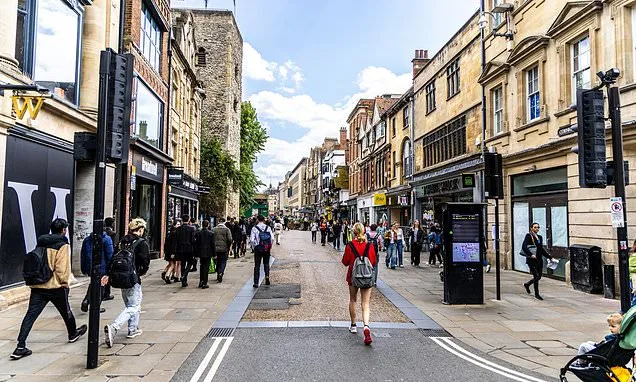
Britain’s retail sector experienced a notable downturn in shopper footfall during July, with soaring temperatures cited as the primary reason for consumers staying home. Data reveals a 2.1 per cent decrease in visits to retail destinations compared to the same month in the previous year. This decline underscores the growing impact of extreme weather events on consumer behavior and the broader economy.
July Footfall Sees Significant Drop Amidst Record Heat
The latest figures, compiled by the British Retail Consortium (BRC) in collaboration with researchers Sensormatic, indicate that High Streets bore the brunt of the decline, with footfall dropping by 3.8 per cent. Shopping centres also saw a decrease of 1.4 per cent. In contrast, retail parks experienced a modest increase of 1.2 per cent, suggesting a shift in consumer preference towards more accessible, often out-of-town, shopping locations.
July 2026 was marked by exceptionally hot and dry weather across England and Wales, with conditions described as the driest since records began in 1836. This climate played a significant role in dampening consumer enthusiasm for shopping trips. While the situation was challenging, the retail environment in July showed a slight improvement compared to June, which saw a more severe 3.4 per cent slide in footfall during a period of record-breaking heatwaves.
London Experiences Steepest Decline in Shopper Visits
The capital city, London, recorded the most significant drop in footfall, with a 5.3 per cent decrease compared to the previous year. Researchers suggest that the extreme heat, which pushed temperatures on the London Underground to over 30 degrees Celsius, deterred many residents from undertaking journeys, particularly those involving public transport.
Broader Challenges Facing the High Street
The dip in footfall adds further pressure to an already struggling High Street. The sector has faced numerous headwinds, including the collapse of established retailers and ongoing concerns about further closures across various chains. Beyond the immediate impact of weather, broader economic factors, such as inflation exacerbated by geopolitical events, continue to affect consumer spending power and confidence.
The trend of declining footfall has been persistent throughout the year. Six out of the first seven months of 2026 have shown worse performance compared to the corresponding periods in the previous year, highlighting the deep-seated challenges confronting physical retail spaces.
Retailers Adapt to Extreme Weather and Economic Pressures
Helen Dickinson, chief executive of the BRC, commented on the ongoing influence of climate change on retail operations. “Climate change continues to deliver more and more extreme temperatures in the UK,” she stated. “Retailers are responding by investing in both mitigations – such as more air conditioning and more efficient refrigeration units – and in sustainability initiatives aimed at reducing carbon emissions.”
Dickinson also highlighted the need for a fairer business rates system to support retailers in making necessary investments. She pointed to the government’s recent announcement of a discount on commercial property tax for pubs, suggesting a similar review for shops. “Unfortunately, business rates often punish stores for such investments, showing the need for government to look again at this broken system,” she added, advocating for reforms that do not penalize businesses for improving their infrastructure and sustainability.
Andy Sumpter, head of consulting and analytics for Sensormatic, echoed the sentiment regarding the weather’s impact. “The exceptionally hot and historically dry weather is likely to have been a significant factor, discouraging shopping trips and particularly impacting High Streets,” he observed. Sumpter noted that despite changes in political leadership, the retail sector has yet to see substantial positive economic shifts. “For retailers, the focus remains on converting these more selective visits into meaningful spend as the summer progresses,” he concluded, emphasizing the ongoing need for retailers to maximize the value of each customer interaction.
Conclusion: Navigating a Changing Retail Landscape
The July footfall decline serves as a stark reminder of the multifaceted challenges facing the retail industry. Extreme weather events, coupled with persistent economic pressures and evolving consumer habits, necessitate strategic adaptation. Retailers are increasingly focused on enhancing in-store experiences, optimizing operational efficiency, and implementing sustainability measures to navigate this dynamic environment and ensure long-term viability.