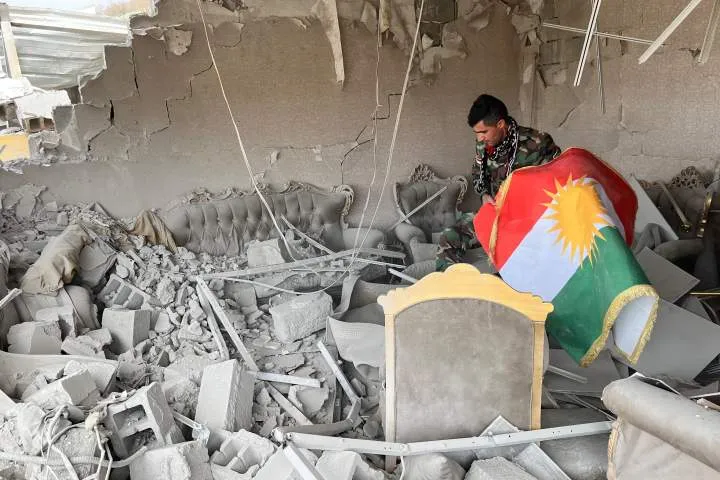
Degala, Iraq — A weathered metal gate and a tattered flag guard the entrance to the Kurdistan Freedom Party base near Erbil in northern Iraq. An anti-aircraft gun overlooks the site from a nearby plateau, where rows of concrete buildings border rugged hills.
Kurdish fighter Ali Mahmoud Awara, clad in camouflage fatigues, a scarf, and running shoes, expresses unease amid the conflict spilling over from Iran. “All of our bases have been targeted by the Iranians,” he states.
The Kurdistan Freedom Party, also known as PAK, operates among a few armed groups in Iraq’s Kurdistan region. These fighters seek greater autonomy for ethnic Kurds across the area and the downfall of Iran’s regime, which has long curtailed Kurdish rights, language, and culture.
The U.S.-Israeli conflict with Iran, launched on February 28, sparks intense discussions on whether Iranian Kurdish fighters should enter the fray. Awara, born in Iran but based in Iraq for 12 years after joining the fight against the Islamic State, stands ready. He aims to return home and overthrow the regime he loathes “with my heart and my body.”
Iran Targets Kurdish Bases
Iran’s Islamic Revolutionary Guard Corps works to block Kurds like Awara from crossing into Iran. On March 4, three Fattah missiles hit the Kurdistan Freedom Party base, striking leader Hussein Yazdanpanah’s office. Veteran fighter Kawan Rashidi died, and three others suffered injuries. Yazdanpanah escaped harm by absence.
“They don’t want the Kurdish movement to progress,” Awara explains. Missile fragments litter the site days later as evidence of the strike. Ongoing threats leave the camp nearly deserted, with animals outnumbering fighters during a recent visit.
Debate Over Joining the War
Kurdish fighters voice confidence in facing Iranian forces. U.S. President Donald Trump first endorsed their ground involvement but later called the situation “complicated enough” despite their eagerness.
Iranian strikes on Kurdish sites pull them into the fight regardless. The White House rejects claims of CIA arms supplies to Kurds, yet U.S. strikes pound Iran’s Kurdish-majority west, neutralizing weapons and bases near Iraq—potentially paving the way for an uprising. With Trump demanding Iran’s unconditional surrender sans U.S. troops, Kurds could shift the tide.
Risks loom: a U.S.-backed push might ignite ethnic civil war in Iran. Iraq, scarred by its 1980-1988 war with Iran and ISIS fallout, resists entanglement. Attacks on U.S. assets, hotels, and Kurdish bases already strain the north; escalation looms if it becomes a launchpad. Iran issues threats.
Kurdish distrust of the U.S. stems from past abandonments after serving American goals. “That history makes the Kurdish groups cautious,” notes Yerevan Saeed, director of the Global Kurdish Initiative for Peace at American University. “They are reportedly looking for political assurances from the Trump administration before fully committing.”
Talks and Preparations
The Kurdistan Freedom Party spokesperson confirms discussions with U.S. and Israeli officials but no operational ties. In an outdoor interview due to strike fears, Khalil Kani Sanani declares the Iranian regime’s end near. Fighters prepare independently, he adds, dismissing the recent office attack as proof of Kurdish strength.
“I think Iran is very weak,” Sanani asserts.
A senior Kurdish Democratic Party of Iran member, Hassan Sharafi, distinguishes the Kurdish struggle from the U.S.-Israeli war despite the shared foe. His group avoids border crossings but endures six attacks on its facilities in ten days.
Escalating Tensions and Warnings
Iranian President Masoud Pezeshkian announces an end to neighborly strikes, urging diplomacy. Yet Awara orders evacuation that day over missile alerts; distant explosions follow. That night, strikes hit another Kurdish base in Sulaymaniyah and Erbil airport.
Kurdistan Region President Masoud Barzani warns, “Everyone must clearly understand that patience and restraint have limits,” adding that such incitement risks grave consequences.
Kurdish factions issue a joint pledge to persist in overthrowing the Islamic Republic. Fighters like Awara await leadership decisions. “We are ready for fighting,” he says. “The Kurdish people need freedom.” For now, they wait.

.jpg "Apple iPhone 17e Evaluation: MagSafe Makes a Distinction")