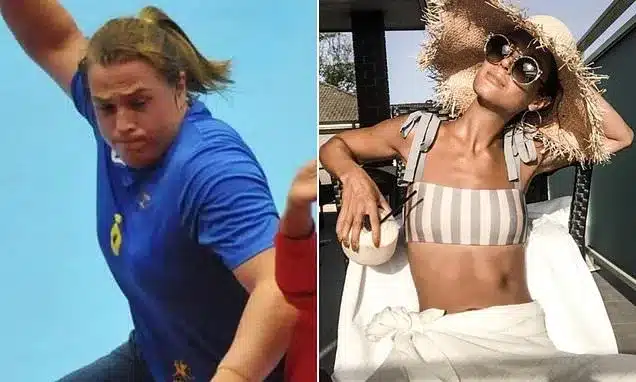
Australian sports presenter Lucy Zelic voices strong support for the International Olympic Committee’s new policy restricting women’s events to biological females starting at the 2028 Los Angeles Games. She describes the move as essential to safeguard the integrity of women’s competitions after prolonged debates on inclusion.
IOC’s New Genetic Screening Policy
The updated IOC framework requires athletes in women’s events to undergo a one-time genetic test for the SRY gene, linked to male biological development. Testing options include non-intrusive cheek swabs, saliva samples, or blood draws. Zelic calls this process minimal compared to its benefits for protecting women’s and girls’ sports.
“This is a much-welcomed but long-overdue determination and will go towards undoing the historic damage and egregious results that the prioritisation of ‘inclusion’ has produced,” Zelic stated.
Addressing Concerns and Support Measures
Zelic highlights the IOC’s commitment to science-based fairness and safety, along with sensitivity toward affected athletes. The policy includes support mechanisms for those with Differences of Sex Development (DSD), focusing on mental health.
“While there have been confronting instances throughout history where some athletes have discovered through the testing process that they were born with Differences of Sex Development, I commend the IOC’s recent announcement that they will focus on providing support mechanisms to assist these participants and their mental health concerns,” she noted.
Zelic emphasizes that the policy preserves the female category without broadly excluding transgender individuals or those with DSD from sports entirely.
High-Profile Cases Fueling Debate
The controversy gained prominence with cases like Algeria’s Imane Khelif, an Olympic gold medalist in Paris 2024, New Zealand’s Laurel Hubbard, the first openly transgender woman at the Tokyo Olympics, and U.S. BMX rider Chelsea Wolfe. Australian handball player Hannah Mouncey also sparked discussions on eligibility.
Criticisms from Advocacy Groups
Human rights organizations express concerns over potential discrimination and privacy issues. Amnesty International’s Steve Cockburn warns that women and girls, particularly from the Global South, face heightened hate and exclusion risks.
Dsdfamilies spokeswoman Ellie Magritte adds that eligibility rules must balance fairness with DSD care standards to avoid harm. “We are concerned that proposed processes do not always demonstrate the level of understanding, dignity and respect that this issue requires,” she stated.
Zelic’s Defense of Fairness
Zelic argues that women’s sports integrity outweighs impacts on a minority. “I understand that this ruling will affect a minority but we cannot continue to place the needs of a minority over the majority of women when so much is at stake,” she said.
She rejects claims of regression, asserting elite sports prioritize fair competition over inclusion. Zelic criticizes past policies for undermining female athletes’ sacrifices and dismisses testosterone suppression as insufficient to eliminate male advantages, citing Australian Sports Commission guidelines.
“Elite individual and team sports has never, nor should it have ever, been about inclusion. It’s about the best athletes in the world being given an opportunity to compete fairly, safely, and be rewarded for their life-long dedication,” Zelic declared.
Broader Implications for Sports
Zelic hopes the policy influences bodies like Football Australia and Netball Australia, extending protections from elite to grassroots levels. “We are not ‘biological’ women, we are not ‘cis-gender’ women – we are just women. Talented, strong, ambitious and deserving of protection, safety and a level playing field,” she affirmed.
The IOC policy, developed through consultations with experts and athletes, applies forward from 2028 without retroactive effects or grassroots mandates. It signals a push for global standards amid varying federation rules.