[ad_1]
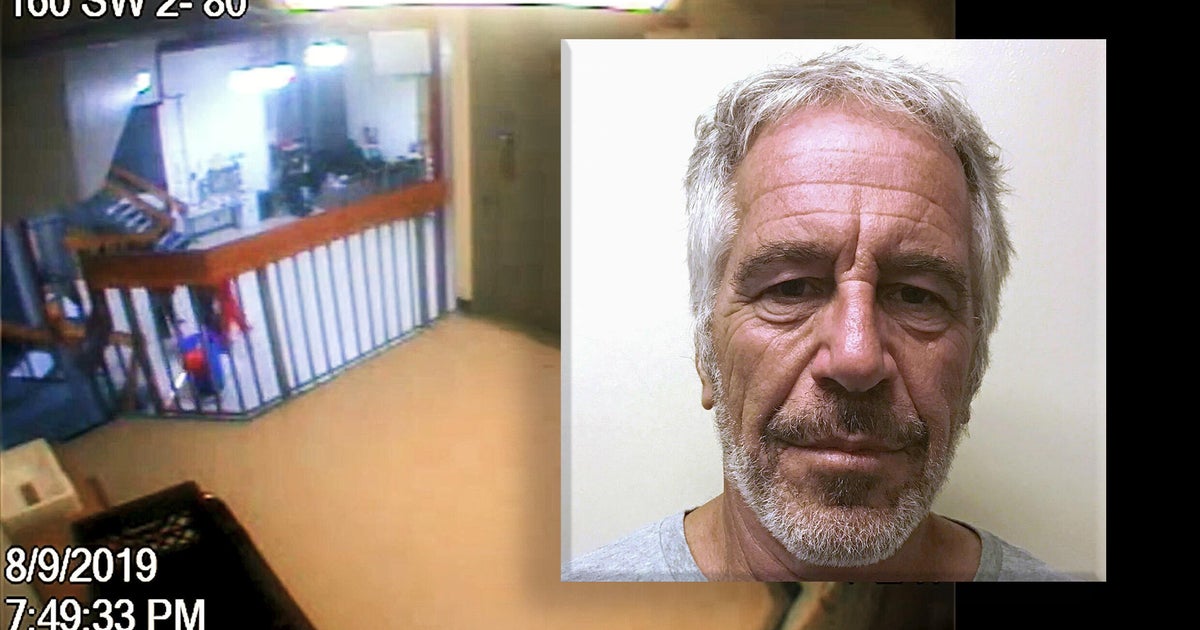
A not too long ago launched cache of surveillance video from the Metropolitan Correctional Middle in New York Metropolis is elevating new questions in regards to the jail cameras on the facility the place Jeffrey Epstein died in his cell in 2019.
The movies had been amongst an enormous cache of supplies launched on Dec. 23 by the Division of Justice as congressionally mandated by the Epstein Recordsdata Transparency Act. Moderately than clarifying occasions surrounding Epstein’s demise, the footage seems to complicate the official narrative, and contradicts some prior statements in regards to the jail’s surveillance system.
The Epstein jail movies
Epstein was discovered lifeless in his cell at roughly 6:30 a.m. on Aug. 10, 2019, by a corrections officer delivering breakfast on the Metropolitan Correctional Middle, the place he was awaiting trial on federal intercourse trafficking fees. His demise was dominated a suicide by town’s chief health worker.
Three months later, then-Legal professional Basic Invoice Barr stated he had personally reviewed jail surveillance footage and verified that nobody entered Epstein’s cell space within the hours earlier than his demise, which supported his conclusion that Epstein died by suicide.
The FBI launched that footage this summer season and evaluation by CBS Information discovered that the footage didn’t present a transparent sufficient view to definitively show that nobody entered Epstein’s cell space, and there have been different inconsistencies with official statements and witness interviews. The DOJ and FBI declined to remark on the time.
Specifics about what cameras had been and weren’t working comes principally from a 2023 report by the Division of Justice’s Workplace of the Inspector Basic. That report acknowledged that though there have been 11 cameras within the Particular Housing Unit (SHU), 10 weren’t recording because of malfunctioning laborious drives.
The only digicam contained in the widespread space of the SHU that was recording was positioned on an higher tier and confirmed solely a sliver of the staircase that led to Epstein’s tier.
U.S. Bureau of Prisons 
Within the 2021 report, the DOJ’s inspector common did acknowledge the existence of an extra digicam protecting a secondary entrance to the SHU. That footage was by no means launched and, in keeping with the report, didn’t present something revealing about Epstein’s guests or his demise.
New footage brings questions, not solutions
Among the many information launched by the Justice Division on Dec. 24 had been greater than 400 one-hour clips of surveillance movies from MCC. The footage spans non-sequential, seemingly arbitrary time durations relationship again to July 5, 2019, greater than a month earlier than Epstein’s demise.
In keeping with inner DOJ emails included within the disclosure, the surveillance system was configured to retain solely 30 days of footage. That raises a direct query: Why do movies from July 5 exist in any respect?
One potential clarification, specialists in video forensics that CBS Information spoke with stated, that if the system had extra storage capability the outdated footage would not be overwritten, so footage outdoors of that 30-day window can be simply recovered.
“[The system] will not overwrite something till the area is required,” stated Stacy Eldridge with Silicon Prairie Cyber Providers.
The brand new cache of video additionally contains footage from 5 extra cameras contained in the jail. Most notably, the discharge contains a number of hours of footage from a digicam beforehand described as non-recording. It offers an unobstructed view of the first entrance to the SHU and the steps resulting in Epstein’s tier.
U.S. Bureau of Prisons 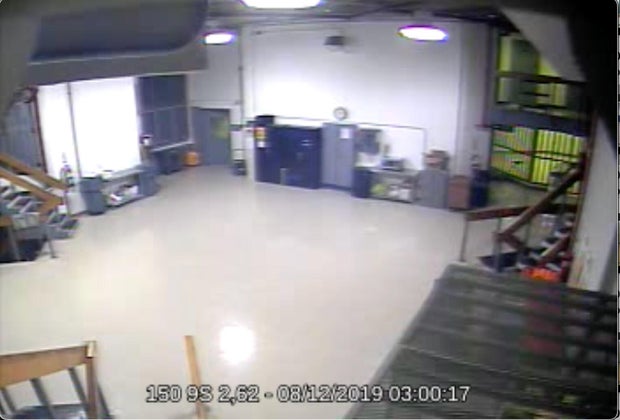
The 4 non-sequential one-hour movies from this digicam are all dated Aug. 12, 2019 — two days after Epstein’s demise. Nevertheless, Division of Justice correspondence states that the surveillance system stopped recording on July 29 and was not repaired till Aug, 14.
Launched by Division of Justice 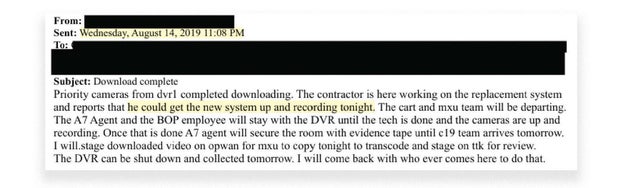
This raises questions on which cameras had been the truth is recording on the time of his demise. One potential clarification is that, following Epstein’s demise, the system may have been reconfigured in order that this digicam was connected to a special, functioning DVR recorder. Based mostly on the truth that the on-screen show stays the identical and the dates don’t overlap, specialists instructed CBS Information they thought a wiring change was essentially the most logical clarification.
“There’s a believable clarification for it, but it surely’s simply odd,” stated Nick Barreiro, a digital forensic knowledgeable with Precept Forensics.
If something, this digicam reveals the missed alternative {that a} clear shot like this may have supplied for investigators working to find out what occurred that night time.
“It fills in gaps which might be clearly lacking from the angle of the opposite digicam,” Barreiro stated.
One other query is what occurred with the footage from the night time of July 23, lower than three weeks earlier than his demise, when Epstein was discovered unconscious on the ground of his cell however then revived. That incident occurred previous to the laborious drive failures that led to the damaged DVR system. Epstein’s tier had a digicam positioned on the finish and it could have captured his cellmate calling for help and corrections officers responding. The DOJ has beforehand stated they’ve been unable to find it.
Consultants say that footage may have been broken when the laborious drive failed. Correspondence included within the launch signifies efforts to recuperate the information from the broken laborious drives had been deserted as a result of the method may have taken six months or extra and would not essentially yield outcomes.
“They’re in all probability going to should manually change every little thing again collectively,” stated Eldridge. “Like every little thing in each investigation, what’s your precedence.”
Different cameras
Along with the SHU footage, the DOJ additionally launched 188 one-hour video clips from a digicam protecting an adjoining housing space often called “10 South,” which is designated for housing essentially the most harmful inmates, together with suspected terrorists (though it was apparently mislabeled as “9S, L tier”). These movies equally don’t run repeatedly, however as an alternative span sporadic hours starting July 5 and ending the day after Epstein’s demise.
The disclosure additionally contains three one-hour movies exhibiting a desk space from seemingly random hours on Aug. 11 and Aug. 12, in addition to 26 one-hour clips from the beforehand acknowledged elevator financial institution, protecting assorted hours between Aug. 7 and Aug. 11.
Along with these movies, a 2-minute and 23-second-long video labeled “J tier” was included that reveals a number of guards strolling round a cell tier. No date is given for this video. In keeping with the 2023 inspector common’s report, the J tier digicam was not recording on the time of Epstein’s demise.
U.S. Bureau of Prisons 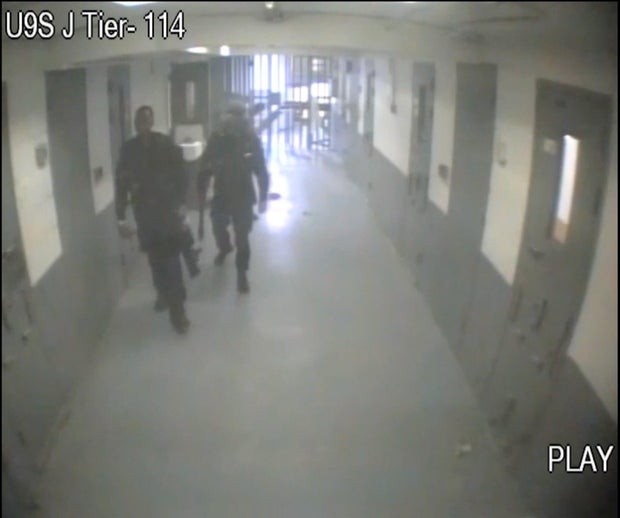
Further video?
These movies are possible a fraction of the movies held by the DOJ. Paperwork obtained by CNN earlier this 12 months revealed that the DOJ had footage from 147 cameras from the jail protecting a 24-hour interval earlier than and after Epstein died, totaling over 8 terabytes of knowledge. The interior paperwork point out that the footage doesn’t reveal something important “because the cameras within the Particular Housing Unit … weren’t energetic on the time.”
After corrections officers found Epstein’s physique, it was transported from his cell to a medical facility contained in the jail, then to an ambulance ready outdoors. It is possible that a few of that motion would have been captured on working cameras, however none of these have been made public.
It is not clear if the DOJ plans to launch further video. If they don’t, they may very well be in violation of the legislation which requires the discharge of “all unclassified data, paperwork, communications, and investigative supplies” associated to Epstein and his demise.
CBS Information has reached out to the Division of Justice for remark however has not acquired a response.
[ad_2]