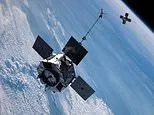
A 1,300-pound NASA satellite hurtles toward Earth, poised for an uncontrolled atmospheric reentry on Tuesday after nearly 14 years in orbit.
Tracking data indicates the Van Allen Probe A will reenter around 7:45 p.m. ET, though the timing could shift by up to 24 hours due to its high speed of thousands of miles per hour.
Low Risk of Harm from Debris
Most of the spacecraft will burn up during reentry, with only some components potentially surviving. The chance of injury from falling debris stands at about 1 in 4,200, or 0.02 percent. Oceans cover 70 percent of Earth’s surface, making impacts over water far more likely than near populated areas.
The U.S. Space Force monitors the probe and notes that reentry predictions will refine as new data arrives.
Solar Activity Accelerates Descent
The mission concluded in 2019, with initial projections for reentry in 2034. However, the sun’s solar maximum in 2024 created intense space weather, boosting atmospheric drag and hastening the spacecraft’s fall.
Mission Legacy in Radiation Belt Research
From 2012 to 2019, Van Allen Probe A and its twin, Probe B, navigated Earth’s Van Allen radiation belts—rings of charged particles trapped by the planet’s magnetic field. These belts protect against cosmic radiation, solar storms, and solar wind that threaten humans and technology.
NASA states: ‘The Van Allen Probes A and B launched on August 30, 2012, and gathered unprecedented data on Earth’s two permanent radiation belts, named for scientist James Van Allen, for almost seven years.’
The agency terminated operations when the probes depleted their fuel and could no longer orient toward the sun.
NASA adds: ‘Data from the Van Allen Probes mission still plays an important role in understanding space weather and its effects. By reviewing archived data from the mission, scientists study the radiation belts surrounding Earth, which are key to predicting how solar activity impacts satellites, astronauts, and even systems on Earth, such as communications, navigation, and power grids. By observing these dynamic regions, the Van Allen Probes contributed to improving forecasts of space weather events and their potential consequences.’
Van Allen Probe B is not due to reenter until after 2030.