The federal government’s national firearms buyback initiative is facing significant criticism, particularly from the Coalition, due to delays in its rollout across Australian states and territories. While an agreement has been reached with New South Wales, negotiations with other jurisdictions, including Victoria, remain stalled, prompting accusations of a “failed” scheme.
Coalition Slams ‘Failed’ Gun Buyback Scheme
The Coalition has voiced strong opposition to the national gun buyback program, labeling it a “knee-jerk response” to a recent tragedy that unfairly targets law-abiding firearm owners. Nationals leader Matt Canavan asserted that his party stands against the Labor government’s actions, which he believes trample on the rights of responsible citizens. “We see today the Labor Party doubling down on what already is a failed gun buyback response,” Canavan stated. He described the initiative as a “desperate attempt to keep on life support a scheme that was announced in the light of a tragedy, with no consultation, no forward-thinking, and is now causing enormous heartache for law-abiding Australians.” Canavan urged the government to abandon the plan, stating, “It just needs to be dropped. It just needs to be gotten rid of.”
NSW Agrees to Buyback Scheme, Other States Hesitate
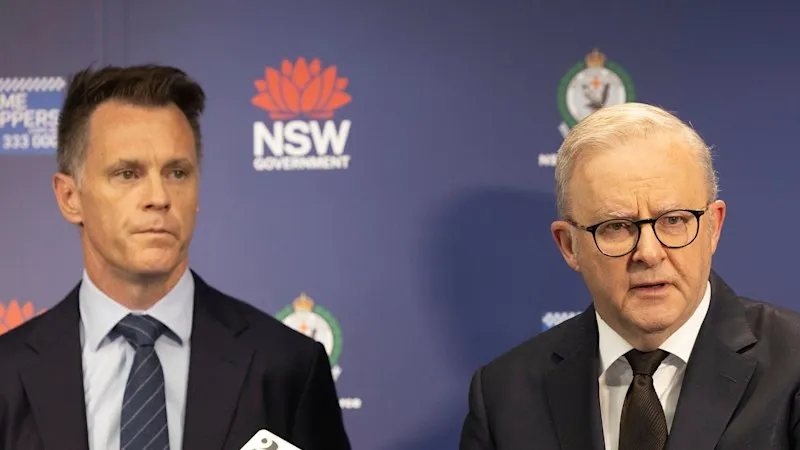
Prime Minister Anthony Albanese announced on Sunday that the firearms buyback scheme would commence in New South Wales on November 2, following an agreement with NSW Premier Chris Minns. Under this agreement, firearm owners in NSW will be eligible to receive between $450 and $1000 for individual weapons, with the costs shared equally between the state and federal governments. The total cost of the scheme has not yet been disclosed. Premier Minns acknowledged the expense, stating, “I’m not going to skirt it. It’s expensive, but it’s a price worth paying.” Prime Minister Albanese emphasized the greater “cost of inaction” in terms of potential loss of life.
Despite the progress in NSW, other states and territories have shown reluctance to join the national buyback. Queensland and the Northern Territory, led by Coalition governments, have expressed strong opposition. The federal government intends to use an upcoming national cabinet meeting to encourage broader participation.
Victorian Government’s Stance on Buyback
In Victoria, the government has indicated a cautious approach. Newly appointed Premier Ben Carroll stated that he would seek advice from Victoria Police Chief Commissioner Mike Bush regarding the necessary resources before committing to the scheme. This follows a previous rejection of the push by former Premier Jacinta Allan. Commissioner Bush commented that the buyback is “a matter for the government” and affirmed his commitment to ensuring Victorian police have adequate resources to combat crime. Premier Carroll is preparing for a challenging election campaign, facing competition from the Coalition and One Nation.
Opposition and Support for the Initiative
The buyback scheme, while not a dominant public debate topic since its announcement, has drawn criticism from various political groups and firearm owner associations. One Nation leader Pauline Hanson echoed the sentiment that the policy unfairly targets legal gun owners, describing it as “crucifying those legal gun owners.” She also questioned the necessity of taxpayer funding for the initiative.
Similarly, the federal Liberal Party, through opposition home affairs spokesman Jonno Duniam, has criticized the government’s handling of the scheme. “Labor announced a national gun buyback, but what Albanese has delivered is a deal with one state. That tells you everything about how badly Labor has handled this from the beginning,” Duniam stated. He reiterated the argument that the buyback makes “scapegoats” of firearm owners.
Gun retailers have also expressed concerns about the proposed valuations. Chris Byrne, manager of Tough Gear, described the offered amounts as “a laughable amount,” noting that individual pistols alone can cost between $2500 and $3000, excluding additional magazines. He argued that the low valuations would act as a disincentive for owners to voluntarily surrender their weapons, likening it to offering a fraction of a car’s market value for its surrender.
Kym Adams, treasurer of the ACT’s Sporting Shooters Association, highlighted the financial implications for households with significant firearm and accessory collections. Her own household possesses firearms and accessories valued at approximately $75,000, associated with her husband’s profession as a shooter. Adams expressed concern that the plan overlooks the value of accessories and eliminates the secondary market for such items, leaving law-abiding citizens feeling penalized.
Support and Calls for Political Courage
Conversely, Gun Control Australia spokesman Piers Grove applauded the NSW announcement and urged other states to follow suit. He drew parallels to the 1996 buybacks implemented under the Howard government, calling for similar political courage. “Australians are almost universally proud of that reform, and we’re absolutely stuffing it up this time with political expedience. We need to put public health as the north star as we go through this and put it above politics,” Grove urged.
Future Phases and Government’s Position
The national firearms buyback scheme is planned to include a second phase, scheduled to begin in early 2027. This phase will target higher-value firearms, with compensation ranging from $3000 to $10,000 per firearm. Additionally, grants of up to $25,000 will be available to licensed gun retailers.
Prime Minister Albanese remains committed to the initiative, encouraging hesitant states to participate. He has characterized the Commonwealth as a “willing partner” and indicated that avenues for negotiation remain open. The government views the buyback as a necessary measure to enhance public safety, contrasting the financial cost with the potential human cost of inaction.
Despite the ongoing debate and opposition, the federal government appears determined to proceed with the national firearms buyback, emphasizing its commitment to public safety while navigating complex negotiations with state and territory governments.