Nintendo continues to see a significant portion of its game sales come from physical copies, indicating a sustained commitment to cartridges and discs for the foreseeable future. Between March 30 and June 30, 2026, the company reported that 38.5% of its software sales were physical, a figure that suggests boxed games remain a vital part of its business model.
Nintendo’s Sales Breakdown
During the first fiscal quarter ending March 2027, Nintendo’s financial report detailed that 61.5% of its sales were digital purchases. This category encompasses a broad range of digital offerings, including full game downloads, downloadable content (DLC), add-on software, and Nintendo Switch Online subscriptions. Notably, the report also specified that digital sales revenue saw a substantial 90% year-on-year increase, reaching 132.7 billion yen. The proportion of digital sales also saw a slight rise of 2.2% compared to the same period in the previous year.
Software unit sales for the upcoming Switch 2 console demonstrated strong performance, increasing by 9.2% year-on-year to 9.46 million units. Meanwhile, sales for the original Nintendo Switch console’s software experienced an even more impressive surge, growing by 38.6% year-on-year to 33.81 million units. This dual growth highlights the continued relevance and appeal of Nintendo’s current and next-generation hardware.
Understanding the Digital Sales Figures
It is important to note that Nintendo’s reported digital sales figure of 61.5% includes various digital revenue streams beyond just full game downloads. These also account for:
- Nintendo Switch Online subscriptions
- Upgrades to Switch 2 editions
- Download-only titles
- Purchases of downloadable content (DLC)
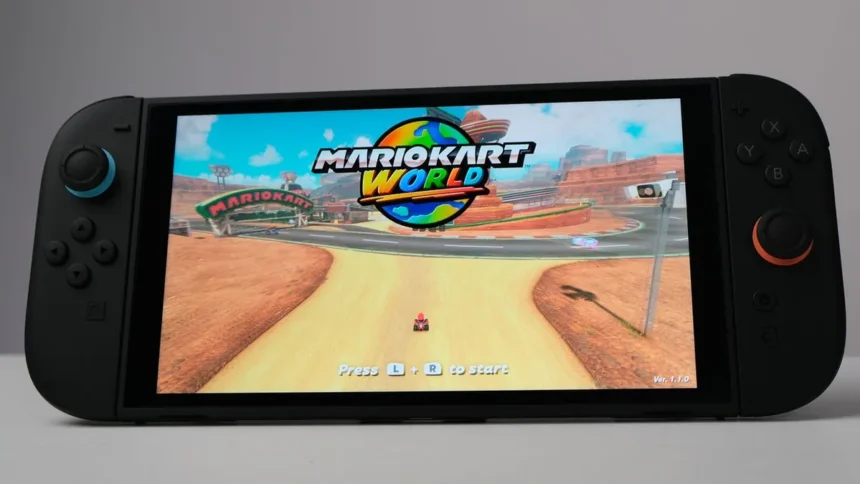
Furthermore, the company clarified that digital copies of games bundled with hardware, such as a hypothetical Mario Kart World, are not counted within software sales revenue. Instead, the revenue generated from these bundled titles is classified under hardware sales. Nintendo stated, “As a result, although bundled software such as Mario Kart World is included in the number of software units sold, the corresponding revenue is not recognized as software sales or digital sales.” This accounting practice means the actual revenue from physical game sales might be even higher than the reported 38.5% suggests.
Implications for Physical Media
The sustained strength of physical game sales at Nintendo stands in contrast to trends observed with other major players in the industry. Sony, for instance, has publicly stated its intention to cease the production of game discs by January 2028. While Sony has indicated a cautious approach to this transition, acknowledging some backlash from consumers, the move signifies a broader industry shift towards digital distribution.
In contrast, Nintendo’s nearly 40% share of physical sales indicates that the company is unlikely to abandon its cartridge-based format or physical disc releases for consoles anytime soon. This strategy likely caters to a significant segment of its player base that prefers owning physical copies for collection, resale, or simply the tactile experience of a game box and manual. The company’s continued success with hardware bundles that include physical games further reinforces this approach.
Industry Trends and Nintendo’s Position
The gaming industry is navigating a complex transition between physical and digital sales. While many publishers, like Capcom, report that the vast majority of their sales (around 90%) are digital and thus less impacted by the decline of physical media, Nintendo occupies a unique position. Its strong brand loyalty, family-friendly image, and distinct hardware often lead to different consumer purchasing habits.
The ongoing success of the original Switch, even with the anticipation of the Switch 2, demonstrates the enduring appeal of Nintendo’s ecosystem. The robust performance of both new and older titles in physical format suggests that Nintendo will continue to support its physical distribution channels, offering players choices that align with their preferences. This dual approach—embracing digital growth while maintaining a strong physical presence—appears to be a cornerstone of Nintendo’s strategy for sustained market success.
Conclusion
With nearly 40% of its software sales still originating from physical copies, Nintendo is demonstrating a clear commitment to the cartridge and disc format. This strategy, supported by strong sales figures for both its current and upcoming consoles, positions Nintendo uniquely within an industry increasingly dominated by digital downloads. The company’s ability to cater to both digital and physical preferences ensures it remains a formidable force in the global gaming market.