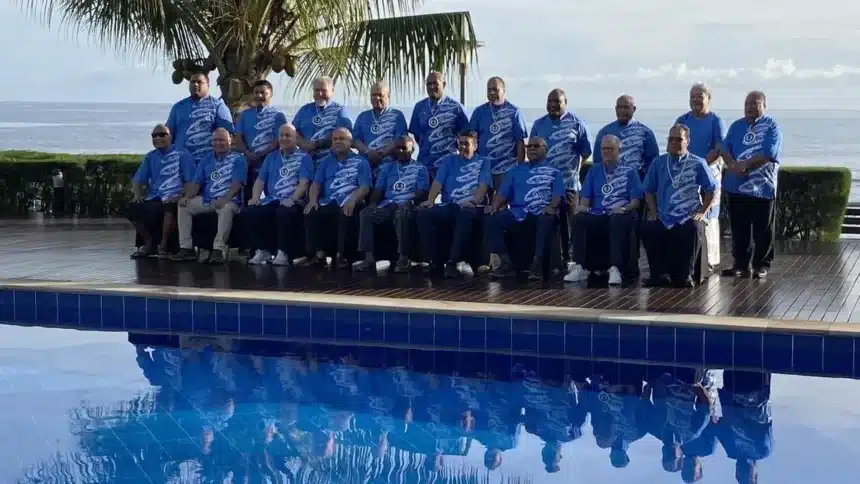
The upcoming Pacific Islands Forum (PIF) summit in Palau is facing a significant challenge to its unity, with a notable number of leaders potentially absent. This situation has raised concerns about regional cohesion, with some officials privately suggesting that external geopolitical pressures may be contributing to the pull-outs. Australian Prime Minister Anthony Albanese is set to lead Australia’s delegation to the annual meeting in Palau, arriving on Monday.
Key Leaders Absent from Pacific Summit
Reports indicate that as many as seven leaders may not attend the summit, citing various reasons including domestic political considerations, health issues, or what are described as unspoken acts of defiance. Leaders from Fiji, Kiribati, Samoa, Solomon Islands, and Vanuatu are confirmed to be absent. There remains uncertainty regarding the participation of counterparts from Nauru and New Caledonia.
The absence of leaders from Kiribati and the Solomon Islands is particularly concerning from a regional perspective. While other nations are expected to send deputies or foreign ministers, Kiribati’s decision to send a senior public servant—a former ambassador to China—in place of President Taneti Maamau has drawn particular attention. This move comes shortly after Micronesia began formalizing ties with Beijing within its constitution, a development that has reportedly caused unease in Canberra. President Maamau has attributed his absence to travel difficulties and a conflict with his parliamentary schedule.
Solomon Islands Leadership Shift
Solomon Islands Prime Minister Matthew Wale has also conveyed his apologies for not attending. However, his departure from Palau over the weekend was prompted by domestic political developments. Mr. Wale was among leaders who utilized a New Zealand Defence Force flight from Auckland and Brisbane to reach Palau. His early departure on Sunday followed a motion of no confidence initiated by his Home Affairs Minister, Manasseh Maelanga. The minister cited Mr. Wale’s alleged failure to consult on significant decisions as the basis for the motion.
This leadership challenge within the Solomon Islands occurs after Mr. Wale, who is 58 years old, signaled a shift towards a more Australia-friendly foreign policy and initiated negotiations for a new treaty. Concerns have been raised by Australian officials that these internal political dynamics might be linked to these ongoing negotiations and potentially influenced by external actors, including China.
External Influence Suspected
New Zealand shares similar suspicions, with its officials believing that the participation of major powers is playing a role in the leaders’ decisions to withdraw from the summit. New Zealand’s Foreign Minister, Winston Peters, expressed significant disappointment regarding Kiribati’s absence, stating that it was “hugely disappointing.” When questioned about the possibility of foreign interference, Mr. Peters did not dismiss the notion, remarking to journalists in Palau, “You’d be defying gravity and logic if you said it wasn’t a big problem.”
Officials from both Australia and New Zealand acknowledge that leader absences are not unprecedented at PIF summits. Nevertheless, they maintain that the forum’s core function will persist, though they concede that such absences do not aid the process. Mr. Peters is representing Prime Minister Chris Luxon, who is scheduled to arrive two days after Mr. Albanese, as both nations navigate upcoming elections.
Palau Hosts Expanded Summit
Organizers anticipate welcoming approximately 2,000 international visitors to Koror for the summit. Following a more restricted meeting in Honiara last year, Palau’s President Surangel Whipps Jr. has opened the event to a broader range of nations. Consequently, many global powers are sending delegations to participate.
The United States delegation will be led by Deputy Secretary of State Chris Landau, and Taiwan’s Foreign Minister Lin Chia-lung is also expected to attend. Australia’s delegation will include Climate Minister Chris Bowen and Pacific Minister Pat Conroy, accompanying Prime Minister Albanese.
Conclusion
The Pacific Islands Forum summit in Palau faces a critical juncture as several leaders’ absences cast a shadow over regional unity. While official reasons vary, underlying concerns about geopolitical influence and domestic political pressures are evident. Despite these challenges, Australia and New Zealand are emphasizing the continued importance and resilience of the Forum, as Palau prepares to host a diverse array of international participants.