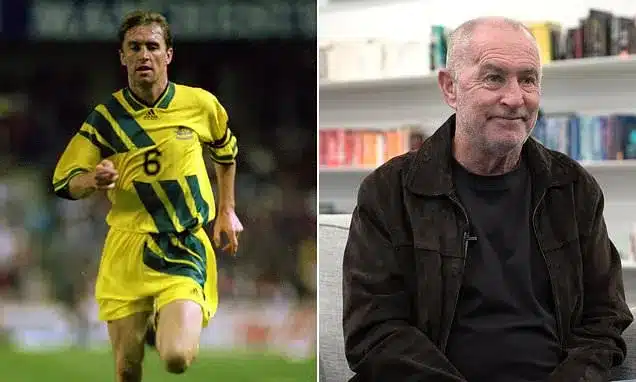
Former Socceroos captain Paul Wade has publicly shared his diagnosis of probable chronic traumatic encephalopathy (CTE), a neurodegenerative disease linked to repeated head impacts. The 64-year-old, who represented Australia 84 times and captained the national team on 46 occasions, revealed his condition through a statement released by Professional Footballers Australia (PFA). While CTE can only be definitively diagnosed after death, medical professionals can provide a probable diagnosis during a person’s lifetime.
Understanding the CTE Diagnosis
Paul Wade’s journey to this diagnosis involved extensive consultation with his neurologist, Dr. Rowena Mobbs. Despite not recalling any significant concussions during his extensive football career, doctors believe that the cumulative effect of frequent, sub-concussive blows to the head, such as those sustained from heading a football repeatedly, can lead to the development of CTE. This understanding highlights that CTE is not solely a consequence of diagnosed concussions but can arise from the sheer volume of head impacts over time.
Wade expressed the profound impact of the diagnosis, stating, “Receiving a diagnosis of probable CTE has been difficult. But I have decided to speak publicly because I know there may be other players and families facing similar questions.” He emphasized his motivation for sharing his story: “If sharing my experience can help someone seek support, create better education and prevention, or help the game take brain health more seriously, then it is worth doing.”
He further elaborated on the stark reality of his condition, recounting a conversation with Dr. Mobbs where she informed him of the terminal nature of CTE. “When the neurologist said, ‘It’s terminal. Go and make some memories,’ that’s when reality kicks in,” Wade shared. “I’m gonna die of this. I might not die for 20 years, I might get hit by a bus, but there is no cure.” This realization underscored for him the critical need for greater awareness, particularly the understanding that CTE can develop even without a history of concussions.
A Career Defined by Aerial Prowess
Paul Wade enjoyed a distinguished career spanning 345 games in Australia’s National Soccer League. His tenure as captain of the Socceroos from 1990 to 1996 was marked by his leadership and commanding presence in midfield. He was particularly renowned for his aerial ability, a skill honed through countless headers during matches and training sessions throughout his playing days.
His former teammate, Craig Foster, who played alongside Wade for the national team, paid tribute to him on social media. Foster described Wade as “one of not only Australian football’s legends, but one of the truly great gentlemen of our game.” He acknowledged the resonance of Wade’s diagnosis within the football community and praised Wade’s continued leadership in advocating for player safety. “Typical of Paul, still showing leadership, as he always did. Wanting to ensure that the game he loves, and that loves him, is completely safe,” Foster wrote.
Calls for Enhanced Brain Health Protections
In light of Wade’s diagnosis, his neurologist, Dr. Rowena Mobbs, is advocating for significant changes to protect young athletes. She is calling for a ban on heading the ball in junior football in Australia, an initiative already adopted in England for players under the age of 12. Additionally, the English Football Association has implemented restrictions on heading during training sessions for older age groups.
Dr. Mobbs stressed the importance of proactive measures, stating, “Ultimately, it’s about being positive and progressive in football. As a neurologist, I call for a reduction in heading for players, including removing all heading under 12.” She added, “We want kids entering the great sport of football today to be their brain best both on the field and throughout life. You only get one brain.”
The Professional Footballers Australia (PFA) has indicated plans for further research into the impact of head trauma in the sport. This aligns with Wade’s hope that his public disclosure will spur greater attention to brain health within football. “We need to understand the exact risks across all ball and impact sports to ensure that future generations are protected, and completely safe,” Foster commented, reflecting the broader sentiment within the sport.
Looking Forward: Education and Prevention
Paul Wade’s decision to speak out is a significant step towards raising awareness about the long-term risks associated with repetitive head impacts in football. While he is careful not to discourage participation, stating, “I do not want to discourage anyone from playing football, as I think there are so many positive health benefits,” he underscores the necessity of informed decision-making.
His message calls for a balanced approach: acknowledging the joys and benefits of football while confronting the potential dangers. The focus is on ensuring that players, families, and governing bodies have access to comprehensive information and robust support systems. The ultimate goal is to implement effective strategies for prevention and management, safeguarding the brain health of current and future generations of footballers. Wade’s legacy is increasingly tied not only to his on-field achievements but also to his courageous advocacy for a safer sporting environment.