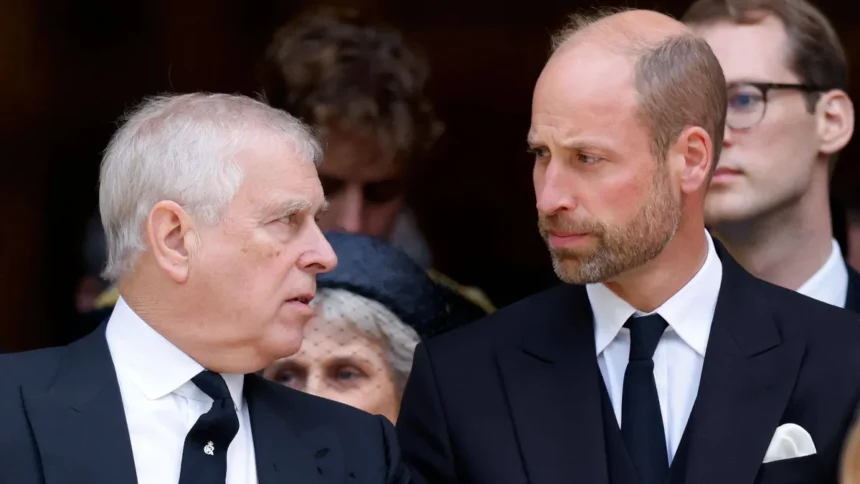
Public perceptions long portrayed a stark divide in the royal family’s handling of Prince Andrew. The late Queen Elizabeth II stood firmly by her favored son, providing financial assistance for his out-of-court settlement with Virginia Giuffre. She expressed pain over his withdrawal from public duties and maintained his status, including his escort at the Duke of Edinburgh’s memorial service.
Prince William appeared as his uncle’s strongest critic. After the 2022 Platinum Jubilee and Order of the Garter ceremony, he established a firm boundary: no public role for Andrew on the world stage. This view solidified when William, godson of the late King Constantine of Greece, withdrew from the Greek monarch’s memorial service while Andrew attended.
King Charles III’s Balancing Role
King Charles III navigated the tensions, showing resolve tempered by his mother’s wishes. New insights uncover a softer private dynamic, contrasting the public distance William maintained post-Epstein scandal.
A Pivotal Private Gesture
Reports indicate Prince William personally called Prince Andrew to offer sympathy after the official loss of his titles—a move Andrew found profoundly touching. This outreach marked a shift, prioritizing family ties behind closed doors.
October 2025 Turning Point
October 2025 brought decisive changes. U.S. Department of Justice documents in the Epstein case dashed any redemption hopes, implicating Andrew and ex-wife Sarah Ferguson through files, photos, and messages. Facing intense political and media scrutiny, King Charles III revoked Andrew’s remaining titles—largely symbolic—and required his exit from Royal Lodge in Windsor.
While the King distanced the monarchy publicly, Prince William set aside differences to contact his uncle, extending condolences amid the House of York’s challenges.
Complex Royal Dynamics
This episode underscores intricate Windsor family ties, echoing the Sussexes’ departure. Blood relations clash with curated public narratives, managed by isolated households, PR teams, and private secretaries.
Andrew settled his civil case without trial and faces no criminal charges or convictions. Yet, the U.S. evidence volume deems him a liability for the Crown.
Evolution of Royal Image Management
Modern image control emerged in the late 1990s to rehabilitate then-Prince Charles ahead of his marriage to Queen Camilla. Prince William has refined it, assembling a elite team from global brands like the Beckhams. Scandals—whether Duchy of Cornwall finances or Epstein-linked donors—get swiftly contained.
He cultivates a modern, relatable family image while shielding his private life more than his childhood exposure allowed. The Windsors thus run dual tracks: precision-tuned public personas and private bonds that often diverge from the script.