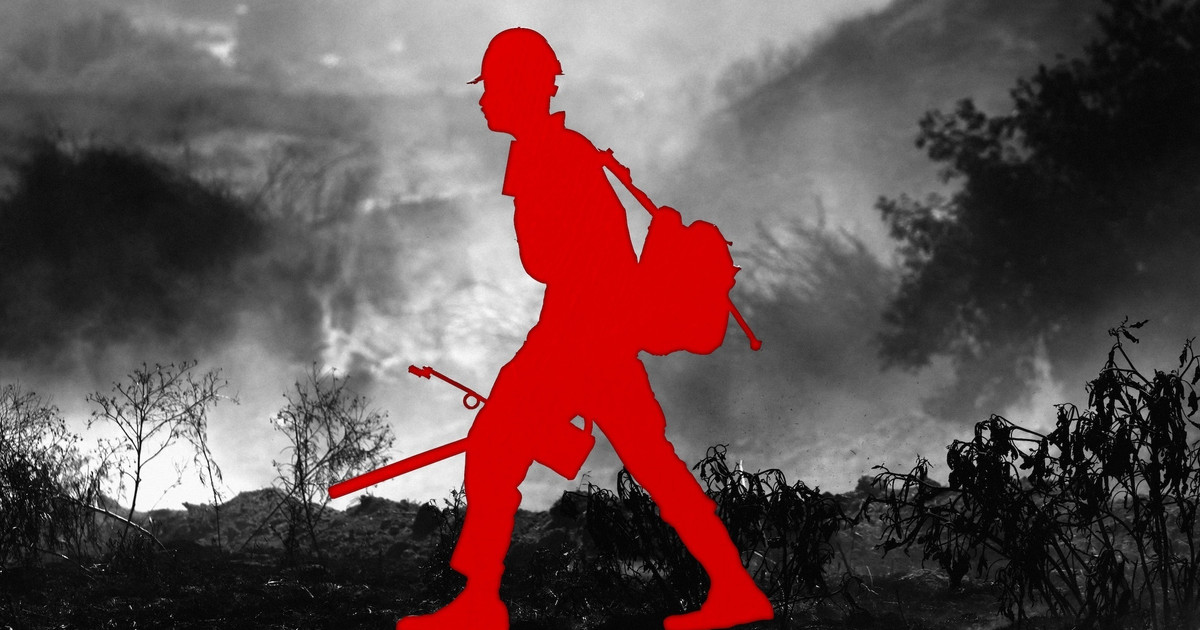
![[Rappler’s Best] Our Facebooking troopers](https://www.rappler.com/tachyon/2026/01/120126-Our-Facebooking-soldiers.jpg "[Rappler’s Best] Our Facebooking troopers")
That is AI generated summarization, which can have errors. For context, at all times seek advice from the total article.
Content material creation ‘deployed in a vacuum, with out institutional oversight, and unaided by a coherent technique’ turns troopers into useless clout chasers
“Noong mga batang reporter tayo, ang mga sundalo panay ang kudeta. Ngayon, panay Fb kuda.” (After we have been younger reporters, troopers mounted varied coup makes an attempt. These days, they rant on Fb.)
That was my remark, punctuated with an LOL emoji, in a small chat group I’ve with previous mates as information concerning the sacking of an Military colonel broke on Friday, January 9.
Not that I’m advocating for a coup as an alternative of kuda. Nevertheless it bears noting that leaders within the defense-military institution have regarded away for a lot too lengthy from the social media habits of their soldiers-turned-content creators — habits which have rewired their brains, reshaped their behaviors, decreased their perspective on warfare to sheer propaganda, and diminished the career.
The previous week noticed two Facebooking officers — one on energetic responsibility, the opposite lengthy retired — getting punished for what basically have been the persona they acquired by means of the numerous likes and shares that they’ve harvested on social media.
- On Monday, January 5, the police arrested retired air pressure normal Romeo Poquiz on the airport upon his arrival from a trip in Thailand, over his allegedly seditious posts on-line. Poquiz (109,000 Fb followers as of Monday, January 12) has been blasting anti-corruption, anti-government posts on Fb and helped set up the United Individuals’s Initiative, a gaggle of army pensioners who joined the large September protest rallies final yr towards the flood management scandal. He was capable of mobilize only a few protesting retirees. Previous to this, a gathering that they sought with Armed Forces chief of employees Romeo Brawner Jr., which was granted, later churned out narratives about an impending coup that had the supposed muscle of the Iglesia ni Cristo. A flurry of leaks and denials adopted — typical army psyops that some swallowed hook, line, and sinker.
- Who’s Poquiz? A 1981 graduate of the Philippine Army Academy (the category that as soon as dominated the police-military institution below the late president Noynoy Aquino), Poquiz’s final put up earlier than retiring in 2014 was chief of the air pressure’s 2nd air division that exercised command and management over all air property within the Visayas. Former president Rodrigo Duterte rewarded him with board memberships after he retired: on the Bases Conversion Improvement Authority and later, the Philippine Nationwide Oil Firm. Primarily based on his earlier posts, he campaigned actively for the Uniteam of then-presidential candidate Bongbong Marcos and then-vice presidential candidate Sara Duterte within the 2022 elections. When the Uniteam broke up, Poquiz was a Marcos critic.
- He’s a staunch defender of Military Colonel Audie Mongao, who was relieved on January 9 from his put up on the Military’s Coaching Command after his Fb declaration that he was withdrawing his “private” help from President Ferdinand Marcos Jr. His Fb account as a “digital creator” has gained greater than 3,000 followers.
- It didn’t assist that simply days earlier than, Mongao’s commander, Main Normal Michael Logico (himself energetic on Fb), took his oath as a newly promoted normal earlier than the President, together with different officers.
The irony is, the defense-military management had unleashed a weapon on social media that’s now ranged towards it. Beneath Duterte, it inspired, coddled, and guarded active-duty officers and troopers who peddled lies, red-tagged harassed activists and journalists, and engaged in political punditry on Fb and YouTube.
Commanders embraced social media as an efficient propaganda weapon of their unending wars and particularly in mild of China’s subtle information warfare — with out rigor in its implementation nor take care of its consequence. On Fb, troopers shed off their uniforms and acted like another consumer: posting selfies and groupies, sharing boodle-fight meals and travels, making psywar pages, after which, ultimately, placing up a number of faux accounts that focused Duterte critics. On YouTube, they created their very own channels.
They received contaminated with the algorithmic virus that boosted their popularity, made them fall in love with themselves and their kuda, and took time away from the core habits — AND restrictions — of soldiery.
- In 2020, we uncovered the chief of the Nationwide Intelligence Coordinating Company on the time, Alex Monteagudo, as a constant sharer of fakery on Fb from as early as 2016, when he used faux data as the idea of a report he submitted to the Senate. He justified this by saying they mirrored the “inventive expressions of our folks.” Examine it right here.
- Let’s not neglect the star influencer of all of them, retired normal Antonio Parlade, who, as a robust Military commander below Duterte, red-tagged journalists and activists, prompting the army to probe him. In 2023, the Ombudsman reprimanded him and his anti-communist companion Lorraine Badoy. He’s nonetheless at it. Not too long ago, Parlade red-tagged a revered lawyer and environmentalist, Tony La Viña (a board director of Rappler).
- The Philippine Nationwide Police used social media to harass suspected drug addicts throughout Duterte’s brutal drug warfare. Examine it right here.
- The protection and army leaderships below Duterte defended these overt warfare strategies when army models received entangled in varied controversies involving their use of Fb. An Military captain and two others have been recognized as being behind a community of accounts that Fb suspended for displaying inauthentic habits. We took a deep dive on this story.
- In 2014, earlier than Duterte got here to energy, the army held its first social media summit, with round a thousand troopers in attendance. The occasion launched a 45-page social media handbook for the Military that “will remind us of our unwavering accountability as troopers.” I ponder what occurred to that handbook, or if it’s been revised in any respect.
In in the present day’s age of cognitive warfare, content material creation is a tactic that any revered armed establishment should deploy. However deployed in a vacuum, with out institutional oversight, and unaided by a coherent technique, such a tactic turns troopers into useless, clout chasing content material creators. Normal Brawner wants to repair this — assuming he is aware of it wants fixing.
Listed below are a few of Rappler’s bests that you just shouldn’t miss:
Val Villanueva takes aside the political and enterprise context behind the rise and big-ticket transactions of Batangas Consultant Leandro Leviste. Ombudsman Boying Remulla mentioned the younger congressman is being probed for “promoting” his photo voltaic vitality franchise to Manny V. Pangilinan.
Dwight de Leon seems into the so-called recordsdata of the late public works undersecretary Cathy Cabral, who performed a important function within the authorities’s big infra tasks.
Raymund Narag tackles the James Deakin controversy — and the way the Land Transportation Workplace paperwork handled it.
Igor Blazevic, a democracy activist, questions the current go to of Philippine International Secretary Maria Theresa Lazaro to Myanmar.


– Rappler.com
Rappler’s Greatest is a weekly e-newsletter of our prime picks delivered straight to your inbox each Monday. Go to rappler.com/newsletters to subscribe.
The views expressed by the author are his/her personal and don’t essentially mirror the views or positions of Rappler.