Extraordinary Birth Offers Hope for Critically Endangered Primates
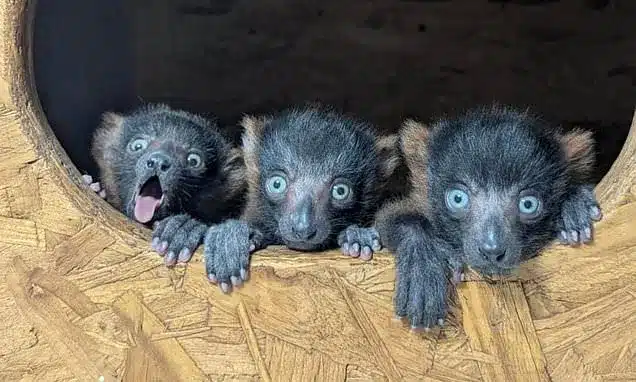
An exceptionally rare event has unfolded at a United Kingdom zoo, with a critically endangered red-ruffed lemur successfully giving birth to quadruplets. This remarkable event is being hailed as a significant triumph for the species’ conservation efforts.
A Remarkable Breeding Success
Zoo experts expressed immense delight following the birth of the four healthy pups to Eka, a red-ruffed lemur, and her mate Nero. While twin births are not uncommon for this species, quadruplets are an exceedingly rare occurrence, representing less than six percent of all births globally.
The arrival of these four young lemurs marks a pivotal moment for the European breeding program, established to secure the future of red-ruffed lemurs. The newborns are already under the dedicated care of the zoo’s animal welfare team, with their first-time mother, Eka, actively tending to them.
Hopes for Increased Awareness
Zak Showell, director of the Shaldon Wildlife Trust, commented on the significance of the event. “To have four healthy infants at once is a real testament to the care our team provides,” Showell stated. “It’s a huge win for the species and a proud moment for Shaldon.”
The quadruplets are integral to the European Association of Zoos and Aquariums breeding program, which strives to protect the red-ruffed lemur population across Europe. This species is native to a limited region in northeastern Madagascar and is classified as critically endangered.
Conservation Efforts Beyond the Zoo
In addition to its role in the breeding program, the Shaldon Wildlife Trust actively contributes to conservation initiatives within Madagascar through its field partner, the Lemur Conservation Association. Conservationists are optimistic that the birth of these rare quadruplets will significantly enhance public awareness regarding the threats confronting one of the world’s most imperiled primate species.
Visitors to the zoo may soon have the opportunity to observe the young lemurs as they grow more active and confident within their habitat.