At Austin Wildlife Rescue in Texas, one thing odd is doing extraordinary work. Among the many baggage of pet food, stacks of paper towels, and containers of gloves that arrive from beneficiant neighbors, one humble merchandise reliably steals the present. Outdated denims, comfortable from years of damage, are being reworked into the coziest little hammocks for rescued raccoons and their fellow wild orphans. On the earth of wildlife rehabilitation, the place each scrap of help can imply a second probability, these denim donations have quietly develop into as beneficial as any bag of kibble.
The group at Austin Wildlife Rescue, usually known as AWR, depends on the neighborhood to maintain their operation working. Dry pet food retains their younger residents wholesome and full. Cleansing provides like paper towels, gloves, and plastic bins assist employees and volunteers preserve the sanitary areas these weak animals rely upon. But when somebody walks by way of the door with a pile of worn-out denims, the joy is completely different. These denims should not simply material. They’re future beds, hiding spots, and play areas for raccoons, squirrels, and opossums studying easy methods to navigate the world once more.
Fb/Austin Wildlife Rescue
AWR explains that they use donated denims to create hammocks for the small mammals of their care, calling that “denim hammock life” an elite stage of animal consolation. It might sound whimsical to image raccoons lounging in suspended pant legs, however the idea is rooted in sensible, animal-centered design. The denim mimics a pure den in a manner that’s surprisingly efficient. Material surrounds the animals, offering heat, comfortable help, and a way of security that arduous enclosures alone can’t supply.
That is particularly essential for orphans which have misplaced the safety of a guardian and a nest. Within the wild, younger raccoons, squirrels, and opossums would relaxation in hole bushes, burrows, or different sheltered areas. The drape of denims in hammock type provides them a comfortable nook that echoes that feeling of enclosure. Based on AWR, this material setup helps them really feel extra at dwelling, even whereas they’re in a rehabilitation heart as a substitute of a forest or area.

Fb/Austin Wildlife Rescue
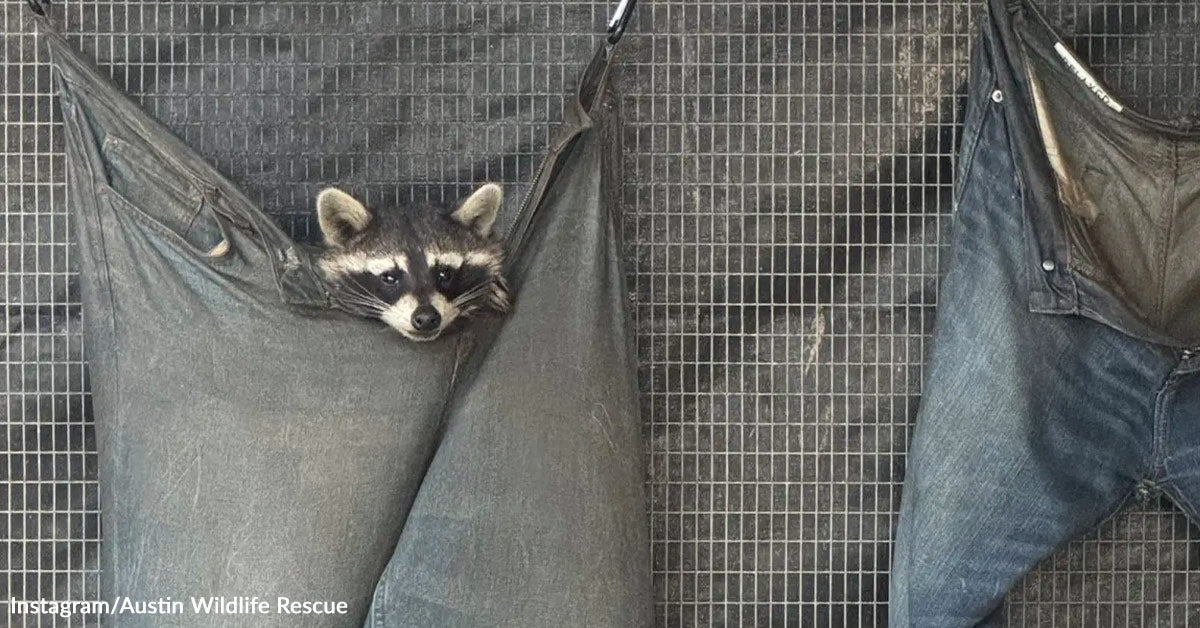
The method of turning outdated denim into wildlife hammocks is charming in its simplicity. Workers members take every pair of denims, tie the pant legs shut, then connect the denims to enclosure partitions with sturdy carabiners. In moments, a well-recognized piece of clothes turns into a cosy swing, prepared for curious little residents. As soon as the hammock is in place, the animals do the remaining. AWR describes them eagerly climbing in, typically a number of at a time, till the hammock is filled with tiny faces and paws.
One in all AWR’s shared snapshots tells the story clearly. In a single pair of denims, not less than 4 raccoons managed to tuck themselves into the accessible pockets of house, with one seen on high and one other peeking out of the underside. It’s a humorous and endearing picture, but it additionally captures the deeper goal behind these makeshift beds. The denims present a secure, contained place for social animals to nest collectively, to really feel shut and safe as they develop robust sufficient to be launched again into the wild.
From a sensible standpoint, not all materials carry out equally in a rehabilitation setting. AWR factors out that denim has distinct benefits for tiny paws and claws. The material is sturdy and robust, able to standing as much as climbing, scratching, and the occasional tug-of-war with out tearing aside instantly. On the identical time, it doesn’t simply snag on nails, which reduces the chance of minor accidents that would complicate an animal’s restoration.
Denim additionally balances heat and breathability in a manner that serves the animals nicely. It helps insulate in opposition to drafts with out turning into stifling. Based on AWR, the fabric permits airflow whereas nonetheless offering a comfortable refuge. For animals that want steady, comfy circumstances whereas they heal and develop, that mixture issues. Outdated denims, it seems, are exceptionally nicely suited to the job.
There’s something particularly putting about how resourceful this resolution is. As a substitute of discarding clothes that not suits or has worn skinny on the knees, neighborhood members can prolong the lifetime of these denims in a completely new course. Within the fingers of wildlife rescuers, every pair turns into half of a bigger cycle of care. What as soon as accompanied somebody by way of their each day routine may subsequent cradle a younger raccoon because it naps, clutching the material with small fingers.
For AWR, each donation performs an element in getting animals prepared for launch. Pet food offers vitality, cleansing provides defend their well being, and outdated denim helps recreate the consolation of a pure den. That help system prepares raccoons, squirrels, and opossums to transition from a secure indoor hammock again to the bushes, burrows, and hidden corners of the landscapes they belong to. Every hammock is short-term, identical to their keep on the rescue, however it helps bridge the hole between rescue and launch.
There may be additionally a quiet emotional energy in these denim hammocks. AWR notes that seeing a rescued raccoon curled up in a pair of well-loved denims turns into a visible reminder of neighborhood care in motion. Individuals contribute one thing so simple as an outdated pair of pants, and the result’s a small life resting extra comfortably, gaining the boldness to face the wild once more. It’s a tactile, seen hyperlink between on a regular basis generosity and significant change for weak animals.
Wildlife rehabilitation will be intense, usually involving lengthy hours, medical care, and cautious monitoring. In that context, the sight of raccoons, squirrels, and opossums tucked into comfortable denim turns into extra than simply cute. It displays the creativity and dedication of those that work to offer wild orphans a second probability and the willingness of native residents to play their half. When somebody provides a raccoon a pair of denims, as AWR places it, it turns into virtually unimaginable to not smile at what that straightforward act of giving has made doable.



![[Pastilan] When a congressman’s ‘thought crime’ goes public](https://www.rappler.com/tachyon/2026/03/pastilan-bong-suntay-sexual-remarks-March-4-2026.jpg "[Pastilan] When a congressman’s ‘thought crime’ goes public")