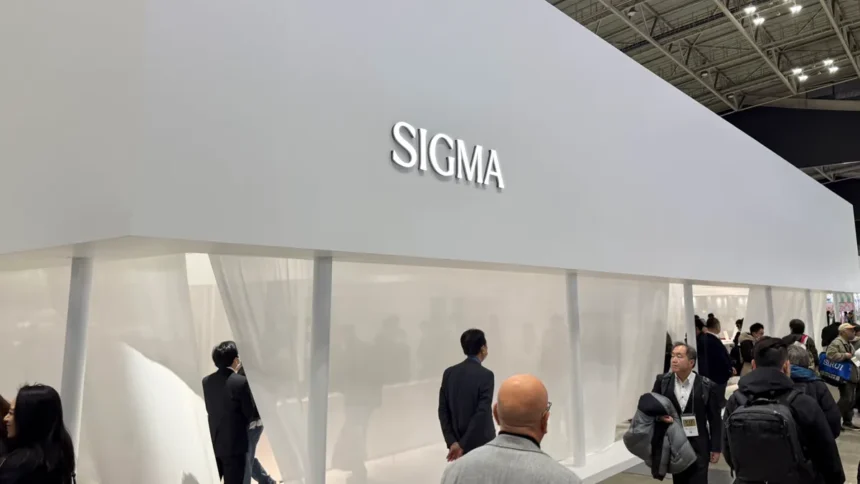
Sigma continues to broaden its lens and camera offerings with innovative products tailored for diverse photographers. Recent releases include the 300-600mm f/4 lens for wildlife and sports, alongside the striking all-metal Sigma BF camera that generated significant buzz.
New Lenses at CP+ 2026
At CP+ 2026, Sigma introduced two fresh lenses: the 15mm f/1.4 APS-C in the Contemporary series and the 35mm f/1.4 full-frame in the Art series. The company also announced development of the 85mm f/1.2 Art lens. These additions blend entirely new designs with upgrades to existing models, resulting in Sigma’s most comprehensive lens portfolio across formats and focal lengths to date. This positions Sigma as a leading third-party lens maker renowned for quality.
CEO Kazuto Yamaki on Strategic Plans
In a discussion on Sigma’s latest lenses and long-term goals amid rising competition from proprietary brands and emerging East Asian manufacturers, CEO Kazuto Yamaki outlined the company’s vision. “Our current plan is to have a full lineup of lenses for various cameras,” Yamaki explains. “Within that, the prime lens is one of the most important segments for us because we have a reputation for building high-quality prime lenses. With that, we think that the 15mm f/1.4 lens is a strong addition to the APS-C camera lineup, and we see the 50mm f/1.4 as a replacement for our previous 60mm lens because, although the focal length is a bit different, we see it as being an improvement in quality over a lens that we have had in the market for a long time.”
Navigating Competition from Chinese Manufacturers
Sigma produces its lenses in Japan using local materials and labor, drawing on decades of expertise to create groundbreaking optics like the 135mm f/1.4. While this approach maintains higher costs compared to some rivals, it delivers superior quality. Chinese brands such as Viltrox have gained traction with affordable, well-regarded lenses.
Yamaki acknowledges their progress but emphasizes Sigma’s advantages. “We make all our lenses in Japan, and ‘Made in Japan’ costs more due to the cost of labor and materials,” he states. “That creates a challenge for us, as compared to the East Asian manufacturers; because we buy materials here and make it here, we are not able to be the cheapest on the market. However, where we make our lenses in Aizu [Japan], we’ve operated our factory for 50 years and it’s common for people to have joined the company in high school or university and stay here until they retire at the age of 60 or 65. These accumulated decades of experience give us an edge and are important for making a high-quality product.”
“I’ve honestly been amazed by the progress that these manufacturers from China have made. I have a lot of respect for them. Overall, however, we believe there is a significant difference in quality while we also offer a huge range of lenses. For example, even if a lens uses digital components within them, the analog manufacturing and basic technology is a very different challenge. It’s still necessary to tightly pack the lenses together, to manually adjust each element, to polish the glass, and that takes experience. When it comes to digital, it’s easy to copy and make a similar product, but when it comes to analog manufacturing processes, the gap exists.”
Ambitions for Optics Leadership and Cameras
Sigma aims to dominate optics like Japan’s Daikin in air conditioning. “Our goal is to become the best optics company,” Yamaki says. “We want Sigma to hold that title in camera and lens manufacturing, which means we must satisfy all photography enthusiasts, not just studio photographers but wildlife photographers and anyone who cares about the quality of their lenses. That also requires us to innovate, too.”
The Sigma BF has received strong user praise, exceeding expectations. Regarding future cameras beyond the BF and FP, including potential compacts, Yamaki remains measured. “I’m very happy to see younger people and teenagers using old compact cameras, and we need to satisfy this new audience,” he notes. “But to maintain the production of such a camera in Japan is challenging, and I don’t think it would be good for Sigma to just chase a trend we don’t know could end in 6-12 months. As a family-owned company, I think about the company or business long-term for 10, 20, 30 years from now.”
Yamaki stresses nurturing lifelong camera users amid AI advancements. “We need to ease people into becoming long-term camera users, but there’s no right answer for that,” he adds. “In the future, the essence of photography will remain the same even in an AI age, and we need to support that. Today, it’s not just photographers who care about cameras, but musicians, creators, architects. We want to be one of the best camera manufacturers, too.”
Sigma plans unique cameras rather than mainstream full-frame models, aspiring to indie status in the industry.