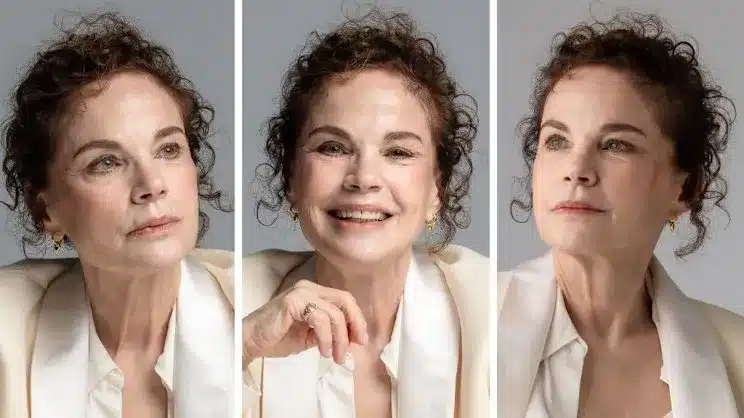
Veteran Australian actress Sigrid Thornton is stepping into the role of Yente, the spirited matchmaker, in a new production of the beloved musical Fiddler on the Roof. While Thornton humorously admits her personal matchmaking attempts have had mixed results, she is embracing the theatrical challenge of portraying one of musical theatre’s most iconic characters. Yente, a widow and a ‘shadchanit’ or professional matchmaker, navigates the social landscape of a turn-of-the-century Russian Jewish shtetl, pragmatically arranging marriages for the community’s inhabitants.
Sigrid Thornton’s Return to the Shtetl
This is not Thornton’s first foray into the world of Fiddler on the Roof. A decade ago, she played Golde, the wife of the central character Tevye, in an Australian staging. Her return to the production, this time as Yente, is driven by the opportunity to inhabit another memorable role and to collaborate with acclaimed American director Jordan Fein. Fein’s fresh interpretation of the musical has garnered significant attention, having previously been a hit in London.
Thornton, who has a notable history in musical theatre including a role in Stephen Sondheim’s A Little Night Music, expressed her enthusiasm for working with an orchestra and the unique demands of musical productions. Although Yente does not have solo singing parts, Thornton anticipates the joy of performing with a chorus of trained singers. She finds the experience of musicals distinct from straight dramatic acting, requiring a different sense of timing and performance.
A Contemporary Lens on a Classic Musical
Director Jordan Fein’s production aims to imbue Fiddler on the Roof with renewed relevance for contemporary audiences. Fein’s approach, while respecting the original material, seeks to make the story set in 1905 feel pertinent to today’s world. This is achieved not through modern dress or sets, but by highlighting the enduring themes within the narrative. The production has already received critical acclaim, including multiple Olivier Award nominations in London, and won awards for Best Set Design and Best Musical Revival.
The Australian cast features Troy Sussman as Tevye and Alexis Fishman as Golde. Sydney violinist Ben Adler will portray the Fiddler, who in Fein’s vision serves as a melodic extension of Tevye’s inner thoughts and words. The production’s visual design, by Tom Scutt, features a stripped-back set dominated by a symbolic wheat field, representing the Anatevka shtetl.
The Enduring Themes of ‘Fiddler on the Roof’
Fiddler on the Roof, a cornerstone of musical theatre, has resonated with audiences since its Broadway debut in 1964. The story centers on Tevye, a poor milkman struggling to maintain his Jewish traditions amidst changing social and political landscapes, while raising his five daughters. Yente’s role in arranging marriages, often based on practicality rather than romance, highlights the community’s adherence to tradition. Yente’s own pragmatic view of marriage, encapsulated in her saying, “Even the worst husband, God forbid, is better than no husband, God forbid,” reflects the societal pressures of the time.
The musical’s plot unfolds as Tevye’s daughters increasingly challenge the established order by choosing their own partners, leading to conflict with tradition and the wider community. The narrative is underscored by the looming threat of expulsion from their home by Tsarist authorities, a stark reminder of historical persecution.
Director’s Personal Connection
Jordan Fein, a 39-year-old director, brings a personal connection to Fiddler on the Roof. Having grown up in a Jewish household, he describes the musical as “literally my family’s story.” His grandparents emigrated from near Kyiv in 1910 for reasons mirroring those of the Anatevka villagers. Fein’s conversations with his grandmother during the development of the production deepened his understanding and connection to the material and his own heritage.
Fein views the musical not just as entertainment but as a powerful medium for emotional expression. He likens disliking musicals to disliking ice cream, suggesting the variety of forms and emotional impact is often underestimated. He believes musicals can articulate feelings and tap into human emotions in ways that spoken word cannot always achieve.
Interpreting Classic Texts
Addressing the notion that established musicals can become stagnant, Thornton emphasizes the potential for fresh interpretations. She argues that classic texts offer a wealth of possibilities for re-imagining, and actors are driven to bring their unique perspectives to roles. Fein echoes this sentiment, noting that his appreciation for the musical grew as he delved into its script and score, discovering its humor and its poignant theme of parents learning about love from their children.
Political and Humanist Dimensions
Beyond its focus on family and tradition, Fiddler on the Roof is inherently political, set against a backdrop of state-sanctioned violence and displacement. The musical depicts the historical pogroms that forced millions of Jews from their homes in Russia. While some critics suggest the musical sanitizes this dark history, its themes of persecution and dispossession remain potent.
The production’s run in London coincided with heightened geopolitical tensions, leading to security measures and public discussion about the musical’s potential to become a focal point for protests. Fein and Thornton acknowledge the political resonance of the work, with Fein stating that “dispossession is a universal theme” and that the story “rhymes with so many situations that are happening in the world right now.” Thornton views the show as a humanist piece exploring community, connection, and family love, themes that are highly relevant globally.
Feminist Perspectives on Yente
Thornton, a self-proclaimed feminist, addressed the potential perception of Yente as an instrument of female repression. She argues that Yente, despite being constrained by traditional expectations, demonstrates resilience and determination. Thornton highlights the strength of the female characters in the musical, who, even within societal limitations, assert their own agency. Yente’s character, in particular, is portrayed as someone who, even in the face of devastation, maintains composure and a forward-looking attitude, embodying a spirit of perseverance.
Key Takeaways
- Sigrid Thornton stars as Yente, the matchmaker, in a new production of Fiddler on the Roof.
- The production is directed by Jordan Fein, who brings a contemporary sensibility and personal connection to the musical.
- Fiddler on the Roof explores themes of tradition, family, love, and persecution, resonating with contemporary issues.
- Thornton and Fein emphasize the musical’s humanist message and its relevance to current global events.
- The role of Yente is interpreted by Thornton as a resilient character navigating societal constraints.
Frequently Asked Questions
What is Sigrid Thornton’s role in Fiddler on the Roof?
Sigrid Thornton plays Yente, the community’s matchmaker, a character known for her pragmatic approach to arranging marriages in the Russian Jewish shtetl.
What makes this production of Fiddler on the Roof unique?
Director Jordan Fein’s production aims to make the classic musical feel relevant to modern audiences by highlighting its enduring themes, rather than altering the setting or costumes. It has received critical acclaim for its fresh interpretation.
How does the musical address political themes?
Fiddler on the Roof is set against the backdrop of historical persecution and the threat of expulsion faced by Jewish communities in Russia. The production acknowledges the political and personal dimensions of dispossession, linking them to contemporary global issues.
Fiddler on the Roof is scheduled to run at Sydney’s Theatre Royal from July 31 to October 3, followed by seasons in Brisbane and Melbourne.