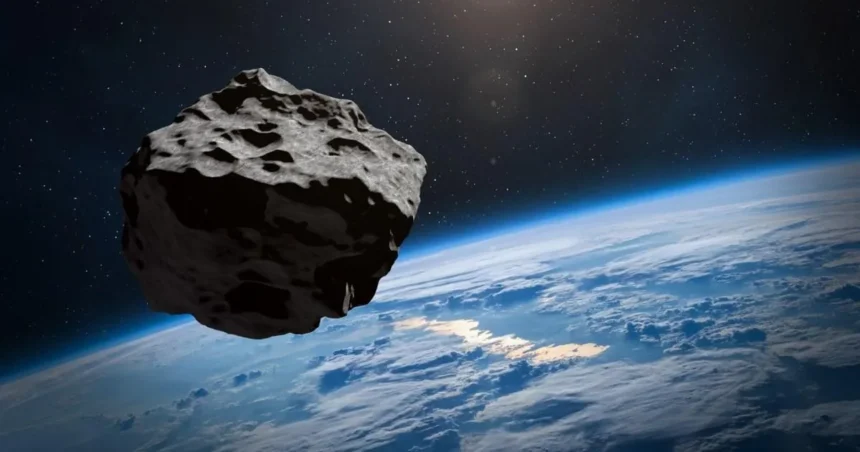
A massive asteroid, approximately 540 feet wide, struck the North Sea just 80 miles off the East Yorkshire coast 43 million years ago. The impact generated a towering 330-foot tsunami and carved out the Silverpit crater, a two-mile-wide scar on the seabed named after a nearby underwater channel.
Discovery of the Silverpit Crater
British oil geologists identified the crater in 2002, buried under 700 meters of sediment and debris. Scientists initially attributed it to seabed collapse from shifting underground salt layers. Recent analysis, however, confirms an extraterrestrial origin comparable in size to York Minster.
Definitive Evidence from Seismic Imaging
Dr. Uisdean Nicholson, a sedimentologist at Heriot-Watt University in Edinburgh, examined seismic images of the 12-mile-wide structure, marked by concentric rings. He discovered shocked quartz and feldspar crystals around the crater—minerals formed only under extreme pressures from asteroid impacts.
“These prove the impact crater hypothesis beyond doubt, because they have a fabric that can only be created by extreme shock pressures,” Dr. Nicholson stated. “Within minutes, it created a 1.5km high curtain of rock and water that then collapsed into the sea, creating a tsunami over 100 meters high.”
Expert Insights and Future Research
Professor Gareth Collins of Imperial College London developed numerical models supporting the impact theory as the simplest explanation. “It is very rewarding to have finally found the silver bullet,” he said. “We can now get on with the exciting job of using the amazing new data to learn more about how impacts shape planets below the surface, which is really hard to do on other planets.”
Silverpit ranks among approximately 200 confirmed impact sites worldwide, many undated. Earth’s dynamic geology—earthquakes and erosion—often erases such evidence over millions of years.
Broader Implications for Earth History
These findings help explain how asteroid impacts influenced planetary evolution and inform predictions for potential future collisions. Dr. Nicholson added, “We can use these findings to understand how asteroid impacts shaped our planet throughout history, as well as predict what could happen should we have an asteroid collision in future.”
Other notable craters include Chicxulub off Mexico’s Yucatán Peninsula, linked to the dinosaur extinction 66 million years ago. Its blast, equivalent to 100 million hydrogen bombs, triggered global firestorms and dust clouds that wiped out dinosaurs, plants, fish, and plankton. Nearby sites like Boltysh in Ukraine, dated similarly, suggest a barrage of impacts contributed to the mass extinction.
Humanity narrowly avoided a close call in 2024 with asteroid 2024 YR4, initially estimated at a 3.1% collision risk on December 22, 2032, over densely populated areas like Mumbai or Lagos. Current assessments reduce that to about 0.00081%, or one in 123,000.