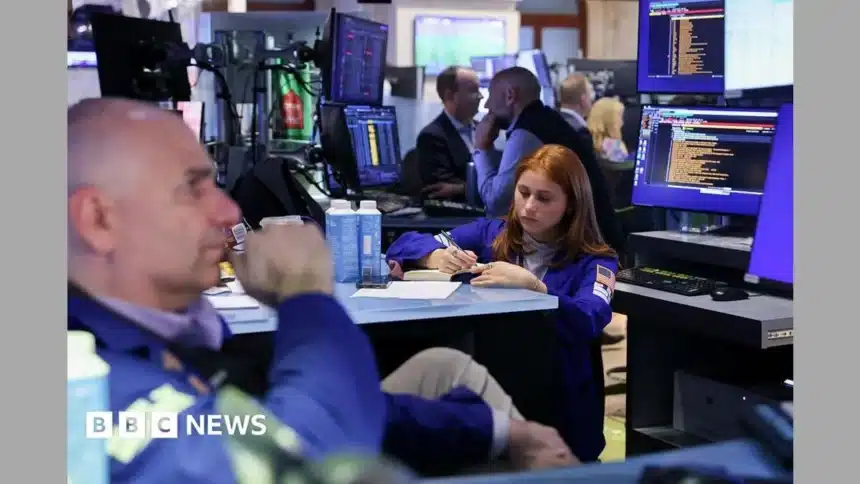
Financial markets experienced a significant downturn on Tuesday as a wave of selling pressure hit major technology shares, casting doubt on the long-term viability of the artificial intelligence boom. The tech-heavy Nasdaq Composite index saw a decline of approximately 2%, mirroring losses in international chipmakers. This pullback reignites concerns that soaring market valuations may have lost their upward momentum following an aggressive three-month ascent.
AI Enthusiasm Meets Market Reality
For several months, global stock exchanges have been propelled by sheer optimism surrounding AI advancements. While this enthusiasm consistently drove indices to record highs, the sustained 90-day rally has led to what many now perceive as inflated stock prices. On Tuesday, this upward trajectory faltered as market observers began questioning whether actual corporate adoption of AI technologies can genuinely justify the current premium valuations.
The downturn disproportionately affected semiconductor manufacturers, including prominent players like Nvidia and Intel. This led to a substantial slide in a primary index tracking global chip firms. This development suggests that investors may have accelerated their funding of the underlying hardware infrastructure for the AI revolution, perhaps too rapidly.
Newly Public SpaceX Faces Volatility
The anxious market sentiment quickly extended to other high-profile assets. Elon Musk’s recently public aerospace company, SpaceX, found itself caught in the broader market turbulence. Following its public debut on June 12, the Texas-based firm has endured a highly volatile trading session. This volatility underscores the vulnerability of newly listed companies when overall tech sentiment sours.
SpaceX’s share price initially dropped below its crucial $150 flotation price. However, the stock managed a modest recovery, settling around $160 by the close of trading. Some optimistic traders interpreted this rebound as a sign of persistent underlying interest in the commercial space sector. Conversely, skeptics point to these sharp price swings as evidence of the highly speculative nature of the current market environment.
Analyst Outlook Divided
Market analysts are currently divided on the future direction of tech investments. There is no consensus on whether this sell-off represents a healthy, temporary correction or the beginning of a more significant market retreat.
Optimistic View: A Healthy Pause
The more optimistic perspective suggests that the current profit-taking is a natural reaction following an unprecedented period of growth. Vivek Arya from Bank of America supported this viewpoint in a recent client note. Arya posited that a combination of persistent inflation and strengthening demand will ultimately lead to upward revisions in sector forecasts. He argued that the industry is transitioning from a phase of defending initial returns to one focused on addressing physical infrastructure and power constraints.
Skeptical View: End of Easy Gains
In contrast, a growing number of skeptics contend that cooling corporate IT budgets and broader economic pressures signal the end of the era of easy market gains. This shift in sentiment was reflected by Danni Hewson, head of financial analysis at AJ Bell. Hewson observed that the relative scarcity of technology stocks on London’s markets helped the FTSE 100 maintain a positive performance, even as Wall Street experienced significant declines.
Looking Ahead: Earnings and Profitability
As the trading week progresses, Wall Street will be closely monitoring upcoming corporate earnings reports. These results will be crucial in determining whether major tech companies can demonstrate that their substantial AI investments are generating tangible profits, moving beyond mere marketing hype.