[ad_1]
As we speak's AI problem is about agent coordination, context, and collaboration. How do you allow them to really assume collectively, with all of the contextual understanding, negotiation, and shared function that entails? It's a vital subsequent step towards a brand new sort of distributed intelligence that retains people firmly within the loop.
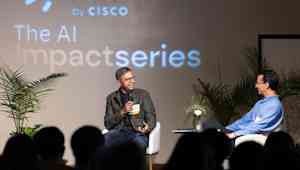
On the newest cease on VentureBeat's AI Affect Sequence, Vijoy Pandey, SVP and GM of Outshift by Cisco, and Noah Goodman, Stanford professor and co-founder of People&, sat down to speak about tips on how to transfer past brokers that simply connect with brokers which can be steeped in collective intelligence.
The necessity for collective intelligence, not coordinated actions
The core problem, Pandey mentioned, is that "brokers right this moment can join collectively, however they will't actually assume collectively."
Whereas protocols like MCP and A2A have solved fundamental connectivity, and AGNTCY tackles the issues of discovery, identification administration to inter-agent communication and observability, they've solely addressed the equal of constructing a cellphone name between two individuals who don't communicate the identical language. However Pandey's staff has recognized one thing deeper than technical plumbing: the necessity for brokers to attain collective intelligence, not simply coordinated actions.
How shared intent and shared data allow collective innovation
To grasp the place multi-agent AI must go, each audio system pointed to the historical past of human intelligence. Whereas people turned individually clever roughly 300,000 years in the past, true collective intelligence didn't emerge till round 70,000 years in the past with the appearance of subtle language.
This breakthrough enabled three vital capabilities: shared intent, shared data, and collective innovation.
"Upon getting a shared intent, a shared aim, you’ve got a physique of data which you could modify, evolve, construct upon, you may then go in the direction of collective innovation," Pandey mentioned.
Goodman, whose work bridges pc science and psychology, defined that language is excess of simply encoding and decoding data.
"Language is this type of encoding that requires understanding the context, the intention of the speaker, the world, how that impacts what folks will say with a view to determine what folks imply," he mentioned.
This subtle understanding is what scaffolds human collaboration and cumulative cultural evolution, and it's what’s presently lacking from agent-to-agent interplay.
Addressing the gaps with the Web of Cognition
"We have now to imitate human evolution,” Pandey defined. “Along with brokers getting smarter and smarter, similar to particular person people, we have to construct infrastructure that permits collective innovation, which suggests sharing intent, coordination, after which sharing data or context and evolving that context.”
Pandey calls it the Web of Cognition: a three-layer structure designed to allow collective pondering amongst heterogeneous brokers:
Protocol layer: Past fundamental connectivity, these protocols allow understanding, dealing with intent sharing, coordination, negotiation, and discovery between brokers from completely different distributors and organizations.
Cloth layer: A shared reminiscence system that enables brokers to construct and evolve collective context, with emergent properties arising from their interactions.
Cognition engine layer: Accelerators and guardrails that assist brokers assume sooner whereas working inside essential constraints round compliance, safety, and value.
The problem is that organizations have to construct collective intelligence throughout organizational boundaries.
"Take into consideration shared reminiscence in a heterogeneous method," Pandey mentioned. "We have now brokers from completely different events coming collectively. So how do you evolve that reminiscence and have emergent properties?"
New basis coaching protocols to advance agent connection
At People&, somewhat than relying solely on further protocols, Goodman’s staff is basically altering how basis fashions are skilled not solely between a human and an agent, however between a human and a number of brokers, and particularly between an agent and a number of people.
"By altering the coaching that we give to the inspiration fashions and centering the coaching over extraordinarily lengthy horizon interactions, they'll come to grasp how interactions ought to proceed with a view to obtain the best long-term outcomes," he mentioned.
And, he provides, it's a deliberate divergence from the longer-autonomy path pursued by many massive labs.
"Our aim isn’t longer and longer autonomy. It's higher and higher collaboration," he mentioned. "People& is constructing brokers with deep social understanding: entities that know who is aware of what, can foster collaboration, and put the best specialists in contact on the proper time."
Establishing guardrails that assist cognition
Guardrails stay a central problem in deploying multi-functional brokers that contact each a part of a corporation's system. The query is tips on how to implement boundaries with out stifling innovation. Organizations want strict, rule-like guardrails, however people don't truly work that method. As an alternative, folks function on a precept of minimal hurt, or pondering forward about penalties and making contextual judgments.
"How do we offer the guardrails in a method which is rule-like, but additionally helps the outcome-based cognition when the fashions get good sufficient for that?" Goodman requested.
Pandey prolonged this pondering to the fact of innovation groups that want to use the principles with judgment, not simply comply with them mechanically. Determining what’s open to interpretation is a “very collaborative activity,” he mentioned. “And also you don't determine that out by means of a set of predicates. You don't determine that out by means of a doc. You work that out by means of widespread understanding and grounding and discovery and negotiation."
Distributed intelligence: the trail to superintelligence
True superintelligence received't come from more and more highly effective particular person fashions, however from distributed programs.
"Whereas we construct higher and higher fashions, and higher and higher brokers, ultimately we really feel that true tremendous intelligence will occur by means of distributed programs," Pandey mentioned
Intelligence will scale alongside two axes, each vertical, or higher particular person brokers, and horizontal, or extra collaborative networks, in a fashion similar to conventional distributed computing.
Nonetheless, mentioned Goodman, "We will't transfer in the direction of a future the place the AIs go off and work by themselves. We have now to maneuver in the direction of a future the place there's an built-in ecosystem, a distributed ecosystem that seamlessly merges people and AI collectively."
[ad_2]