On a winter day almost a century in the past, a quiet revolution started that may change the lives of people who find themselves blind all around the world. The primary information canine faculty in America, often called The Seeing Eye, opened its doorways and began coaching canine to behave as trusted companions and navigators. At this time the concept of a information canine is well known, but the primary organized effort to create a information canine faculty is surprisingly current in comparison with the lengthy historical past of human and canine companionship.
Archaeological and genetic analysis means that canine have been domesticated someplace between 10,000 and 32,000 years in the past. That span reaches again 1000’s of years earlier than written historical past. Over that point canine have been hunters, guards, herders, and members of the family. They’ve labored on farms and battlefields, in cities and distant settlements. Towards that backdrop, it’s placing to comprehend that information canine for the blind solely started to appear about 100 years in the past, and that one decided younger man performed a central position in that growth.
In 1927, a blind American teenager named Morris Frank got here throughout a report that may alter the course of his life. The report described a small group of canine in Europe that had been educated to assist World Battle I veterans who had misplaced their sight. The concept a canine might serve not solely as a companion but additionally as an lively information was nonetheless new and untested for many of the world. But for Frank, it represented a possibility to achieve higher independence and to indicate others who have been blind {that a} totally different form of life may be potential.
The coach featured within the report was Dorothy Harrison Eustis, an American dwelling in Switzerland. She had been working with canine and exploring their capabilities in a structured, rigorous approach. When Frank contacted her, he was reaching throughout an ocean to somebody who shared his perception in what canine might do. Eustis agreed to assist, and that call set in movement a collaboration that may firmly set up the idea of seeing eye canine in public consciousness.
Frank traveled to Switzerland to work instantly with Eustis and to be paired with a canine that may very well be educated as his information. The canine he acquired was named Buddy. Collectively, human and canine practiced navigating environments that have been busy and unpredictable. They realized to work as a crew, with the canine taking the lead in avoiding obstacles and the handler deciphering delicate cues by way of the harness and leash. This required not solely cautious coaching but additionally a deep stage of belief.
In 1928 Frank returned to the USA with Buddy at his facet. To show {that a} educated information canine might reliably help a blind individual in complicated city circumstances, he organized a public demonstration in New York Metropolis. Reporters have been invited to observe as Frank and Buddy navigated the crowded streets, shifting by way of bustling sidewalks and site visitors with the canine guiding every step. The occasion drew consideration not simply because it was uncommon, however as a result of it clearly confirmed a brand new form of partnership between an individual and a canine.
In response to the account, the demonstration was a hit. Observers noticed that Buddy didn’t merely comply with instructions. As a substitute, the canine took on the accountability of recognizing hazards and steering Frank round them. This sort of “clever disobedience,” the place a information canine refuses a command that may lead its handler into hazard, turned one of the crucial celebrated indicators of efficient information canine coaching. The demonstration supplied a vivid instance of how a educated canine might broaden the independence of somebody who was blind.
The momentum from that occasion led on to the founding of the primary information canine faculty in the USA. On January 29, 1929, in Nashville, Tennessee, Frank formally established The Seeing Eye. It was conceived as a spot the place canine and people who find themselves blind may very well be matched, educated, and supported in a structured approach. The opening of the varsity reworked what had been an experimental concept into an organized program that others might be a part of.
The earliest days of The Seeing Eye have been modest. The primary graduating class, in February 1929, included solely two college students and two canine, named Tartar and Gala. A classic {photograph} from that point exhibits this small group on the very starting of a motion that may ultimately span many nations and cultures. From these first pairings, the varsity started to construct a coaching philosophy that handled canine as expert working companions whereas additionally recognizing the deep emotional bonds that naturally kind between information canine and their handlers.
Over time, The Seeing Eye relocated from Nashville to New Jersey, the place it continues to function at present. It holds the excellence of being the oldest nonetheless current information canine faculty on this planet. From its campus, generations of rigorously chosen and educated canine have gone on to serve people who find themselves blind or visually impaired, serving to them transfer by way of their communities, journey, work, and dwell with higher autonomy.
The varsity’s affect has prolonged past day-to-day information canine coaching. The Seeing Eye has additionally performed a job in areas corresponding to canine genetics and illness management, striving to keep up wholesome breeding strains in order that information canine can take pleasure in lengthy, lively working lives. The establishment has contributed to discussions about public coverage associated to blindness, together with entry rights for information canine groups in public areas. As information canine turned extra acquainted to the general public, legal guidelines and norms regularly advanced to acknowledge that an individual partnered with a information canine ought to be capable to enter eating places, experience public transportation, and navigate shared environments with out pointless obstacles.
The story of The Seeing Eye additionally matches into a bigger historical past of canine in occasions of warfare and peace. The identical period that produced information canine for blinded veterans additionally noticed well-known navy canine corresponding to Sergeant Stubby in World Battle I or the canine related to Basic Patton in World Battle II. These examples spotlight the broad vary of roles canine have taken on, from the battlefield to the town sidewalk, at all times adapting their expertise to the wants of the people alongside them.
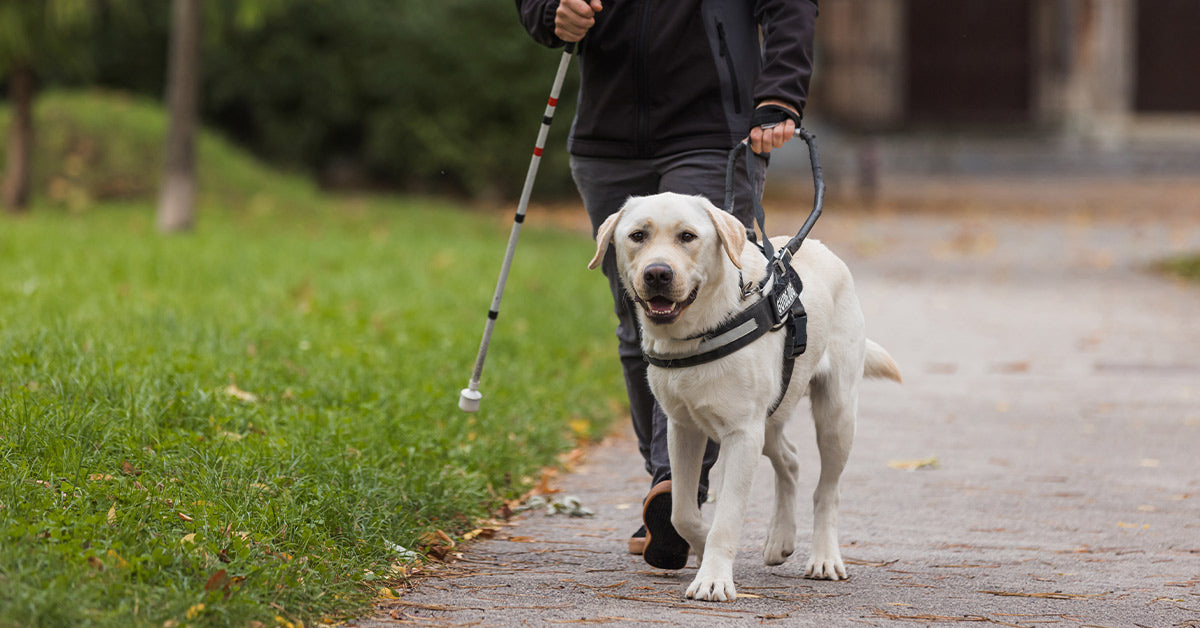
Wanting again, it’s exceptional {that a} follow now thought of an ordinary a part of blindness providers was as soon as an experiment carried out between a young person in search of independence, a coach in Switzerland, and a single canine named Buddy. From that place to begin grew a pioneering group in New Jersey and a mannequin that different information canine faculties around the globe have adopted. The enduring legacy of The Seeing Eye is seen each time a information canine and handler transfer along with confidence by way of a busy road, persevering with a partnership that started in a small classroom nearly 100 years in the past.