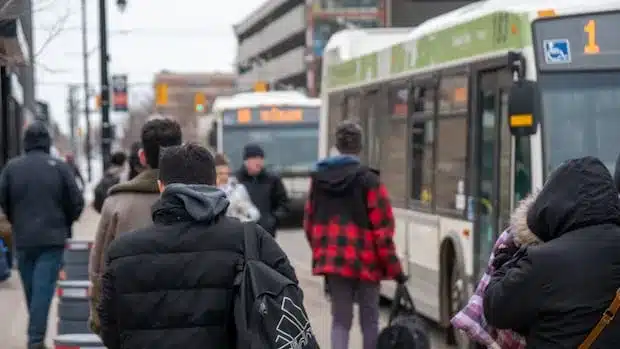
Thunder Bay City Council has rejected proposed temporary adjustments to the city’s transit schedule amid ongoing driver shortages causing frequent cancellations.
Proposal Details and Vote Outcome
The plan aimed to decrease bus frequency on numerous routes while boosting service on the Mainline route during summer months. Council defeated the measure in a Tuesday vote.
The adjustments would have operated from May 10 to August 22, aligning service with available staff, enhancing reliability, reducing cancellations, and supporting stability during driver recruitment efforts, according to transit management.
Union Response
“Obviously the union is very pleased with the outcome,” stated Fred Caputo, president of Amalgamated Transit Union Local 966, representing Thunder Bay transit operators. “We’re actually very happy that the council took the time to address all the issues that we brought up, and to actually look into the reduction and the impact it’s going to have on the public.”
Caputo noted that council posed direct questions to transit management, highlighting the need for further work. He expressed hope for additional meetings between the union and management to tackle transit challenges.
Service Delivery Statistics
Current service delivery stands at about 96 percent, with a target of 99 percent. Summer forecasts predict a drop to 92 percent. Maintaining current summer service requires 84 operators, but only 79 are anticipated—58 full-time and 21 part-time—with 52 unavailable due to sick leave, vacation, or other absences.
Approval of the reductions would require 77 operators to achieve 99 percent delivery.
Councillor’s Perspective
Current River Councillor Andrew Foulds, who opposed the proposal, described the transit system as “precarious,” with cancellations severely impacting riders heading to work or appointments.
“I think a robust transit system is defining for a municipality, and right now transit is struggling,” Foulds said. He receives numerous complaints about operator absenteeism and various contributing factors.
Foulds rejected the plan for lacking a long-term fix. “The reality is, there was a real tension between reliability and levels of service,” he explained, noting that unlike high-frequency systems in larger cities like Toronto, Thunder Bay riders already invest significant planning time.
“People are already doing an extraordinary amount of planning, spending an enormous amount of time on transit, to get to, say, an eight-hour shift, and it’s adding a significant amount of time onto their day,” Foulds added. “By adding even more time to that, it’s challenging for citizens.”
Next Steps and Terminal Update
Transit management is now evaluating next steps following the rejection.
Separately, the city announced further delays in reopening the Waterfront Transit Terminal. “There’s been a delay on some of the exterior finishing products,” explained Bobbi Tait, supervisor of capital facility construction. This includes exterior cladding and soffit materials under the canopy.
The terminal overhaul now targets a mid-to-late April opening, with the temporary Cumberland Street hub—between Van Norman and Camelot—remaining operational until then. Upgrades include an expanded passenger area, new canopy, and improved operator space.