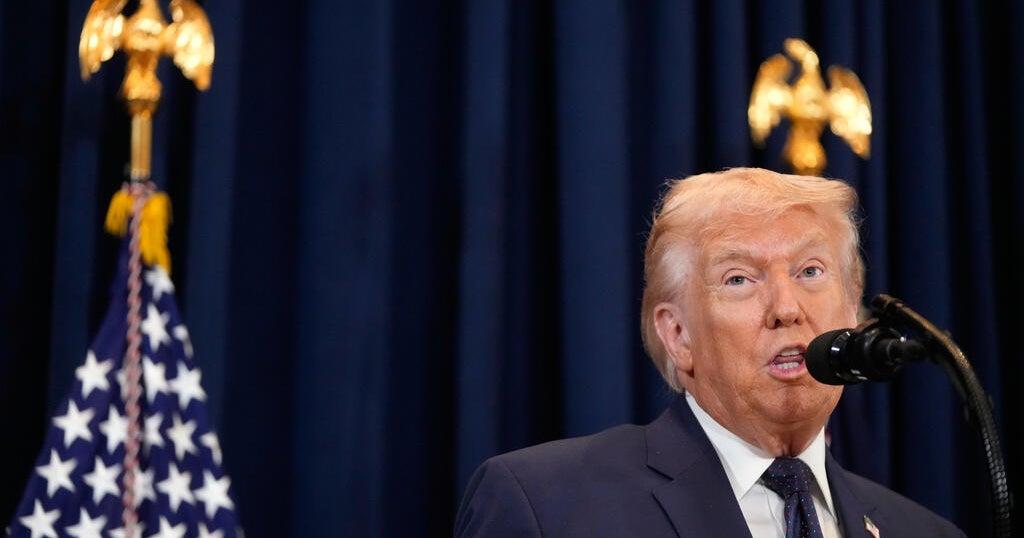
Every week in the past, President Donald Trump stood earlier than Congress and touted low-cost fuel. Costs had just lately fallen to a nationwide common of $2.92 per gallon, the bottom stretch since 2020, in keeping with AAA (1). At a Texas vitality rally simply hours earlier than the primary airstrikes, the temper was triumphant.
Seven days later, fuel has blown previous $3.40 a gallon, in keeping with AAA — the best nationwide common since September 2024. After the U.S. and Israel launched strikes on Iran, WTI crude surged greater than 35% in a single week to shut above $90 a barrel — its greatest weekly acquire within the historical past of the futures contract, which dates again to 1983 (2).
And the President’s response? He advised Reuters he isn’t anxious about it.
“They will drop very quickly when that is over, and in the event that they rise, they rise, however that is way more vital than having gasoline costs go up slightly bit,” Trump mentioned in an unique interview on Thursday (3).
Behind closed doorways, the tone is seemingly completely different. White Home Chief of Workers Susie Wiles has reportedly warned in inside conferences that failing to behave on rising costs can be “catastrophic” for Republicans heading into the November midterms. Vitality Secretary Chris Wright and Wiles have each been reaching out to grease CEOs to debate choices, in keeping with White Home press secretary Karoline Leavitt.
Trump mentioned he isn’t trying to faucet the Strategic Petroleum Reserve, the identical emergency stockpile he criticized President Biden for drawing down, and expressed confidence that the Strait of Hormuz, by which roughly a fifth of the world’s oil passes every day, will stay open.
However the Strait is already in disaster. Visitors has floor to a close to standstill. Iraq has shut down 1.5 million barrels per day of manufacturing. Kuwait has began reducing output after operating out of space for storing. Qatar’s vitality minister warned that crude might hit $150 per barrel if tankers cannot get by.
JPMorgan estimates that manufacturing cuts might method 6 million barrels per day by the top of subsequent week if the Strait stays closed.
In different phrases, this is perhaps much more than fuel costs rising “slightly bit.”
Here is what most individuals do not take into consideration after they see oil costs spike: by the point a barrel of crude will get refined and burned in your automotive, it is already touched virtually every part else in your life.
Oil does not simply energy your commute. It powers the vehicles that ship your groceries, the ships that carry your electronics, the tractors that plow the fields the place your meals is grown, and the factories that make the plastics, chemical compounds, and supplies in nearly each product you purchase. As a result of almost every part within the economic system must be transported, greater gasoline prices ripple outward into shopper costs throughout the board.
How a lot? A Federal Reserve Financial institution of Dallas evaluation printed final 12 months modeled this actual situation — a closure of the Strait of Hormuz pushing WTI crude to $100 per barrel — and located that it might add roughly 1.3 proportion factors to headline inflation at its peak, with core inflation rising by about 0.3 proportion factors. The results fade inside months because the one-time worth shock works by the system, however within the close to time period, the influence is actual (4).
Wall Road estimates inform an identical story. Goldman Sachs mentioned a sustained 10% rise in oil costs would increase headline CPI by about 0.28 proportion factors and core CPI by simply 0.04, and that in eventualities the place oil stays elevated for a number of months, year-over-year headline inflation might briefly climb again towards 3%. Apollo World’s Torsten Sløk estimated {that a} $50-per-barrel spike would add a full proportion level to second-quarter inflation (5). Oil is up roughly $28 per barrel since final Saturday.
U.S. inflation had cooled to 2.4% in January, its lowest studying since Might — and the Federal Reserve was lastly within reach of its 2% goal. Even a brief spike again towards 3% or above would mark a major setback, placing added stress on an already strained shopper and certain delaying the speed cuts many Individuals have been relying on.
The pass-through to meals costs is value watching intently. Agriculture is deeply depending on diesel, petroleum-derived fertilizers, and long-haul freight — all of that are immediately tied to the value of crude. Analysis from the Federal Reserve has persistently discovered that oil shocks push meals costs greater much more reliably than they have an effect on core inflation.
The inflation image was already extra fragile than the White Home wished to confess. Now it is being stress-tested by a taking pictures struggle on the earth’s most vital oil-producing area.
To be honest, most economists are urging warning, not panic. Many notice that oil spikes pushed by Center Japanese conflicts have traditionally proved momentary, and the U.S. produces way more of its personal vitality than it did throughout earlier crises.
Morningstar DBRS’s Ravikanth Rai, affiliate managing director of vitality and pure assets scores, mentioned in an announcement cited by CNBC that it stays unclear whether or not the value enhance will persist as a result of the battle continues to be in its early levels (6).
Not everyone seems to be sounding the alarm. RSM chief economist Joseph Brusuelas argued that the U.S. economic system is much much less susceptible to grease shocks than it was a era in the past. “In right now’s American economic system, spikes in oil costs don’t current the identical important draw back threat to top-line financial development or inflation as they did a half century in the past,” Brusuelas advised CNBC.
Nonetheless, period issues an ideal deal. Trump has outlined a four-to-five-week timeline for the army marketing campaign, a projection that political and army analysts have questioned, noting the administration hasn’t clearly articulated its finish objective. If the battle drags on, earlier inflation forecasts may be thrown out the window.
Merchants are actually in near-consensus that the Federal Reserve will maintain rates of interest regular at its March assembly, and bets that charges will stay untouched by June have strengthened as officers weigh greater vitality prices towards slowing development.
New York Fed president John Williams mentioned this week that the battle might have an effect on the near-term inflation outlook. “We’ll must see how persistent that is and the way lengthy that is, however it might affect general inflation,” Williams advised reporters (7). Minneapolis Fed president Neel Kashkari mentioned he was not as assured in his earlier name for a price minimize this 12 months, noting that “with the geopolitical occasions, we have to get much more information in” (8).
In plain English: do not depend on price cuts to ease your mortgage or automotive cost anytime quickly.
Learn Extra: The typical web value of Individuals is a shocking $620,654. Nevertheless it virtually means nothing. Right here’s the quantity that counts (and find out how to make it skyrocket)
You’ll be able to’t management what occurs within the Strait of Hormuz. However you may get forward of what is coming in your pockets.
Begin together with your price range. Gasoline costs have jumped roughly 50 cents a gallon in every week. For a family operating two vehicles, that works out to an additional $40 to $60 a month simply in gasoline — and that is earlier than the oblique prices hit. Grocery costs are inclined to lag oil by two to 3 months as greater diesel and freight prices work by the availability chain, so what you are paying on the pump right now will present up on the checkout counter by summer time.
For those who’re invested out there, resist the urge to promote into the volatility. Oil-driven selloffs are typically sharp however short-lived. The S&P 500 fell roughly 25% after Russia invaded Ukraine in early 2022 and recovered inside months. The larger threat is locking in losses by promoting on the backside and lacking the rebound.
For money you are holding on the sidelines, high-yield financial savings accounts are nonetheless paying above 4% APY — which suggests your emergency fund can at the least partially hold tempo with rising costs. And if you happen to’re searching for a direct inflation hedge, Treasury Inflation-Protected Securities (TIPS) and Sequence I Financial savings Bonds each regulate with the Client Worth Index. Neither will make you wealthy, however they’re designed for precisely this sort of setting.
The speed-cut timeline issues right here too. If inflation climbs again towards 3%, the Fed is unlikely to chop charges anytime quickly — which suggests mortgage charges, auto mortgage charges, and bank card charges keep elevated. For those who’ve been ready for cheaper borrowing prices earlier than making a giant buy, that timeline simply bought longer.
President Trump is probably not involved about fuel costs. However if you happen to’re one of many thousands and thousands of Individuals already stretched skinny by the price of residing, you most likely must be — and never simply due to what it prices to fill your tank.
Oil touches almost every part you purchase — from the diesel that strikes your groceries to the petroleum-derived fertilizers that develop them to the freight prices baked into each on-line order. When crude spikes 35% in every week, these prices do not stay on the pump. They ripple outward, and so they take months to completely arrive.
The battle could also be temporary. Trump says 4 to 5 weeks. However even a brief disruption has already erased a 12 months’s value of progress on fuel costs and put the Fed’s rate-cutting timeline in jeopardy. The Individuals who come by this in the perfect form will not be those who predicted what occurs subsequent — they will be those who did not wait to seek out out.
—
We rely solely on vetted sources and credible third-party reporting. For particulars, see our editorial ethics and tips.
AAA (1); CNBC (2, 6); Reuters (3); Federal Reserve Financial institution of Dallas (4); Yahoo Finance (5); Bloomberg (7, 8)
This text gives data solely and shouldn’t be construed as recommendation. It’s supplied with out guarantee of any type.