[ad_1]

By BEN FINLEY, ERIC TUCKER, KEVIN FREKING and JOSHUA GOODMAN
WASHINGTON (AP) — President Donald Trump’s “blockade” of sanctioned oil tankers off Venezuela’s coast is elevating new questions concerning the legality of his army marketing campaign in Latin America, whereas fueling considerations that the U.S. might be edging nearer to warfare.
The Trump administration says its blockade is narrowly tailor-made and never concentrating on civilians, which might be an unlawful act of warfare. However some specialists say seizing sanctioned oil tied to chief Nicolás Maduro may provoke a army response from Venezuela, participating American forces in a brand new stage of battle that goes past their assaults on alleged drug boats.
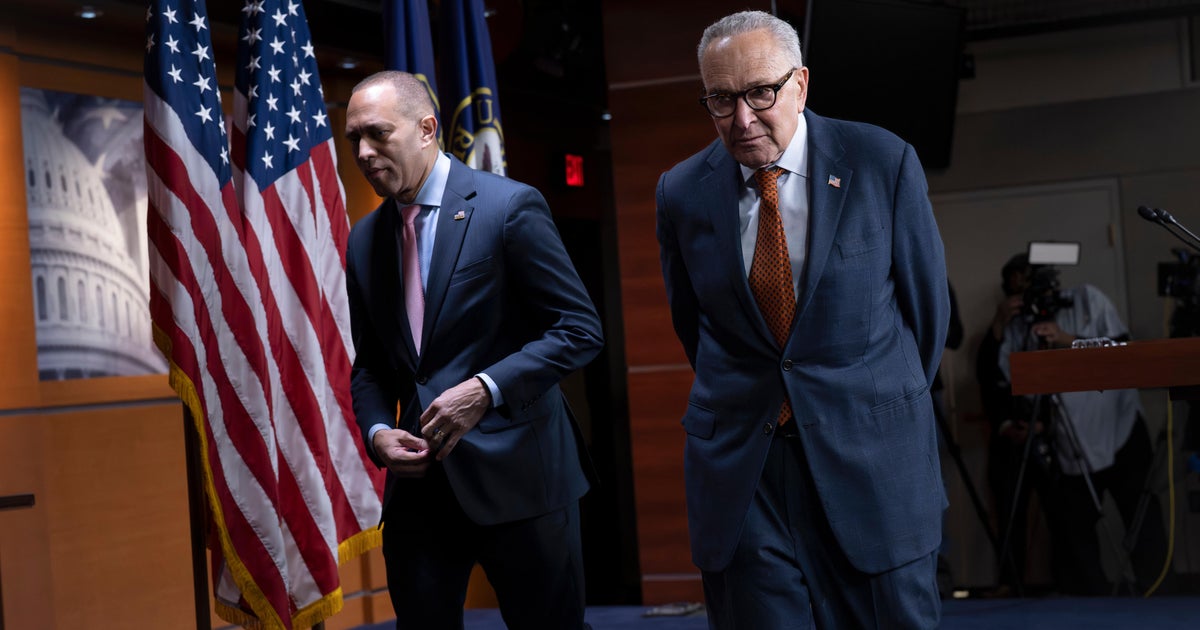
“My greatest worry is that is precisely how wars begin and the way conflicts escalate uncontrolled,” stated Rep. Jason Crow, a Colorado Democrat who fought in Iraq and Afghanistan. “And there aren’t any adults within the room with this administration, neither is there session with Congress. So I’m very apprehensive.”
Claire Finkelstein, a professor of nationwide safety regulation on the College of Pennsylvania, stated using such an aggressive tactic with out congressional authority stretches the bounds of worldwide regulation and more and more seems like a veiled try and set off a Venezuelan response.
“The priority is that we’re bootstrapping our manner into armed battle,” Finkelstein stated. “We’re upping the ante to be able to attempt to get them to interact in an act of aggression that may then justify an act of self-defense on our half.”
Republicans largely are OK with the marketing campaign
Trump has used the phrase “blockade” to explain his newest tactic in an escalating stress marketing campaign in opposition to Maduro, who has been charged with narcoterrorism within the U.S. and now has been accused of utilizing oil earnings to fund drug trafficking. Whereas Trump stated it solely applies to vessels dealing with U.S. financial penalties, the transfer has sparked outrage amongst Democrats and largely shrugs, if not cheers, from Republicans.
Rep. Michael McCaul, R-Texas, stated Trump going after sanctioned oil tankers linked to Venezuela isn’t any totally different from concentrating on Iranian oil.
“Identical to with the Iranian shadow tankers, I’ve no drawback with that,” McCaul stated. “They’re circumventing sanctions.”
The president has declared the U.S. is in “armed battle” with drug cartels in an effort to scale back the stream of medication to American communities. U.S. forces have attacked 26 alleged drug-smuggling boats and killed least 99 individuals since early September. Trump has repeatedly promised that land strikes are subsequent, whereas linking Maduro to the cartels.
The marketing campaign has drawn scrutiny in Congress, notably after it was revealed that U.S. forces killed two survivors of a ship assault with a follow-up strike. However Republicans to date have repeatedly declined to require congressional authorization for additional army motion within the area, blocking Democrats’ warfare powers resolutions.
Sen. Roger Wicker, Republican chairman of the Senate Armed Service Committee, has basically ended his panel’s investigation into the Sept. 2 strike, saying Thursday that the complete marketing campaign is being performed “on sound authorized recommendation.”
Venezuela pushes again
Trump introduced the blockade Tuesday, a couple of week after U.S. forces seized a sanctioned oil tanker off Venezuela’s coast. The South American nation has the world’s largest confirmed oil reserves and depends closely on the income to help its financial system.
The U.S. has been imposing sanctions on Venezuela since 2005 over considerations about corruption in addition to legal and anti-democratic actions. The primary Trump administration expanded the penalties to grease, prompting Maduro’s authorities to depend on a shadow fleet of falsely flagged tankers to smuggle crude into international provide chains.
The state-owned oil firm Petróleos de Venezuela S.A., or PDVSA, has been largely locked out of world oil markets by U.S. sanctions. It sells most of its exports at a steep low cost on the black market in China.
Nicolás Maduro Guerra, Maduro’s son and a lawmaker, on Thursday decried Trump’s newest tactic and vowed to work with the personal sector to restrict any affect on the nation’s oil-dependent financial system. He acknowledged that it received’t be a simple job.
“We worth peace and dialogue, however the actuality proper now could be that we’re being threatened by essentially the most highly effective military on the earth, and that’s not one thing to be taken frivolously,” Maduro Guerra stated.
Pentagon prefers the time period ‘quarantine’
It wasn’t instantly clear how the U.S. deliberate to enact Trump’s order. However the Navy has 11 ships within the area and a large complement of plane that may monitor marine visitors coming out and in of Venezuela.
Trump could also be utilizing the time period “blockade,” however the Pentagon says officers choose “quarantine.”
A protection official, who spoke on situation of anonymity to stipulate inside reasoning concerning the coverage, stated a blockade, beneath worldwide regulation, constitutes an act of warfare requiring formal declaration and enforcement in opposition to all incoming and outgoing visitors. A quarantine, nevertheless, is a selective, preventive safety measure that targets particular, criminality.
Rep. Adam Smith, the rating Democrat on the Home Armed Companies Committee, stated he was uncertain of the legality of Trump’s blockade.
“They’re blockading apparently the oil business, not the complete nation,” stated Smith, who represents components of western Washington state. “How does that change issues? I acquired to speak to some legal professionals, however basically, a blockade is an act of warfare.”
The U.S. has an extended historical past of leveraging naval sieges to stress lesser powers, particularly within the nineteenth century period of “gunboat diplomacy,” generally frightening them into taking motion that triggers a good larger American response.
However in current a long time, because the structure of worldwide regulation has developed, successive U.S. administrations have been cautious to not use such maritime reveals of power as a result of they’re seen as punishing civilians — an unlawful act of aggression exterior of wartime.
Throughout the 1962 Cuban missile disaster, President John F. Kennedy famously known as his naval cordon to counter an actual menace — weapons shipments from the Soviet Union — a “quarantine” not a blockade.
Mark Nevitt, an Emory College regulation professor and former Navy decide advocate normal, stated there’s a authorized foundation for the U.S. to board and seize an already-sanctioned ship that’s deemed to be stateless or is claiming two states.
However a blockade, he stated, is a “wartime naval operation and maneuver” designed to dam the entry of vessels and plane of an enemy state.
“I believe the blockade is based on a false authorized pretense that we’re at warfare with narcoterrorists,” he stated.
Nevitt added: “This appears to be virtually like a junior varsity blockade, the place they’re making an attempt to say a wartime authorized software, a blockade, however solely doing it selectively.”
Geoffrey Corn, a Texas Tech regulation professor who beforehand served because the Military’s senior adviser for law-of-war points and has been essential of the Trump administration’s boat strikes, stated he was not satisfied the blockade was meant to ratchet up the battle with Venezuela.
As a substitute, he urged it might be aimed toward escalating the stress on Maduro to surrender energy or encouraging his supporters to again away from him.
“You possibly can take a look at it by means of the lens of, is that this an administration making an attempt to create a pretext for a broader battle?” Corn stated. “Or you possibly can take a look at it as a part of an total marketing campaign of pressuring the Maduro regime to step apart.”
Goodman reported from Miami. Related Press reporters Stephen Groves and Konstantin Toropin in Washington and Regina Garcia Cano in Caracas, Venezuela, contributed to this report.
[ad_2]