[ad_1]
By CHRISTOPHER RUGABER and PAUL WISEMAN, Related Press Writers
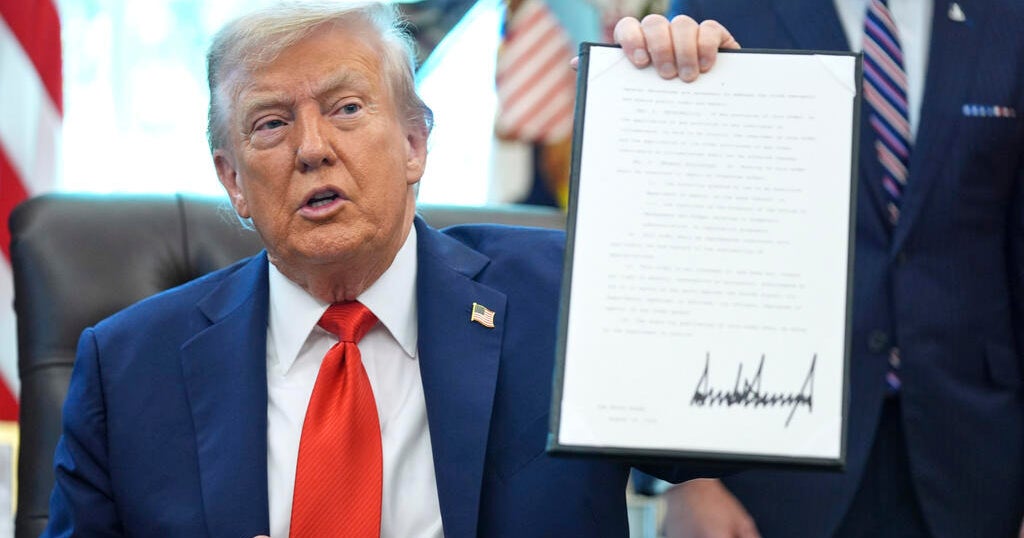
WASHINGTON (AP) — President Donald Trump sought in his first State of the Union handle to promote People on the thought of a booming financial system, falling costs, and hovering jobs, but he faces a skeptical public with a a lot gloomier view.
Barely 12 hours earlier than his speech, in reality, The Convention Board, a enterprise analysis group, launched its newest shopper confidence report. It confirmed that total confidence within the financial system stays traditionally low, and is barely above the extent it plunged to within the depths of the COVID recession.
In February, its index ticked as much as 91.2, which is noticeably beneath a four-year peak reached in November 2024 of 112.8. People stay dejected by excessive costs and see few jobs accessible, the survey discovered.
Different polling has yielded comparable outcomes: Solely 39% of People approve of Trump’s financial management, in keeping with the most recent Related Press-NORC Heart for Public Affairs Analysis survey. And the College of Michigan’s shopper sentiment survey stays mired at recessionary ranges.
Trump sought to beat that gloom by pointing to financial knowledge that paints a brighter image, a tactic that President Joe Biden tried with little success. However on Tuesday night time there have been gaps between the president’s claims and the financial actuality many People are dealing with.
“Inflation is plummeting, incomes are rising quick, the roaring financial system is roaring like by no means earlier than,” Trump stated.

The financial system grew final yr, however extra slowly
To start with, the financial system is rising however it’s hardly “roaring.”
It expanded 2.2% final yr, down from 2.8% in Biden’s final yr and a pair of.9% in 2023. To make sure, most People have been deeply dissatisfied with the value spikes underneath Biden that pushed inflation to a peak of 9.1% in 2022, a four-decade excessive.
A roaring U.S. financial system usually appears extra just like the late Nineties, when progress topped 4% for 4 years in a row, or within the Nineteen Eighties, when it rose by 3.5% or larger for six years in a row.
Shoppers are nonetheless scuffling with excessive costs
Inflation has slowed up to now yr, however many People nonetheless cite excessive costs in surveys as a key purpose they’re sad with the financial system.
Trump accurately famous that core inflation, which excludes the unstable meals and power classes, fell to a five-year low in January. But different value measures present that inflation stays stubbornly elevated: A gauge of core costs intently monitored by the Federal Reserve was 3% larger in December than a yr earlier, above the Fed’s 2% goal. It locations much less weight on housing prices, which have cooled, than the measure Trump cited.
Almost half of the folks responding to the College of Michigan’s shopper sentiment survey in February “spontaneously talked about excessive costs eroding their private funds,” Joanne Hsu, director of the survey, stated in a press release.
Trump famous that the value of eggs has fallen sharply from its peak, which is true, however most requirements People depend on — groceries, lease, electrical energy — stay rather more costly than they have been 5 years in the past. And electrical energy costs rose one other 6.3% simply up to now 12 months.
Trump’s tariffs have additionally pushed up the price of many imported objects, together with furnishings, auto elements, instruments, and garments. And groceries similar to floor beef, espresso, and bananas have risen sharply up to now yr. Floor beef costs, for instance, are up 17%.

Hiring floor almost to a halt final yr
One purpose for the patron gloom is probably going the sharp slowdown in hiring final yr. Employers added simply 181,000 jobs in 2025 — or 15,000 a month – making it the worst yr for job progress outdoors of a recession since 2002.
And regardless of Trump’s pledge to revive American manufacturing, factories misplaced 108,000 jobs in 2025 on prime of the 202,000 misplaced within the final two years of the Biden administration. Auto and auto elements crops have reduce almost 74,000 jobs the previous two years.
Trump’s tariffs are partially accountable as a result of they drive many factories to pay extra for imported uncooked supplies and elements. However excessive rates of interest have additionally damage producers over the previous couple of years. And lots of of them employed aggressively — maybe an excessive amount of — in 2021 and 2022 when the U.S. financial system was roaring again from pandemic lockdowns. Automation additionally signifies that many factories want fewer employees.
Hiring did are available in unexpectedly sturdy in January at 130,000 new jobs, and factories added jobs for the primary month in additional than a yr.
Advantages of tariffs stay unclear
Trump steered his tariffs have straight contributed to an financial growth for the U.S., however most People have seemingly seen little profit.
“Shifting ahead, factories, jobs, funding and trillions and trillions of {dollars} will proceed pouring into the USA of America,” Trump stated.
Trump as soon as once more made his tariffs sound painless, insisting that they’re paid by international nations. In actual fact, they’re paid by U.S. importers who typically attempt to move the burden alongside to their prospects by way of larger costs. International corporations would possibly take successful if they’ve to chop costs to keep up gross sales in the USA. However import costs haven’t fallen considerably, suggesting that abroad exporters aren’t feeling a lot ache.
A examine by Harvard College economist Alberto Cavallo and two colleagues discovered that U.S. shoppers have been consuming 43% of the upper tariff prices and that U.S. corporations have been absorbing a lot of the relaxation.
And to date Trump’s sweeping import taxes haven’t delivered a lot progress towards his aim of decreasing the huge and longstanding U.S. commerce deficit — the hole between what America sells to international nations and what it buys from them.
The U.S. commerce deficit in items similar to vehicles and home equipment — the main focus of Trump’s protectionist insurance policies — really hit a document $1.24 trillion final yr, rising 2% from 2024.
[ad_2]