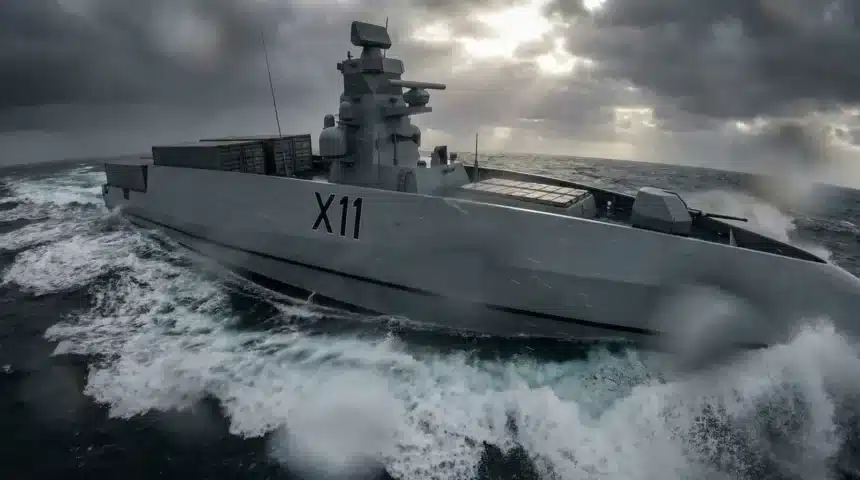
The United Kingdom’s Royal Navy is embarking on a significant strategic shift, moving away from traditional crewed destroyers and frigates towards a hybrid fleet incorporating a substantial number of uncrewed platforms. This new Defence Investment Plan outlines a future featuring at least six Common Combat Vessels, which will serve as crewed command hubs, alongside a new family of uncrewed vessels designated as Types 91, 92, 93, and 94. These autonomous systems are envisioned for roles including missile carrying, submarine hunting, and advanced sensor operations, with their numbers expected to grow through the 2030s. This transition raises critical questions about its potential impact on the British shipbuilding industry and the actual size of the future fleet.
A New Fleet Architecture
The Defence Investment Plan represents a departure from previous naval procurement strategies. It drops plans for the Type 83 destroyer, intended to replace the current Type 45 destroyers from the late 2030s, and the unnumbered Type 32 frigate, which was planned in addition to the eight Type 26 and five Type 31 frigates already under construction. In their stead, the plan prioritizes six Common Combat Vessels, designed to act as command centers for the uncrewed assets. Crucially, the plan does not specify a firm number for the uncrewed fleet, leaving its ultimate size dependent on future funding and strategic decisions.
This shift from a projected generation of approximately eleven large, complex crewed warships to six command ships supported by a potentially much larger number of smaller, uncrewed platforms fundamentally alters the landscape of naval procurement. While the total number of large warships may decrease, the sheer volume of hulls, if realized, could offer a different kind of stimulus to the shipbuilding sector.
Potential Impact on British Shipbuilding
The economic implications for British shipyards are complex and depend heavily on how the new strategy is implemented. The construction of eleven large frigates and destroyers would have concentrated significant work, requiring substantial amounts of steel and thousands of skilled jobs, primarily at major yards on the Clyde and at Rosyth. In contrast, the uncrewed vessels are designed to be smaller, less complex, and cheaper to build, each requiring a fraction of the tonnage and labor of a traditional frigate.
Measured by tonnage and man-hours, the proposed hybrid fleet might not match the scale of the programs it replaces. However, when viewed through the lens of hull count and the potential to involve a wider array of shipyards, the picture changes. The relative simplicity of the uncrewed platforms is key to this potential expansion. Concepts presented by industry have envisioned pairing large command ships with smaller, autonomous or lean-crewed sensor and effector vessels that could be constructed at a variety of yards, extending beyond the limited number of facilities currently building naval frigates.
If this vision materializes, a fleet of uncrewed platforms could distribute work to commercial and second-tier shipyards that typically do not receive warship orders. This could foster a broader industrial base and provide a more consistent flow of construction work compared to the intermittent, large-scale projects associated with complex crewed warships.
Estimating the Uncrewed Fleet Size
While the Defence Investment Plan refrains from stating a total number for the uncrewed fleet, insights can be gleaned from statements by naval leadership. The First Sea Lord has described a model where a Type 26 frigate operates alongside two uncrewed escorts, with an uncrewed submarine also engaged in operations. The stated ambition is to have the first uncrewed escort ships operational within two years.
Extrapolating from this, the Royal Navy will eventually possess nineteen crewed surface combatants, including the eight Type 26, five Type 31, and the six Common Combat Vessels. Assuming a standard operational tempo where approximately one-third of the fleet is deployed at any given time, around six crewed vessels would be at sea. If each of these is screened by two uncrewed escorts, this implies a need for twelve uncrewed vessels at sea, or eighteen if the ratio is three escorts per crewed ship. Applying the same one-in-three operational availability rule to these escorts suggests a standing force of roughly thirty to sixty surface hulls.
This calculation is sensitive to assumptions about operational tempo. Uncrewed vessels are expected to have longer endurance at sea than their crewed counterparts, potentially reducing the total number required. Conversely, early designs may face higher maintenance demands, increasing the number needed to maintain operational readiness.
The uncrewed fleet is not monolithic. It comprises four distinct types: the Type 91 (missile carrier), Type 94 (sensor/radar ship), Type 92 (submarine hunting sonar sloop), and Type 93 (uncrewed submarine). The first three are surface vessels, with the Type 93 operating submerged. The number of surface escorts is linked to the number of crewed frigates, but the Type 93’s deployment is tied to broader strategic requirements, such as maintaining a presence across the North Atlantic barrier. When these specialized platforms and other sensor gliders are factored in, the total uncrewed fleet size could easily reach into the sixties.
Ambitions and Realities
Government statements indicate a commitment to expanding these uncrewed platforms through the 2030s, alongside the introduction of at least six Common Combat Vessels. Some officials have even spoken of a future Royal Navy numbering in the hundreds, predominantly uncrewed. This ambitious vision has met with skepticism, particularly given past difficulties in procuring even modest numbers of autonomous minehunting vessels.
However, there is supporting evidence for the strategic direction. A recent naval wargame reportedly demonstrated that a hybrid force could triple the missile capacity of a task group. Even the lower-end estimates for the uncrewed fleet, if built in the UK, would represent one of the most significant naval hull orders in the country for a generation.
Challenges and Dependencies
The successful realization of this ambitious plan hinges on several critical factors that are not yet fully in place. A primary concern is the location of construction. Some industrial concepts for the uncrewed vessels rely on designs from overseas shipbuilders, potentially leading to a significant portion of the manufacturing occurring abroad. This would mean the UK’s contribution would be largely limited to systems integration and combat system development, capturing only a fraction of the overall value.
Furthermore, the actual simplicity of these uncrewed hulls is subject to debate. The larger surface types are estimated to be around eighty to one hundred meters long and weigh a couple of thousand tonnes, characteristics more akin to small warships than inexpensive drones. Only the Type 93 underwater vehicle is destined for specialist submarine facilities; the other three types are surface hulls that could, in principle, be built by a wider range of yards. This potential for broader industrial participation is contingent on securing actual orders and ensuring that the fabrication work is performed domestically.
The entire plan’s execution depends on future orders, as the current figures are described as indicative. The commitment is firm only for at least six Common Combat Vessels, with the numbers for the uncrewed fleet left to future budget allocations. This approach carries the risk of ambitions being scaled back, as has occurred with previous naval programs.
Conclusion: An Opportunity Awaiting Realization
Despite the uncertainties, the opportunity for a significant boost to British shipbuilding remains. If the Royal Navy proceeds with building the envisioned flotillas and ensures they are constructed in the United Kingdom, the hybrid fleet could result in more hulls being built across a greater number of yards than the crewed ships being retired. The ultimate success will be measured by the order books in the coming years, determining whether the flexibility outlined in the plan translates into tangible contracts for British yards or fades into unrealized ambition.