Members of Parliament have issued a strong condemnation of the Ministry of Defence (MOD), demanding that the UK rectify significant failures that have endangered Afghan allies who previously assisted British forces. A comprehensive report highlights how a data breach and subsequent bureaucratic shortcomings have left individuals fearful for their lives, with some eligible to relocate to the UK still facing insurmountable obstacles to safety.
Systemic Failures and Data Breach Impact
A cross-party Defence Committee has detailed a series of “harrowing failures” that have impacted Afghan nationals who worked alongside UK military personnel. The report criticizes the MOD for its handling of resettlement schemes, particularly following an accidental data breach in 2022. This breach led to the exposure of over 18,000 names, placing these individuals at considerable risk from the Taliban regime, which swiftly regained control of Afghanistan.
The committee described the data breach as a “foreseeable systemic failure,” not an isolated incident, stemming from a cascade of errors. The leaked spreadsheet contained sensitive information on individuals who had applied to the Afghan Relocations and Assistance Policy (Arap) scheme, alongside data from thousands of other applications. The report further notes that the then-Defence Secretary, Grant Shapps, did not inform his Labour counterpart, John Healey, about the extent of the issue.
Despite the government establishing a new settlement route in the wake of the breach, the committee found it to be significantly flawed. The secrecy surrounding the incident and the subsequent handling of applications have drawn sharp criticism, with MPs arguing that immediate action is required to support those left in precarious situations.
Criticism of MOD’s Role and Decision-Making
The Defence Committee has questioned the Ministry of Defence’s suitability for managing immigration casework, suggesting that the department should focus solely on defence matters. Committee Chairman Tan Dhesi stated that the inquiry, which began with the data breach, evolved to encompass the human cost of delays, secrecy, and flawed decision-making. He emphasized the government’s responsibility to explain how it intends to safeguard eligible Afghans who are currently unable to reach a third country for necessary UK entry clearance checks, citing issues with safety, legality, and affordability.
Mr. Dhesi expressed deep concern that current policies risk excluding individuals who should have been brought to the UK much earlier, especially given past government assurances of assistance. He also pointed out that secrecy has been too readily employed as a defense against accountability in matters far removed from sensitive military operations.
The Plight of ‘Triples’ and Refused Applicants
A significant portion of the report focuses on the treatment of “Triples” – Afghans who worked with UK forces but whose resettlement applications were denied. The committee asserts that the government bears a special responsibility towards these individuals, many of whom may have spent years in hiding or been compelled to flee to third countries, often facing destitution and an inability to leave Afghanistan.
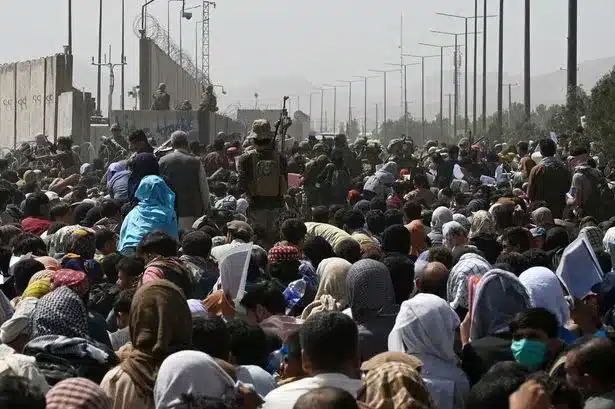
The report highlights that since April, a new policy mandates that eligible Afghans must finance their own travel to a third country to undergo security vetting. This requirement has been met with heavy criticism, particularly following the chaotic fall of Kabul in August 2021, when thousands of individuals sought to escape the Taliban takeover but were unable to do so.
Government Response and Commitments
In response to the report’s findings, an MOD spokesperson acknowledged the severity of the incident and its profound impact on many individuals. The spokesperson stated that thousands of eligible Afghans have already been successfully relocated to the UK, where they are being supported to rebuild their lives. The department reiterated its commitment to concluding the Afghan resettlement program by the end of the current parliamentary term.
The MOD indicated that lessons are being learned from the incident, with significant reforms already implemented. These include enhanced data protection standards, more robust case-working processes, and improved governance for the resettlement program. The department welcomed the public and parliamentary scrutiny, viewing it as an essential mechanism for learning and accountability, and pledged to continue collaborating with the Defence Committee on these critical issues.
Path Forward and Recommendations
The Defence Committee’s report underscores the urgent need for the UK government to address the systemic issues that have jeopardized the safety and well-being of Afghan allies. The findings emphasize that bureaucratic delays, lack of transparency, and flawed policies have created a dangerous environment for those who served alongside British forces.
Key recommendations likely revolve around streamlining the application process, ensuring adequate financial and logistical support for relocation, and enhancing data security measures to prevent future breaches. The committee’s call for accountability and clear explanations from the government highlights the ongoing imperative to fulfill promises made to those who risked their lives in service to the UK. The successful implementation of reforms and a commitment to transparency will be crucial in restoring trust and ensuring the safety of remaining eligible individuals.