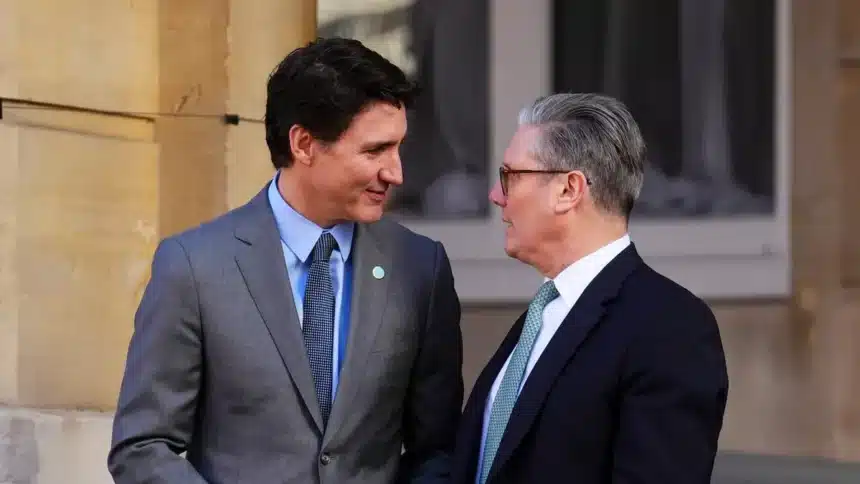
Navigating the turbulent waters of political leadership presents distinct challenges in the United Kingdom and Canada, despite their shared parliamentary systems. Observers note that the U.K. has experienced a significantly higher turnover of prime ministers in recent years compared to Canada. While the seismic shift of Brexit is often cited as a catalyst for leadership changes in Britain, deeper structural and cultural factors contribute to this divergence.
The Brexit Effect and Eroding Trust
The United Kingdom’s decision to leave the European Union, commonly known as Brexit, has been a major destabilizing force in its politics. Professor Lori Turnbull of Dalhousie University suggests that the ongoing unrest and difficulty in governing post-Brexit make it harder for any leader to maintain their position. At least two U.K. prime ministers, David Cameron and Theresa May, saw their tenures end directly or indirectly due to the Brexit process. Cameron resigned after the 2016 referendum, while May was ousted for failing to secure parliamentary approval for her Brexit deal.
Boris Johnson, who eventually delivered Brexit, was later removed amidst scandals that surfaced during the COVID-19 pandemic. His successor, Liz Truss, had a historically short term, followed by Rishi Sunak, who struggled to reverse declining Conservative party fortunes. Andrew MacDougall, a former communications director for Canadian Prime Minister Stephen Harper, pointed to the 2024 U.K. election outcome where Keir Starmer’s Labour Party unseated Sunak. MacDougall argued that Starmer’s victory was more a rejection of the incumbent Conservatives than an endorsement of a clear Labour vision, suggesting a lack of preparedness for the early election call.
Beyond Brexit, both MacDougall and Turnbull highlight a broader trend of eroding public trust in political institutions globally. Events such as the Iraq War, the 2008 financial crisis, the COVID-19 pandemic, and the war in Ukraine have contributed to this disillusionment. MacDougall contends that this, coupled with a fragmented public discourse, makes effective governance increasingly challenging.
Divergent Political Cultures and Mechanisms
While Canada has also faced its share of institutional trust issues and global crises, the U.K. possesses distinct political mechanisms and a culture that facilitates quicker leadership changes. Both the U.K. Labour and Conservative parties have established internal processes allowing their parliamentary caucuses to challenge leaders at any time, provided sufficient support is gathered. Often, leaders will step down preemptively when they sense a significant internal challenge brewing.
In contrast, Canadian federal parties, such as the Liberals and Conservatives, typically only trigger leadership reviews if the party loses a general election. The 2015 Reform Act in Canada offered a potential avenue for Members of Parliament (MPs) to force a leadership vote with caucus support, but its use has been minimal. It was employed once in the case of former Conservative leader Erin O’Toole. Notably, the Liberal Party has not adopted the Reform Act’s provisions, limiting its utility for challenging a sitting leader like Justin Trudeau, even as his popularity waned. Trudeau eventually resigned, but this occurred a year after internal dissent and calls for a leadership vote emerged within his party.
The Role of Backbenchers and Caucus Management
Challenging party leaders is also more culturally accepted, and even expected, in the U.K. MacDougall observes that backbench MPs in Britain frequently rebel on policy matters, and such dissent is a recognized part of the political landscape. In Canada, however, a single backbencher voting against their party can often generate significant media attention, indicating a lower tolerance for internal dissent.
Furthermore, the sheer size of the U.K. Parliament, with 650 seats in the House of Commons, presents a unique management challenge for leaders. The Labour Party alone can command a caucus of over 400 MPs, a number larger than the entire Canadian House of Commons. Turnbull explains that U.K. leaders have fewer tools, such as cabinet appointments or diplomatic posts, to manage such large and diverse caucuses. The promise of promotion or demotion, a common tactic in smaller Canadian caucuses, is less effective when a leader may not even know all their MPs personally.
Party Brands vs. Leader Brands
A significant difference lies in the strength of party brands versus individual leader brands. In the U.K., traditional party affiliations—being a “Tory” or a “Labour member”—often carry deep historical weight that can supersede a leader’s personal appeal. Turnbull notes that even strong leaders in the U.K. have historically struggled to build a personal brand that overshadows the established party identity.
Conversely, Canadian leaders can more readily imprint their personal style and vision onto their parties. The era of Justin Trudeau, for instance, is strongly associated with the Liberal brand. While this allows leaders to shape their party’s image, it also means that a leader’s personal popularity can become intrinsically linked to the party’s fortunes, potentially making them more vulnerable if that popularity declines.
Future Trends and Canadian Parallels
MacDougall suggests that the increasing fragmentation of political parties into smaller, distinct subgroups within the U.K., exacerbated by a fractured information ecosystem, contributes to leadership instability. He posits that as Canada’s own information environment becomes more fragmented, similar trends of fleeting leader popularity might emerge.
In conclusion, while both nations grapple with similar global challenges and evolving public trust, the U.K.’s more robust internal party mechanisms, greater cultural acceptance of dissent, and distinct party-leader dynamics contribute to a political environment where prime ministerial tenures can be more precarious than in Canada. However, as MacDougall warns, Canada may not be immune to these trends in the long run.