[ad_1]
Reporting Highlights
- Operation Gigawatt: Utah Gov. Spencer Cox declared final yr that the state would double vitality manufacturing within the subsequent decade utilizing an “any of the above” method to energy sources.
- Rising Power Supply: Photo voltaic initiatives have been coming on-line quicker than another supply in Utah and account for two-thirds of the brand new initiatives ready to connect with the state’s energy grid.
- Hostile Laws: Cox signed payments that may make it harder and costly to develop and produce photo voltaic vitality, ending tax credit for growth and imposing a tax on era.
These highlights have been written by the reporters and editors who labored on this story.
Utah Gov. Spencer Cox believes his state wants extra energy — much more. By some estimates, Utah would require as a lot electrical energy within the subsequent 5 years because it generated all final century, to fulfill the calls for of a rising inhabitants in addition to chase information facilities and AI builders to gasoline its economic system.
To that finish, Cox introduced Operation Gigawatt final yr, declaring the state would double vitality manufacturing within the subsequent decade. Though the announcement was brief on particulars, Cox, a Republican, promised his administration would take an “any of the above” method, which goals to broaden all sources of vitality manufacturing.
Regardless of that aim, the Utah Legislature’s Republican supermajority, with Cox’s acquiescence, has taken a tough flip in opposition to solar energy — which has been coming on-line quicker than another supply in Utah and accounts for two-thirds of the brand new initiatives ready to connect with the state’s energy grid.
Cox signed a pair of payments handed this yr that may make it harder and costly to develop and produce photo voltaic vitality in Utah by ending photo voltaic growth tax credit and imposing a hefty new tax on photo voltaic era. A 3rd invoice aimed toward limiting photo voltaic growth on farmland narrowly missed the deadline for passage however is predicted to return subsequent yr.
Whereas Operation Gigawatt emphasizes nuclear and geothermal as Cox’s most popular sources, the legislative broadside, and Cox’s willingness to associate with it, caught many within the photo voltaic trade off guard. The three payments, of their authentic type, might have introduced photo voltaic growth to a halt if not for photo voltaic trade lobbyists negotiating a decrease tax price and defending current initiatives in addition to these underneath development from the brunt of the affect.
“It took each greenback of political capital from all the key photo voltaic builders simply to get to one thing tolerable, in order that something they’ve underneath growth will get constructed and so they can transfer on to greener pastures,” mentioned one trade insider, indicating that photo voltaic builders will probably pursue initiatives in additional politically pleasant states. ProPublica spoke with three trade insiders — vitality builders and lobbyists — all of whom requested to stay nameless for worry of antagonizing lawmakers who, subsequent month, will once more contemplate laws affecting the trade.
The Utah Legislature’s pivot away from photo voltaic mirrors President Donald Trump taking a extra hostile method to the trade than his predecessor. Trump has ordered the phaseout of profitable federal tax incentives for photo voltaic and different renewable vitality, which expanded underneath the Biden administration. The lack of federal incentives is an even bigger hit to photo voltaic firms than the reductions to Utah’s tax incentives, trade insiders acknowledged. The administration has additionally canceled massive wind and photo voltaic initiatives, which Trump has lamented as “the rip-off of the century.” He described photo voltaic as “farmer killing.”
But Cox criticized the Trump administration’s determination to kill an enormous photo voltaic mission in neighboring Nevada. Generally known as a governor who advocates for a return to extra civil political discourse, Cox doesn’t usually choose fights. However he didn’t pull punches with the determination to halt the Esmeralda 7 mission deliberate on 62,300 acres of federal land. The central Nevada mission was anticipated to provide 6.2 gigawatts of energy — sufficient to provide almost eight occasions the variety of households in Las Vegas. (Though the Trump administration canceled the environmental evaluate of the joint mission proposed by a number of builders, it has the potential to maneuver ahead as particular person initiatives.)
“That is how we lose the AI/vitality arms race with China,” Cox wrote on X when information surfaced of the mission’s cancellation. “Our nation wants an all-of-the-above method to vitality (like Utah).”
However he didn’t tackle his personal Legislature, at the least publicly.
A lot of Utah’s Republican legislators have been skeptical of photo voltaic for years, criticizing its footprint on the panorama and viewing it as an unreliable vitality supply, whereas lamenting the retirement of coal-generated energy vegetation. The economies of a number of rural counties depend on mining coal. However lawmakers’ skepticism hadn’t coalesced into profitable anti-solar laws — till this yr. When Utah lawmakers convened initially of 2025, they took benefit of the political second to go after photo voltaic.
“It is a sentiment sweeping by means of pink states, and it’s very disconcerting and really disturbing,” mentioned Steve Useful, Utah director of The Western Method, which describes itself as a conservative group advocating for an all-of-the-above method to vitality growth.
The shift in sentiment in opposition to photo voltaic vitality has created a tough local weather for an all-of-the-above method. Photo voltaic initiatives may be constructed shortly on Utah’s huge, sun-drenched land, whereas nuclear is an extended sport with initiatives anticipated to take a decade or extra to return on-line underneath optimistic situations.
Cox usually helps photo voltaic, “in the suitable locations,” particularly when the captured vitality may be saved in massive batteries for distribution on cloudy days and after the solar goes down.
Cox mentioned that as a substitute of vetoing the anti-solar payments, he spent his political capital to average the laws’s affect. “I believe you’ll see the place our fingerprints have been,” he advised ProPublica. He didn’t element particular modifications for which he advocated however mentioned the payments’ earlier iterations would have “been rather a lot worse.”
“We’ll proceed to see photo voltaic in Utah.”
Cox’s any-of-the-above method to vitality era attracts from a decades-old Republican push equally titled “the entire above.” The GOP coverage’s purpose was as a lot about preserving and increasing reliance on fossil fuels (certainly, the phrase could have been coined by petroleum lobbyists) because it was turning to cleaner vitality sources corresponding to photo voltaic, wind and geothermal.
As governor of a coal-producing state, Cox hasn’t proven curiosity in decreasing reliance on such legacy fuels. However as he slowly rolls out Operation Gigawatt, his focus has been on geothermal and nuclear energy. Final month, he introduced plans for a producing hub for small modular reactors within the northern Utah neighborhood of Brigham Metropolis, which he hopes will develop into a nuclear provide chain for Utah and past. And on a latest commerce mission to New Zealand, he signed an settlement to collaborate with the nation on geothermal vitality growth.
In the meantime, the payments Cox signed into regulation already look like slowing photo voltaic growth in Utah. Since Could, when the legal guidelines took impact, 51 deliberate photo voltaic initiatives withdrew their functions to connect with the state’s grid — representing greater than 1 / 4 of all initiatives in Utah’s transmission connection queue. Though initiatives drop out for a lot of causes, some trade insiders theorize the anti-solar laws might be at play.
Caught within the political squeeze over energy are Utah prospects, who’re footing increased electrical energy payments. Earlier this yr, the state’s utility, Rocky Mountain Energy, requested regulators to approve a 30% hike to fund elevated gasoline and wholesale vitality prices, in addition to upgrades to the grid. In response to outrage from lawmakers, the utility knocked the request right down to 18%. Regulators finally awarded the utility a 4.7% enhance — a choice the utility promptly appealed to the state Supreme Court docket.
Juliet Carlisle, a College of Utah political science professor specializing in environmental coverage, mentioned the brand new photo voltaic tax might sign to massive photo voltaic builders that Utah vitality coverage is “turning into extra unpredictable,” prompting them to construct elsewhere. This, in flip, might undermine Cox’s efforts to shortly double Utah’s electrical energy provide.
Operation Gigwatt “depends on speedy deployment throughout a number of vitality sources, together with renewables,” she mentioned. “If renewable development slows — particularly utility-scale photo voltaic, which is at the moment the fastest-deploying useful resource — the state could face challenges assembly demand development timelines.”

Rep. Kay Christofferson, R-Lehi, had sponsored laws to finish the photo voltaic trade’s state tax credit for a number of legislative classes, however this was the primary time the proposal succeeded.
Christofferson agrees Utah is dealing with unprecedented demand for energy, and he helps Cox’s any-of-the-above method. However he doesn’t suppose photo voltaic deserves the benefits of tax credit. Regardless of enhancing battery expertise, he nonetheless considers it an intermittent supply and thinks overreliance on it could work in opposition to Utah’s vitality objectives.
In testimony on his invoice, Christofferson mentioned he believed the tax incentives had served their goal of getting a brand new trade off the bottom — 16% of Utah’s energy era now comes from photo voltaic, rating it sixteenth within the nation for photo voltaic capability.
Christofferson’s invoice was the least regarding to the trade, largely as a result of it negotiated a prolonged wind-down of the subsidies. Initially it could have ended the tax credit score after Jan. 1, 2032. However after negotiations with the photo voltaic trade, he prolonged the deadline to 2035.
The invoice handed the Home, however when it reached the Senate flooring, Sen. Brady Brammer, R-Nice Grove, moved the tip of the incentives to 2028. He advised ProPublica he believes photo voltaic is already established and now not wants the subsidy. Christofferson tried to defend his compromise however in the end voted with the legislative majority.
Not like Christofferson’s invoice, which wasn’t born of an antipathy for renewable vitality, Rep. Casey Snider, R-Paradise, made it clear in public statements and behind closed doorways to trade lobbyists that the aim of his invoice was to make photo voltaic pay.
The invoice imposes a tax on all photo voltaic manufacturing. The proceeds will considerably enhance the state’s endangered species fund, which Utah paradoxically makes use of to struggle federal efforts to checklist threatened animals for cover. Snider solid his invoice as pro-environment, arguing the cash might additionally go to habitat safety.
As initially written, the invoice would have taxed not solely future initiatives, but in addition these already producing energy and, extra worrisome for the trade, initiatives underneath development or in growth with financing in place. The margins on such initiatives are skinny, and the unanticipated tax might kill initiatives already within the works, one photo voltaic trade government testified.
“Corporations like ours are being successfully punished for investing within the state,” testified one other.
The pushback drew assaults from Snider, who accused photo voltaic firms of hypocrisy on the setting.
Business lobbyists who spoke to ProPublica mentioned Snider wasn’t as keen to barter as Christofferson. Nevertheless, they succeeded in decreasing the tax price on future developments and negotiated a smaller, flat price for current initiatives.
“Everybody type of determined collectively to save lots of the prevailing initiatives and let it go for future initiatives,” mentioned one lobbyist.
Snider advised ProPublica, “My aim was by no means to run anyone out of enterprise. If we needed to make it extra heavy-handed, we might have. Utah is a conservative state, and I’d have had all of the assist.”
Snider mentioned, just like the governor, he favors an any-of-the-above method to vitality era and doesn’t “need to take down any specific trade or supply.” However he believes utility-scale photo voltaic farms have to pay to mitigate their affect on the setting. He likened his invoice to federal regulation that requires royalties from oil and gasoline firms for use for conservation. He hopes federal lawmakers will use his invoice as a mannequin for federal laws that will apply to photo voltaic initiatives nationwide.
“This trade wants to provide again to the setting that they declare very closely they will defend,” he mentioned. “I do imagine there’s a tinge of hypocrisy to this entire motion. You may’t say you’re good for the setting and never offset your impacts.”

One of many extra emotional debates over photo voltaic is about to return subsequent yr, after a invoice that will finish tax incentives for photo voltaic growth on agricultural land did not get a vote within the ultimate minutes of this yr’s session. Sponsored by Rep. Colin Jack, R-St. George, the invoice has been fast-tracked within the subsequent session, which begins in January.
Jack mentioned he was pushed to behave by ranchers who have been involved that photo voltaic firms have been outbidding them for land that they had been leasing to graze cows. Photo voltaic firms pay considerably increased charges than ranchers can. His invoice initially had a slew of land use restrictions — corresponding to mandating the gap between initiatives and residential property and creeks, minimal lot sizes and 4-mile “inexperienced zones” between initiatives — that photo voltaic lobbyists mentioned would have strangled their trade. After negotiating with photo voltaic builders, Jack eradicated the land use restrictions whereas preserving provisions to ban tax incentives for photo voltaic farms on personal agricultural land and to create requirements for decommissioning initiatives.
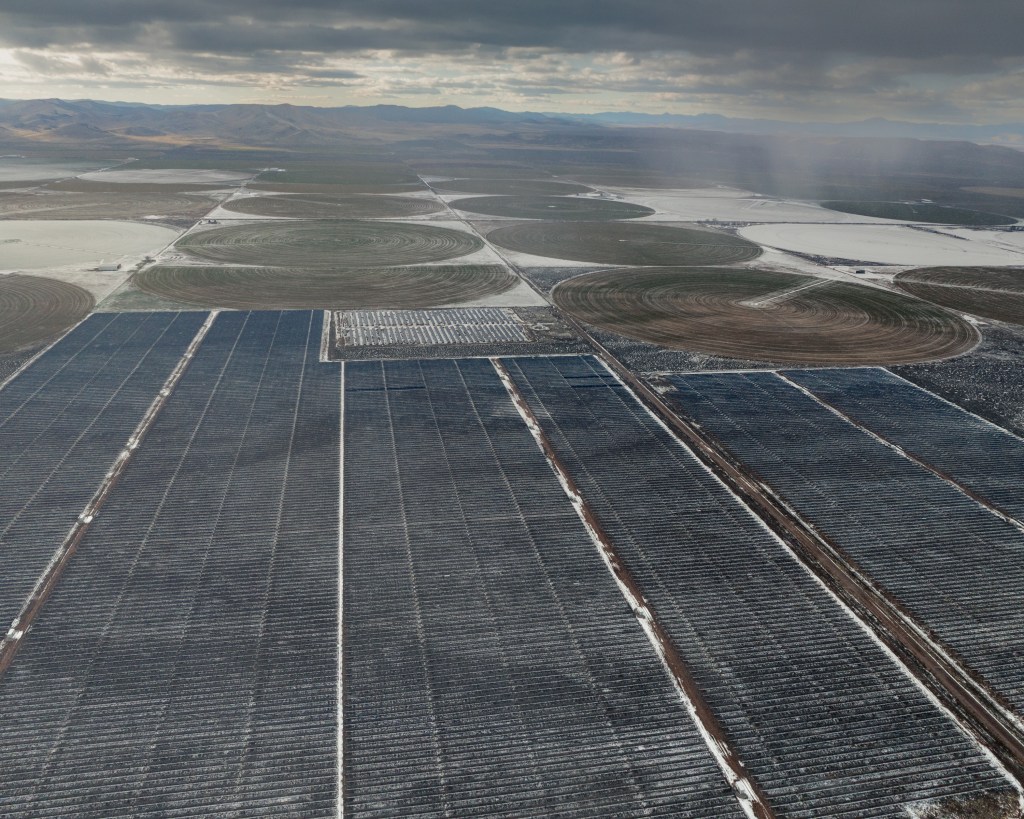
Many in rural Utah recoil at rows of black panels disrupting the panorama and worry photo voltaic farms will displace the ranching and farming lifestyle. Certainly, some questioned whether or not Cox, who grew up on a farm in central Utah, would have been as important of Trump scuttling a 62,300-acre photo voltaic farm in his personal state as he was of the Nevada mission’s cancellation.
Peter Greathouse, a rancher in western Utah’s Millard County, mentioned he’s anxious about photo voltaic farms taking on grazing land in his county. “Twelve and a half % is privately owned, and plenty of that isn’t farmable. So when you usher in these photo voltaic locations that begin to eat up the farmland, it will possibly’t get replaced,” he mentioned.
Utah is dropping about 500,000 acres of agricultural land each 10 years, most of it to housing. A report by The Western Method estimated photo voltaic farms use 0.1% of the USA’ whole land mass. That quantity is predicted to develop to 0.46% by 2050 — a tiny fraction of what’s utilized by agriculture. Of the land managed by the Utah Belief Lands Administration, lower than 3,000 of the two.9 million acres dedicated to grazing have been transformed to photo voltaic farms.
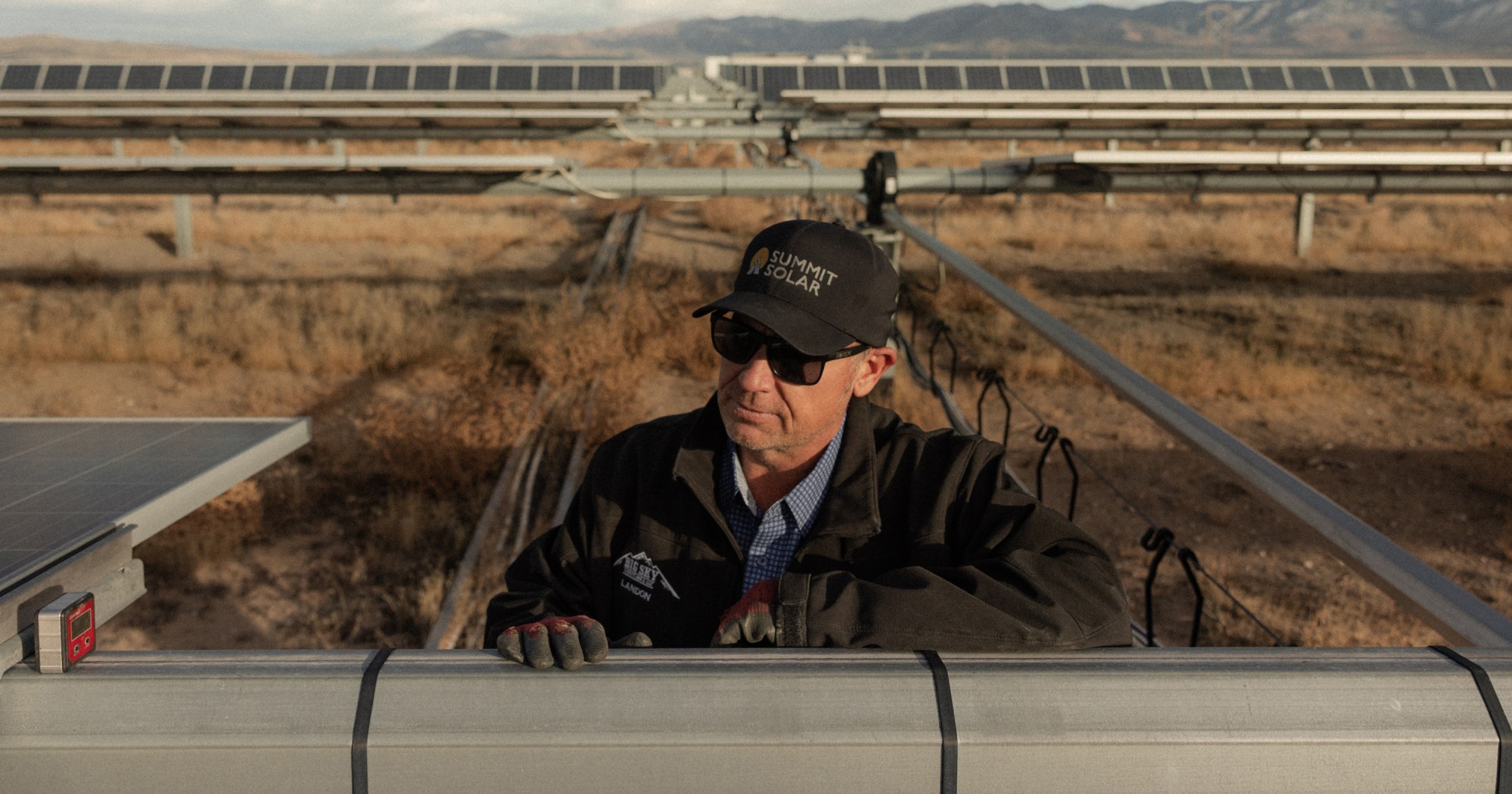
Different ranchers advised ProPublica they’ve been in a position to keep on their land and protect their lifestyle by leasing to photo voltaic. Landon Kesler’s household, which raises cattle for crew roping competitions, has leased land to photo voltaic for greater than a decade. The income has allowed the household to nearly double its land holdings, offering extra room to ranch, Kesler mentioned.
“I’m going to be fairly trustworthy, it’s absurd,” Kesler mentioned of efforts to restrict photo voltaic on agricultural land. “Photo voltaic very straight helped us tie up different property for use for cattle and ranching. It didn’t run us out; it truly helped our agricultural enterprise thrive.”
Photo voltaic lobbyists and executives have been working to bolster the trade’s picture with lawmakers forward of the subsequent legislative session. They’re arguing photo voltaic is an efficient neighbor.
“We don’t use water, we don’t want sidewalks, we don’t create noise and we don’t create mild,” mentioned Amanda Smith, vp of exterior affairs for AES, which has one photo voltaic mission working in Utah and a second in growth. “So we simply type of sit on the market and produce vitality.”
Photo voltaic pays personal landowners in Utah $17 million a yr to lease their land. And, extra necessary, photo voltaic builders argue, it’s important to powering information facilities the state is working to draw.
“We’re wanting to be a part of a diversified electrical energy portfolio, and we predict we carry plenty of values that may profit communities, preserve charges low and steady, and assist preserve the lights on,” Rikki Seguin, government director of Interwest Power Alliance, a western commerce group that advocates for utility-scale renewable vitality initiatives, advised an interim committee of lawmakers this summer season.
The message didn’t get a constructive reception from some lawmakers on the committee. Rep. Carl Albrecht, R-Richfield, who represents three rural Utah counties and was amongst photo voltaic’s critics final session, mentioned the largest grievance he hears from constituents is about “that ugly photo voltaic facility” in his district.
“Why, Rep. Albrecht, did you enable that photo voltaic discipline to be constructed? It’s black. It appears to be like just like the Useless Sea while you drive by it,” Albrecht mentioned.
[ad_2]