[ad_1]
NPR’s Michel Martin talks to Richard Haass, president emeritus of the Council on International Relations, in regards to the U.S. seizing an oil tanker off the coast of Venezuela.
MICHEL MARTIN, HOST:
For extra on this, we have referred to as Richard Haass. He’s a veteran diplomat, president emeritus of the Council on International Relations and creator of a weekly Substack publication referred to as House & Away. Good morning, Mr. Haass. Thanks for becoming a member of us as soon as once more.
RICHARD HAASS: Good morning, Michel.
MARTIN: So what’s the Trump administration telling the world by seizing an oil tanker off the coast of Venezuela?
HAASS: Effectively, I believe in the event you tie this into the lately launched nationwide safety technique, it primarily alerts the world that within the Western Hemisphere, we’re going to act – I am going to put it diplomatically – with nice independence, some would possibly say – critics would possibly use the phrase impunity – to advertise ends to advance pursuits as we see them. And on this case, there’s clearly an curiosity in bringing a few change in regime in Venezuela. And as Steve simply commented, that is a method of – what? – escalating, graduating, incrementally rising the strain on the federal government.
MARTIN: And might we discuss briefly in regards to the oil, as Steve and Steve simply talked about? A reporter requested Trump on the White Home on Wednesday what occurs to the oil on the ship. He stated that he does not know. The Maduro regime is looking this piracy, which means that that is about taking the oil. What do you suppose?
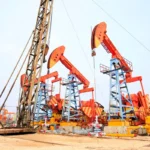
HAASS: Effectively, the oil that basically issues just isn’t the oil on the tanker. When you consider what is perhaps motivating the US in Venezuela, it does not appear to essentially be medicine. Venezuela just isn’t a central participant within the drug commerce, definitely not the fentanyl commerce. Already 8 million or so folks have left Venezuela, however that stream is basically stopped. I believe the most important rationale for the US selling regime change is to get at Venezuelan oil reserves. They’re the world’s largest. In the meanwhile, they’re hardly producing something in any respect, solely one million barrels a day. They may produce many occasions that. And I believe this administration, which places financial pursuits within the forefront of its international coverage, may be very involved in getting a regime in energy that may invite American firms to come back in. So I – greater than anything, I believe it is the oil on the bottom, not the oil on the tanker that basically issues.
MARTIN: Fascinating. So trying broadly at this strain marketing campaign, we have had sanctions, strikes on suspected drug smugglers, a fleet of warships within the Caribbean. If the purpose is regime change, do you suppose that the administration can truly obtain that?
HAASS: Effectively, that is the query. You do it by way of honey and vinegar. The honey is you supply the Maduro regime a protected passage out. They will go reside at some Membership Med (ph) in Havana, and the strain is – will increase. And it might be, for instance, focused strikes on sure installations which can be near the political middle of the regime. The issue with this type of escalation, with this type of coercion, is it signifies that you are ready for the Venezuelan authorities to say uncle. And the query is, if they do not say uncle, then the onus is on you to escalate. And this administration, I do not suppose, is especially anxious for a big navy involvement in Venezuela.
MARTIN: Are there downsides to regime change for the US?
HAASS: Effectively, there’s all the time the draw back that you do not essentially know what you get afterwards. You’ve got bought a democratic opposition in Venezuela, however you have bought different forces in that nation. So you’ll be able to’t be assured that the transition is easy, and what you find yourself with is folks studying the Federalist Papers, on this case, in Spanish. The historical past of regime change, shall we embrace, is sort of tough, and sometimes it takes a very long time to consolidate one thing that’s, you realize, measurably higher than what you had.
MARTIN: Earlier than we allow you to go, very briefly, the president additionally stated – kind of issued a kind of a imprecise warning to Colombia, saying, you realize, you are subsequent. What do you suppose which means?
HAASS: Effectively, once more, I believe it reinforces the sense that we see the Western Hemisphere as a precedence as our yard. I do not suppose it’s going to be properly obtained within the hemisphere, however guess what? It is perhaps properly obtained in each Moscow and in Beijing ‘trigger they like the concept this administration more and more sees the world when it comes to spheres of affect – we are able to do what we need to do right here. However that means Russia can do what it needs to do in Europe, and China can do it in Asia.
MARTIN: Heaps to speak about right here. That is Richard Haass. He is president emeritus of the Council on International Relations. Richard Haass, thanks a lot for becoming a member of us as soon as once more.
HAASS: Thanks.
Copyright © 2025 NPR. All rights reserved. Go to our web site phrases of use and permissions pages at www.npr.org for additional data.
Accuracy and availability of NPR transcripts might differ. Transcript textual content could also be revised to appropriate errors or match updates to audio. Audio on npr.org could also be edited after its authentic broadcast or publication. The authoritative file of NPR’s programming is the audio file.
[ad_2]