The Paramount emblem is displayed above an entrance to Paramount Studios on Feb. 23, 2026 in Los Angeles, California.
Justin Sullivan | Getty Photographs
A day after Paramount Skydance emerged because the winner to take over fellow media big Warner Bros. Discovery, questions are mounting in regards to the corporations’ regulatory path ahead.
The WBD board stated on Thursday that Paramount’s revised $31-per-share provide was superior to an current bid from Netflix, prompting the streamer to announce that it was strolling away from the deal totally and clearing the best way for Paramount.
Paramount’s raised provide — up from $30 per share — was the most recent in a sequence of strikes it made after it launched a hostile bid late final 12 months to purchase WBD. It had initially misplaced out on a bidding struggle to Netflix, which supplied $27.75 per share.
Paramount’s newest bid additionally included a $7 billion breakup payment if the deal does not win regulatory approval. And it agreed to pay the $2.8 billion breakup payment that WBD would owe Netflix if the deal fell by means of.
However media trade consultants stated it is trying extra seemingly that the Paramount deal will get by means of authorities scrutiny than it did when Netflix was within the image.
Netflix vs. Paramount
Netflix co-CEOs Ted Sarandos and Greg Peters stated Thursday that it was “now not financially engaging” to match Paramount’s raised provide.
Although Netflix executives had stated they had been “extremely assured” that their deal would win approval, the merger would have introduced collectively two prime streaming providers — Netflix and Paramount+ — and will have probably raised costs for shoppers and decreased competitors.
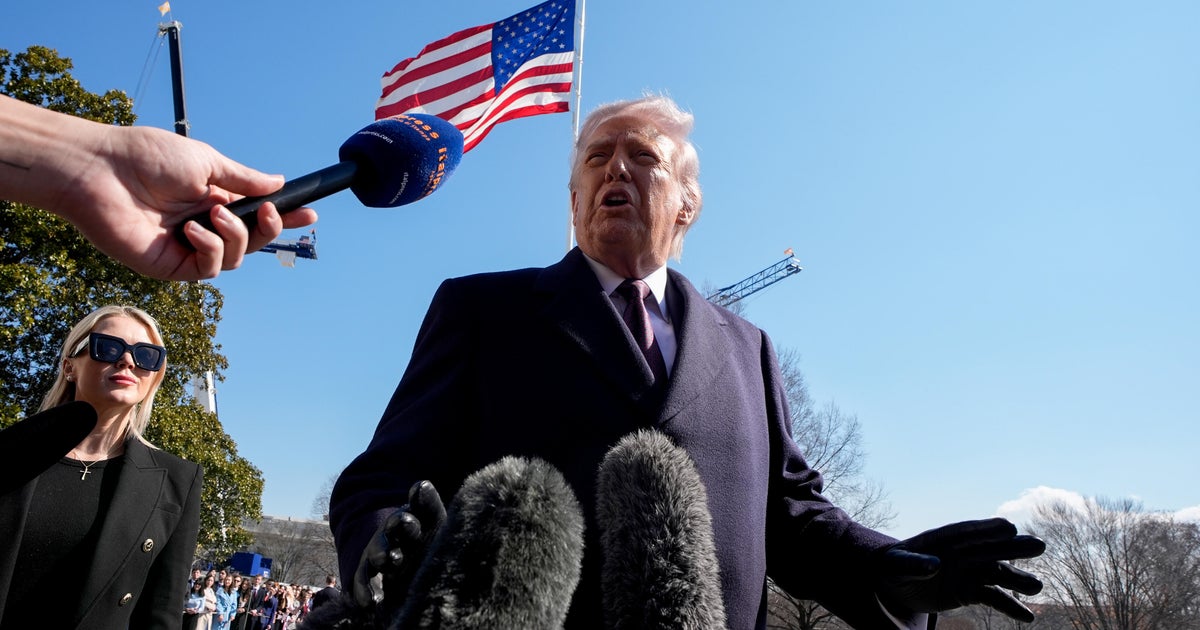
In early December, Trump stated the Netflix-WBD deal “might be an issue” due to the elevated market share Netflix would acquire, saying he could be concerned. He walked again these feedback earlier this month, saying the deal could be on the sole discretion of the Division of Justice.
And whereas the scale of a mixed Netflix and WBD entity was one of many corporations’ largest antitrust obstacles, that concern might nonetheless be raised for Paramount.
Each Paramount and WBD have sprawling portfolios of TV networks, along with Paramount+ hitting 78.9 million subscribers, in response to its most up-to-date earnings report, and HBO Max counting 131.6 million subscribers by means of the tip of 2025.
Paramount executives argued one of many execs of their provide was {that a} cope with the media firm would garner much less authorities scrutiny. Paramount Skydance CEO David Ellison’s father, Oracle co-founder Larry Ellison, is thought to have shut relations with President Donald Trump.
Trump’s son-in-law, Jared Kushner, is backing the Paramount deal, in response to a submitting with the Securities and Alternate Fee.
Nonetheless, Paramount’s proposed deal had come below criticism for probably being funded by the sovereign wealth funds of Saudi Arabia; Abu Dhabi, United Arab Emirates; and Qatar. The corporate has beforehand stated that these entities have agreed to forgo all governance rights, together with board illustration.
California Legal professional Basic Rob Bonta, a Democrat, warned on Thursday evening that the merger was “not a finished deal” and that the California Division of Justice, which has an open investigation into the deal, will probably be vigorous in its evaluate.
And Democratic Sen. Elizabeth Warren of Massachusetts stated in an announcement that the Paramount and WBD merger is “an antitrust catastrophe threatening greater costs and fewer decisions for American households.”
A possible for fewer considerations
Analysts from Raymond James stated they consider the Paramount-WBD deal might pose far much less of a danger for regulatory approval than a Netflix tie-up.
In a Friday notice, the analysts stated the regulatory path ahead for Paramount is “meaningfully simpler” than Netflix’s, although it might not be a “cakewalk.”
“After all, there are new challenges with this deal round information, cable networks, worldwide linear networks, and so forth., however we nonetheless really feel the WBD/PSKY deal is extra palatable all-in,” the analysts wrote. “And, significantly following the response to the WBD/NFLX settlement, we consider PSKY’s political standing with the present U.S. administration is far stronger than Netflix’s.”
The analysts famous that questions stay about how the aggressive marketplace for the businesses will probably be outlined by the DOJ, they usually speculated that Netflix seemingly determined to not match Paramount’s superior provide due to what was “more likely to be a brutal regulatory evaluate.”
A Friday notice by Morningstar analysts echoed these ideas. The analysts stated the transfer was proper for each Netflix and Paramount as a result of they believed Netflix was unnecessarily overpaying for WBD’s streaming and studios.
Notably, Paramount aimed to purchase everything of WBD, together with its pay-TV networks, equivalent to CNN, TBS and TNT, whereas Netflix solely needed the corporate’s studio and streaming property.
“That is one of the best end result for Warner shareholders, in our view, as we have felt that, with a better chance of immediate regulatory approval and uncertainty surrounding the worth and danger of the community enterprise they’d have retained, one of the best provide would have been $30 in money,” the analysts wrote.
The analysts added that they do not count on Paramount to face any regulatory points through the approval course of.
‘Horizontal consolidation’
Joseph Kalmenovitz, an assistant professor of finance on the Simon Enterprise Faculty on the College of Rochester, stated Paramount’s timing for the bid was seemingly strategic.
“David Ellison did not simply outmaneuver a Hollywood board — he timed the regulatory cycle completely,” Kalmenovitz stated. “The populist, big-is-bad philosophy is out; the deal-friendly institution is again in.”
Nonetheless, Paren Knadjian, a accomplice at advisory agency EisnerAmper, stated the regulatory path ahead for Paramount stays nuanced and is not a finished deal. Whereas considerations over the Netflix-WBD deal targeted largely on library content material, the Paramount-WBD deal is way extra of a “horizontal consolidation” effort between cable TV, sports activities, streaming and information, he stated.
“I feel the most important factor we’ll deal with is the focus of mental property below one roof,” Knadjian informed CNBC. “What energy does that give this new entity when it comes to the flexibility to cost extra?”
Knadjian stated Paramount may even be going through political considerations, not solely from state and federal politicians, however between CNN and CBS combining below one roof, along with considerations over blockbuster franchises like “Star Trek” and “Harry Potter.”
Finally, the approval of the deal will come all the way down to which concessions the 2 corporations must make with a view to assuage any fears over a attainable media monopoly.
“The regulatory stress, the political stress, these are the issues that can actually delay the deal and can make it extra difficult, and I feel there’s going to should be vital concessions for it to undergo.
There’s so many elements to this. It is way more difficult than most of the different offers we have seen previously,” Knadjian stated.
– CNBC’s Lillian Rizzo contributed to this report.