[ad_1]
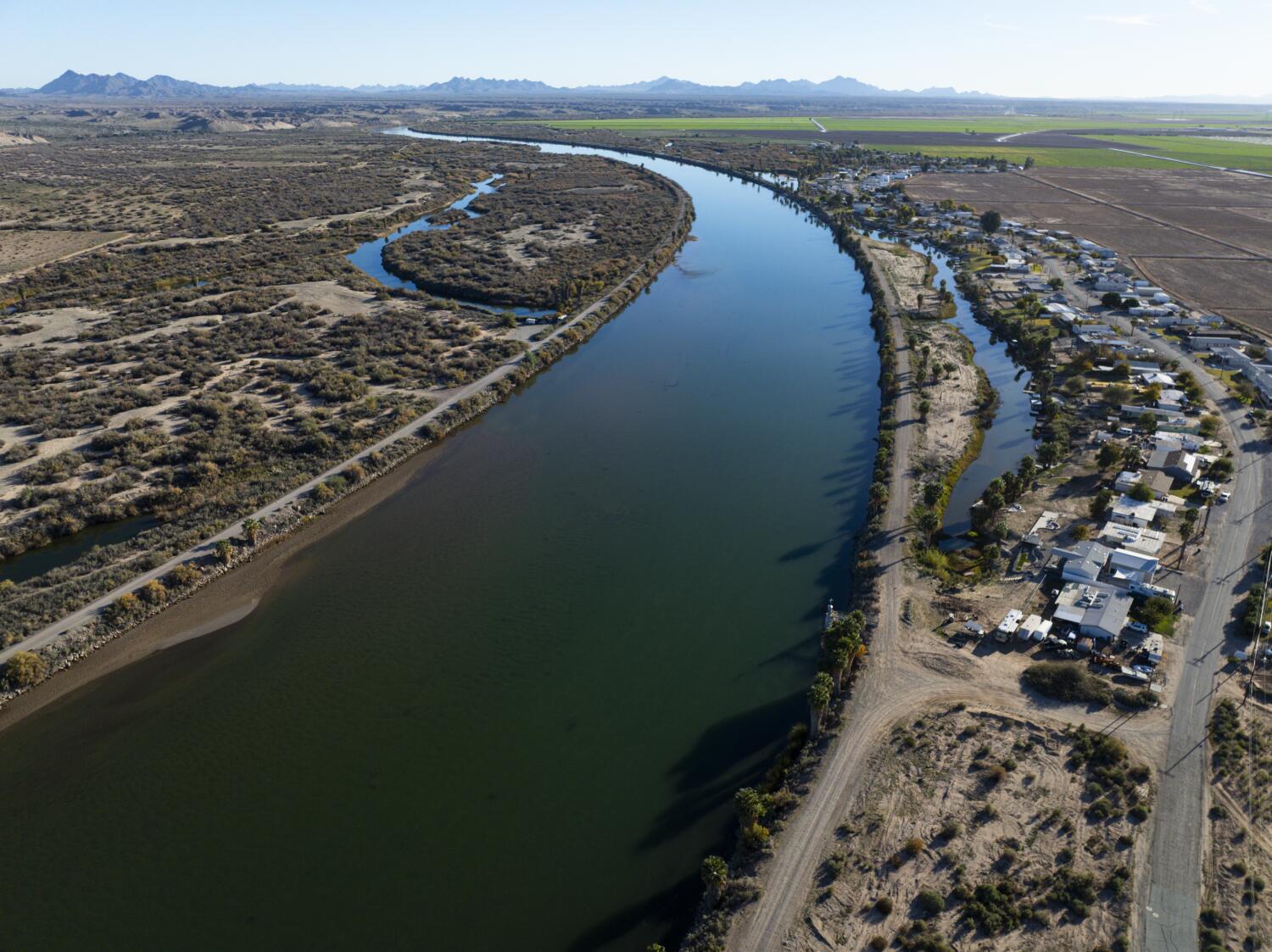
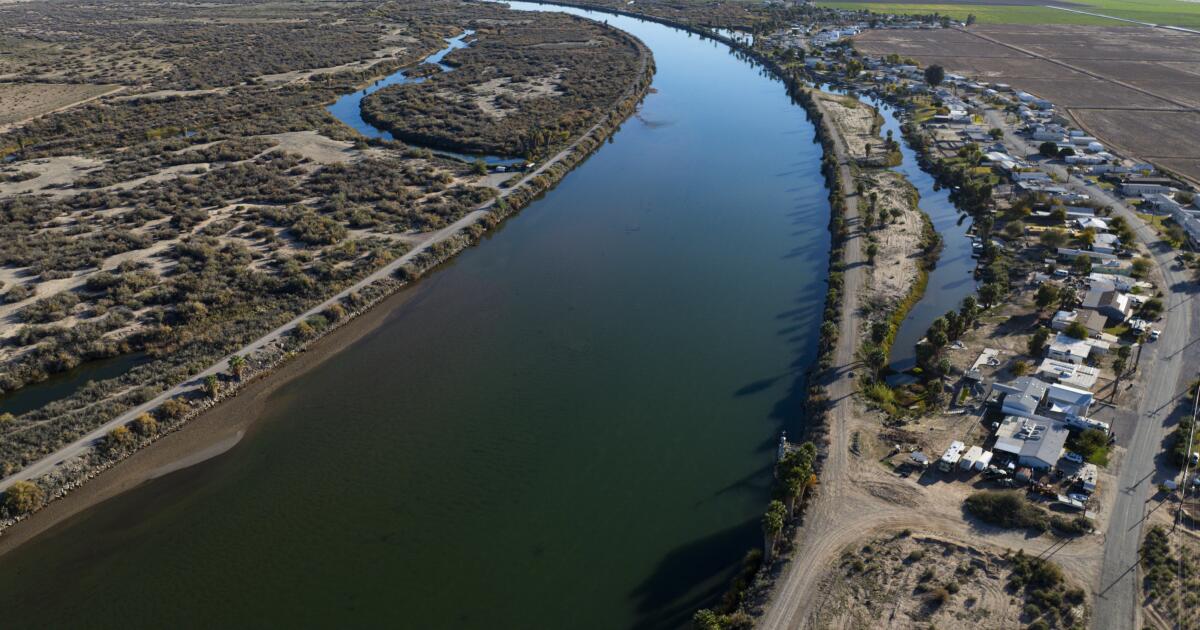
The leaders of seven states introduced Friday, sooner or later earlier than a Trump administration deadline, that there’s nonetheless no deal to share the diminishing waters of the Colorado River.
That leaves the Southwest in a quagmire with unsure repercussions whereas the river’s depleted reservoirs proceed to say no.
Former U.S. Inside Secretary Bruce Babbitt stated in an interview with The Occasions that the deadlock now seems so intractable that Trump administration officers ought to take a step again, abandon the present effort and start yet again.
Babbitt stated he believes it could be a mistake for Inside Secretary Doug Burgum to “attempt to impose a long-term resolution” by ordering main water cuts throughout the Southwest — which might possible set off a prolonged court docket battle.
“We want a recent begin,” Babbitt stated. “I imagine that within the absence of a unanimous settlement, [the Interior Department] ought to renew the present agreements for 5 years, after which we should always begin throughout. We must always scrap the complete course of and invent a brand new one.”
Officers for the seven states have tried to spice up reservoir ranges through voluntary water cutbacks and federal funds to farmers who agree to go away fields dry a part of the 12 months. However after greater than two years of attempting to hash out new long-term guidelines for sharing water, they continue to be deadlocked; the present guidelines are set to run out on the finish of this 12 months.
The states equally blew previous an earlier federal deadline in November.
Inside Division officers haven’t stated how they’ll reply. The company is contemplating 4 choices for imposing cutbacks beginning subsequent 12 months, in addition to the choice of taking no motion.
Babbitt, who was Inside secretary beneath President Clinton from 1993 to 2001, stated he thinks the Trump administration’s choices are too slender and insufficient. They might place the burden of water cuts on Arizona, California and Nevada whereas not requiring any for the 4 different upriver states — Colorado, Utah, Wyoming and New Mexico.
With no consensus, the one cheap strategy is to increase present water-saving agreements for just a few years whereas making a brand new push for options, Babbitt stated.
Federal officers have “missed the chance” to take a robust management position, he stated, and it’s time to reimagine the trouble as a “rather more inclusive, public, broad” course of.
The river supplies for about 35 million individuals and 5 million acres of farmland, from the Rocky Mountains to northern Mexico. California makes use of extra water than another state however has reduce considerably lately.
Since 2000, relentless drought intensified by local weather change has sapped the river’s movement and left reservoirs depleted. This winter’s file heat and lack of storms has left the Rockies with little or no snow.
Lake Mead, the river’s largest reservoir, is now 34% full, whereas Lake Powell is at 26%.
“Our states have conserved massive volumes of water lately,” California Gov. Gavin Newsom stated in a joint assertion with Arizona’s Katie Hobbs and Nevada’s Joe Lombardo. “Our stance stays agency and truthful: all seven basin states should share within the accountability of conservation.”
The states’ positions haven’t modified a lot within the final two years, stated JB Hamby, California’s lead negotiator, and transferring towards an settlement would require agency commitments for cuts by all.
Officers representing the 4 Higher Basin states stated they’ve supplied compromises and are ready to proceed negotiating. In a written assertion, they burdened they’re already coping with substantial water cuts, and stated their downstream neighbors try to safe water “that merely doesn’t exist.”
[ad_2]