[ad_1]
Reporting Highlights
- Ending Exploitation: Specialists say that the Truthful Meals Program has improved situations for farmworkers — and, if broadly adopted, may forestall exploitation and abuse within the fields.
- Win-Win: Pacific Tomato Growers, the primary farm to hitch this system 15 years in the past, has seen long-term advantages each for its employees and its backside line.
- Ongoing Opposition: Regardless of this system’s confirmed potential, most farmers have resisted becoming a member of. Till extra grocery and quick meals chains signal on as patrons, specialists say it may keep that manner.
These highlights had been written by the reporters and editors who labored on this story.
When Jon Esformes was in his 20s, farmworkers staged protests outdoors considered one of his household’s tomato farms, in California’s Central Valley, calling out the actual fact they had been paid lower than 50 cents for every bucket of produce they picked. The summer time of 1989 was notably memorable: The demonstrations had been tense — strikers warned that anybody who crossed the picket line would “pay along with your blood” — after which turned violent. Somebody threw a rock at Esformes’ head, leaving him with a scar.
By the point Esformes grew to become a vp of Pacific Tomato Growers in 2008, the household’s relationship with employees hadn’t modified a lot. Pay had barely elevated. He and the remainder of Pacific’s management nonetheless thought-about outdoors efforts to enhance working situations within the fields to be a menace to the enterprise. “After we heard ‘employee group,’ the preliminary response was to placed on the flak jacket and prepare for warfare,” Esformes recalled throughout a panel in 2018.
Most of the points that employees had been protesting nonetheless persist at farms nationwide, fueled by the fixed strain for affordable produce and the excessive demand amongst overseas employees for U.S. jobs. However Pacific, considered one of America’s largest tomato growers, is a uncommon outlier. The corporate modified course by adopting reforms that many farms throughout America have resisted, beginning with the daunting job of eliminating the labor-market middlemen who’re instrumental in recruiting overseas farmworkers — and are largely liable for the abuse and exploitation of these employees.
Pacific, with its 2,500 employees at farms and packing homes in 4 states, was in a position to present that it may undertake such reforms at scale with out disrupting the income it attracts from over $90 million in annual income. These reforms had been doable partly by means of the corporate’s participation within the Truthful Meals Program, an initiative that launched in 2010 with the purpose of stopping farmworkers from being harmed within the fields. By the top of Pacific’s first 12 months in this system, different main tomato growers adopted its lead, in hopes of not shedding prospects due to their labor practices.
“We would have liked to see the world because it was,” mentioned Esformes, who’s now CEO and working associate for Pacific. “Not how we wished it to be.”

The rationale extra farms haven’t signed on to those reforms over the previous 15 years is difficult. Some growers have mentioned they’re involved in regards to the potential up-front prices to implement these sorts of modifications, particularly in an period when wages are hovering and margins are shrinking. Others say they’re hesitant to signal on till extra large grocers and different patrons commit to buying their produce by means of this system. Many extra have traditionally been quiet on the subject.
ProPublica reached out to greater than two dozen farm commerce teams and produce growers associations in an try to achieve a deeper understanding of why so few of their farms take part in this system. Most of them didn’t reply our questions. A few of them have opposed current efforts by authorities officers to enact protections just like ones that this system requires. They’ve warned that such modifications may have a “detrimental affect” that might “burden the entire business for a number of unhealthy apples” who had disregarded the rights of farmworkers.
Brian Reeves, a fourth-generation farmer in upstate New York who’s president of the state’s vegetable growers affiliation, advised ProPublica that many farmers simply wish to deal with farming itself with out the additional burden of compliance, such filling out paperwork and submitting to audits.
“There’s a little bit little bit of: If it ain’t broke, don’t repair it,” Reeves added. “Plenty of farmers are simply afraid that it’s going to be extra of a headache than it’s price.”

Labor specialists say that this system is a potential resolution to a long time of shrinking governmental oversight coupled with inadequate state and federal protections. They are saying the lax regulatory setting has led to the widespread abuse of farmworkers — together with threats of violence, stolen wages, compelled labor and deaths within the fields. It additionally has led to prison costs and convictions in opposition to individuals who abused and exploited employees. In 2021, Operation Blooming Onion, considered one of largest investigations into the trafficking of seasonal visitor employees, revealed that hundreds of them had been illegally charged tens of millions of {dollars} to work on Georgia’s farms. Some had been compelled to select crops for little to no pay in what prosecutors described as a type of modern-day slavery. The very worst of these abuses included the repeated rape and kidnapping of a overseas farmworker, which was on the middle of a current ProPublica investigation.
There had been an identical probe in Florida through the 2000s. Prosecutors indicted a number of labor contractors who had compelled employees to select crops and chained them inside a truck at night time. Following the indictments, Publix grocery shops suspended orders from growers with ties to the case. Pacific was considered one of them. (The contractors later pleaded responsible to compelled labor and trafficking costs and had been sentenced to jail.)
Even earlier than Publix paused its orders, Pacific had began implementing modifications. Then public outcry over Pacific’s previous ties to these labor contractors prompted Complete Meals to cease shopping for from the corporate. One of many driving forces behind the strain on Complete Meals was the Coalition of Immokalee Employees, a human rights advocacy group that had been organizing widespread protests and threatening boycotts of quick meals chains till they compelled suppliers to enhance working situations.
The coalition had not too long ago introduced an bold new initiative, quickly to be referred to as the Truthful Meals Program. It was constructed across the premise that buyers wished their produce to be ethically sourced. To facilitate that, the coalition aimed to enlist each farms which might be prepared to enhance working situations and massive patrons, like Complete Meals, that had been prepared to pay these farms’ employees extra for his or her produce they picked.
Over the subsequent decade and a half, this system would assist defend the rights of a whole lot of hundreds of farmworkers. It will additionally resolve hundreds of the employees’ complaints. However its protections would solely attain a tiny fraction of the nation’s farms.


Within the mid 2000s, nicely earlier than the primary farmer signed up for the Truthful Meals Program, commerce teams tried to cease it from getting off the bottom. The Florida Fruit and Vegetable Affiliation tried to undercut assist for this system by making a employee security initiative of its personal, with fewer protections and no pay improve. And the Florida Tomato Growers Change went as far as to ban any farmer from collaborating with the Coalition of Immokalee Employees. Anybody who tried to could be fined $100,000.
The change later dropped its menace after considered one of its member farms departed as a result of it wished to win the enterprise of huge patrons like McDonald’s and Taco Bell; each had dedicated to supply tomatoes from farms prepared to hitch this system. Ultimately, Esformes reached out on to the coalition’s leaders and agreed to satisfy at their places of work in September 2010. Sitting at their lengthy, shabby convention room desk, he and the workers mentioned the issues plaguing farmworkers and tips on how to deal with them. Within the weeks forward, he’d study extra in regards to the group’s new initiative.
The patrons taking part within the Truthful Meals Program would pay farmers a premium of a penny per pound, most of which might be handed alongside to employees. That small increase from the patrons’ facet may make a giant distinction in employees’ pay — a possible improve of greater than 20%. The 12 months this system launched, the common minimal wage for a seasonal overseas farmworker was roughly $10 an hour.
The farmers themselves would conform to routine audits to scrutinize their books, examine their fields and interview their employees. If main issues had been discovered, they might be investigated additional. If farmers didn’t deal with violations of this system’s guidelines, patrons would droop orders from these farms.
Esformes believed that Pacific may ship on these guarantees. The next month, he grew to become the primary farmer to enroll in this system.

Some of the important necessities for farmers who be a part of the Truthful Meals program is to cease utilizing third-party labor contractors. Farmers have lengthy relied on contractors, who in some methods are well-equipped to supply and handle farmworkers. Many employees come to the U.S. on seasonal H-2A visas. Labor contractors typically converse Spanish and know the place in Mexico, Guatemala and different Central American international locations to recruit candidates. Contractors assist them navigate the visa software course of. And contractors typically handle the employees as soon as they arrive, arranging for his or her journey and housing, overseeing their work within the discipline and distributing their pay.
However all that outsourcing makes it arduous for growers to understand how the employees are being handled — and straightforward for them to disregard when employees are handled badly. “In the event you’re utilizing labor contractors, you’ve zero visibility,” Esformes mentioned.
In actual fact, labor contractors had been liable for a lot of the abuses of employees that federal investigators had found through the years. Contractors had been discovered to have enriched themselves by charging employees unlawful charges to get a visa, stealing wages from their work within the fields and crowding them into substandard housing. These abuses regularly revealed the necessity for extra state and federal oversight, which seldom materialized.
Pacific had already phased out contractors after the Florida indictments, however Esformes dedicated to make the change everlasting for so long as the corporate was in this system.
“All of this stuff which might be unlawful had been occurring underneath the labor contractor system on each farm, together with ours,” Esformes mentioned. “I’m not sitting right here with my head within the sand saying we had been squeaky clear earlier than. We knew there have been issues. We wished them fastened.”


It wasn’t as arduous for Pacific to desert labor contractors because it was for some growers; given the corporate’s dimension, it already had a human sources division that it may increase. However for smaller farms, labor brokers may be important to operations, particularly if the proprietor doesn’t converse Spanish.
To assist make this system extra accessible, the council that oversees the Truthful Meals Program works with Mexico’s nationwide employment service to immediately recruit employees for farmers, bypassing unvetted recruiters who typically illegally cost employees for a visa. The council additionally consults with farmers to assist them transition to hiring and managing employees themselves.
After Pacific joined the Truthful Meals Program, Esformes urged any worker to depart in the event that they didn’t purchase into this system’s reforms. He even needed to hearth a number of workers who wouldn’t stop. After that first 12 months handed, a couple of tenth of his managers had been gone. “A few of them had been longtime workers,” he mentioned. “I didn’t care.”
At first, Esformes was mainly involved with doing proper by his employees. However after a number of seasons there have been surprising advantages.
At a time when many farmers haven’t been capable of finding sufficient employees, Pacific largely stopped experiencing labor shortages. Over time, as Esformes’ fields grew to become safer and the variety of accidents declined, so did the dangers of employees’ compensation claims. The packages’ necessary relaxation breaks — 10 minutes each two hours through the summer time — didn’t reduce productiveness. These breaks ended up having the other impact: The employees had extra power to select sooner, in comparison with after they had been getting exhausted and fewer environment friendly on the finish of every day.

When employees returned dwelling, they chatted about life on Esformes’ farms. The pickers wished to return again the subsequent season. Earlier than lengthy, their family and friends members again dwelling began asking for jobs too.
What was good for his employees ended up being good for his enterprise.
This previous spring, because the solar rose over southwest Georgia, Esformes steered his pickup previous the low-slung barracks the place a pair dozen farmworkers from Mexico had been staying. Most mornings, they boarded a white college bus certain for tomato fields alongside the Florida border.
However at present, every employee was getting paid to find out about their rights. Over the subsequent hour, the coalition’s staffers educated them in regards to the sorts of protections they need to count on — necessary breaks from excessive warmth, entry to scrub water, secure transportation — and tips on how to name a 24-hour hotline staffed by the council that oversees the Truthful Meals Program. “You’ll be able to have the chance to talk up with out concern,” one staffer defined. “You can also make a criticism with out pondering, ‘Oh, we’re going to get fired.’”
Esformes sat behind them in a folding chair, his presence meant to be a reminder that the rights the coalition’s staffers described had the complete assist of Pacific.


The Truthful Meals Program’s protections presently lengthen to greater than 20,000 farmworkers in almost half of all states. It has led to employees getting paid greater than $50 million in premiums. It is embraced by federal officers. However up to now, it solely consists of 50 or so farmers who oversee a tiny fraction of the nation’s almost 2 million farms. The contributors embrace different giant tomato growers in Florida, corn harvesters in Colorado and candy potato farmers in North Carolina.
Jennifer Bair, a professor of sociology on the College of Virginia, mentioned that farmers are sometimes cautious of further bills related to this system, given the rising prices of enterprise and the rising variety of bankruptcies. Till there’s strain from extra patrons, this system might proceed to solely appeal to a small variety of farmers, similar to those that really feel ethically obligated to guard their employees, specialists advised ProPublica.
“Why are there no more growers? The patrons,” mentioned Susan Marquis, a professor with Princeton College’s College of Public and Worldwide Affairs. She mentioned that extra farmers will be a part of if extra patrons “maintain their suppliers accountable, signing on to the Truthful Meals Program and saying, ‘We is not going to purchase this stuff from somebody who’s not in this system.’”
Greg Asbed, a co-founder of the coalition that helped launch the Truthful Meals Program, mentioned that farmers have been against industrywide modifications prior to now. He in contrast present hesitation to the period when farmers had been immune to security protocols to forestall the unfold of foodborne outbreaks. It was solely after Individuals demanded it — and patrons listened to their prospects — that farmers received on board.
“We have now a vaccine,” Asbed mentioned. “We’ve examined it, it really stops it, and folks don’t undergo anymore. And but, even after the proof of idea, even after 15 years of success, there’s nonetheless reluctance on the demand facet.”

A few of America’s largest produce patrons haven’t participated in this system, stating that it’s the duty of the farms to make sure that their employees are handled pretty. In some instances, patrons have created social duty tips for farmers to comply with. However provide chain specialists have described these nonbinding tips as a type of “beauty compliance” that may fail to carry farmers accountable if their employees are harmed.
That’s largely why the coalition’s members have continued to strain patrons to hitch the Truthful Meals Program. In recent times, this system’s supporters have marched roughly 50 miles to protest outdoors the mansion of Wendy’s board chair and requested Kroger shareholders to assist a proposal that might urge the corporate to do extra to guard the farmworkers who choose the produce offered of their aisles. Neither of the businesses joined this system following these actions.
Kroger and Wendy’s didn’t reply to ProPublica’s questions in regards to the Truthful Meals Program. Wendy’s beforehand has acknowledged that its suppliers should adhere to its personal code of conduct and bear a “rigorous certification course of.” Kroger acknowledged in its newest annual report that it encourages suppliers to interact in “accountable labor practices.”
Almost all of the patrons in this system restrict their participation to a small variety of crops. ProPublica reached out to greater than 30 of America’s largest grocery and quick meals chains to ask why they haven’t joined this system or expanded their participation. ProPublica additionally requested interviews with representatives of these firms to see how they study provide chains to make sure that their produce had no ties to the 2021 federal indictment in Georgia that exposed intensive abuses of farmworkers. Solely two of these firms — Goal and Walgreens — responded to say that their suppliers didn’t have ties to the greater than two dozen individuals indicted within the Blooming Onion case.
Not one of the firms’ spokespeople agreed to an interview or answered questions in regards to the Truthful Meals Program.
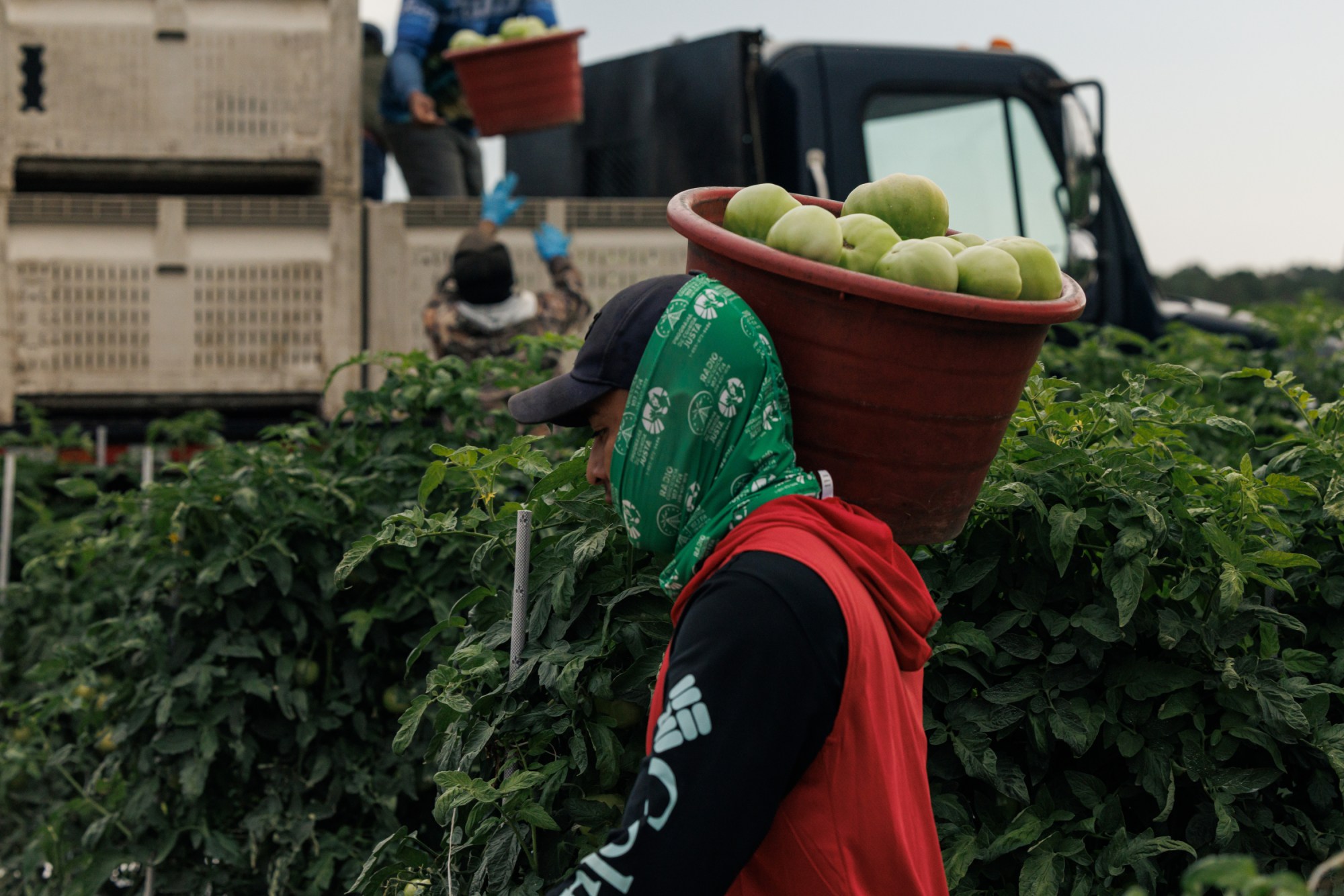
Almost all over the place Esformes goes, from high-profile panels to non-public conversations with farmers, he speaks about how this system is benefitting his enterprise. Within the early 2010s, after Esformes joined this system and complied with its necessities, Complete Meals gave Pacific one other shot. The corporate’s remodeled tomato operation now matches according to Complete Meals’ socially acutely aware model. Lately, the produce part is stuffed with tomatoes with a inexperienced Truthful Meals sticker that includes a feminine employee holding a tomato bucket on her shoulder.
However look past the tomatoes, towards the opposite fruit and greens, and that sticker isn’t discovered.

[ad_2]











![[Ask the Tax Whiz] A Filipino worker’s information to the Thirteenth-month pay](https://www.rappler.com/tachyon/2025/12/Screenshot_20251212_091343_Rappler.jpg "[Ask the Tax Whiz] A Filipino worker’s information to the Thirteenth-month pay")