[ad_1]

An individual flutters a nationwide flag in Caracas on January 3, 2026, after US forces captured Venezuelan chief Nicolas Maduro.
Federico Parra/AFP by way of Getty Photos
disguise caption
toggle caption
Federico Parra/AFP by way of Getty Photos
WASHINGTON — It’s a case of geopolitical déjà vu. On the identical day thirty-six years aside, U.S. forces seized a deeply unpopular, Latin American dictator and introduced him to america to face drug prices.

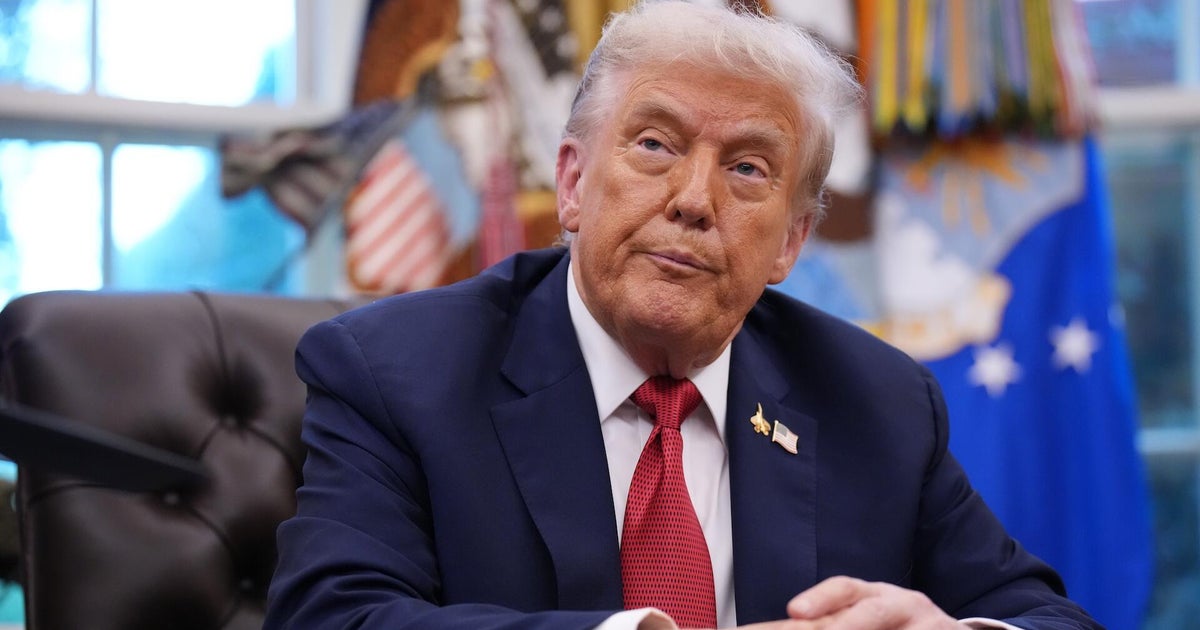
In 1990, troopers despatched by President George H.W. Bush detained Panamanian President Manuel Noriega. On Saturday, it was troops despatched by President Trump who captured Venezuelan President Nicolás Maduro.
In each cases, analysts mentioned america was utilizing power to safe strategic belongings within the Western hemisphere, specifically the Panama Canal and Venezuela’s oil fields.
“We’ll be promoting oil,” President Trump mentioned at a information convention Saturday, “in all probability in a lot bigger doses as a result of they could not produce very a lot as a result of their infrastructure was so dangerous.”
Regardless of some similarities, analysts and former diplomats additionally see massive variations between the interventions in Panama and Venezuela and fear about the place the latter could possibly be headed.
Panama is extensively seen as a vivid spot in a historical past of U.S. operations in Latin America which have included CIA-backed coups in Guatemala and Chile. John Feeley, a profession diplomat who served as U.S. ambassador to Panama in the course of the second Obama administration, mentioned the U.S. invasion in 1989 had a constructive affect on the nation.
“The most important end result was a democratic system with self-determination, peaceable switch of governance, and an financial system that truly took off and did very, very nicely,” mentioned Feeley.

One purpose the Panama operation labored, mentioned Feeley, is as a result of a political opposition there was able to take over and American troops — 1000’s of whom have been already stationed within the canal zone — have been shortly out and in of Panama-proper.
Against this, President Trump declared america would “run” Venezuela for now prematurely of what he referred to as a “protected, correct and even handed transition.” Trump mentioned Venezuela’s Vice-President, Delcy Rodríguez, had been sworn in as the brand new president.
“She’s basically prepared to do what we predict is important to make Venezuela nice once more,” Trump informed reporters.
However talking to Venezuelans in a televised tackle, Rodríguez pushed again towards Trump, saying what the U.S. had achieved to her homeland was “a barbarity.”
Trump appeared to dismiss the notion that Venezuelan opposition chief and 2025 Nobel Peace Prize winner María Corina Machado could lead on the nation, saying she did not have sufficient help or respect inside Venezuela.
Feeley referred to as Trump’s assertion about Machado the “saddest” of his press convention.
“Maduro will not be even remotely widespread, and he stole the (2024) election,” mentioned Feeley, “so there appears to be widespread will to eliminate him. What there doesn’t appear to be, in my opinion up to now, is any sort of transition plan.”

Folks reveal towards US navy motion in Venezuela in Boston Frequent on January 3. 2026 in Boston, Massachusetts.
Joseph Prezioso/AFP by way of Getty Photos
disguise caption
toggle caption
Joseph Prezioso/AFP by way of Getty Photos
The failure to map out a transition up to now additionally worries Douglas Farah, the president of IBI Consultants who spent a decade advising the Pentagon. In 2019, Farah labored with Trump administration officers working battle video games to find out what a post-Maduro Venezuela would possibly seem like. The group checked out a number of eventualities.
“The conclusion of each one was that until you had some form of managed transition from the regime to a democratic or some semi-functional democratic system, you’ll have absolute chaos for an extended time period,” Farah mentioned.

That dangers an influence vacuum that Farah mentioned numerous armed teams — together with guerillas from Colombia — would swiftly transfer to fill, resulting in extra violence.
Throughout his information convention, President Trump declined to rule out deploying American troops to Venezuelan soil.
“We’re not afraid of trainers on the bottom,” the president informed reporters.
However Farah mentioned occupying Venezuela could be far harder than the intervention in Panama. Venezuela has seven instances as many individuals and a land mass twelve instances bigger.
“In Venezuela, you may have mountains, you may have jungles, you may have ocean fronts,” Farah mentioned. “How will we discuss taking up a rustic when we’ve got no practical presence there?”
[ad_2]