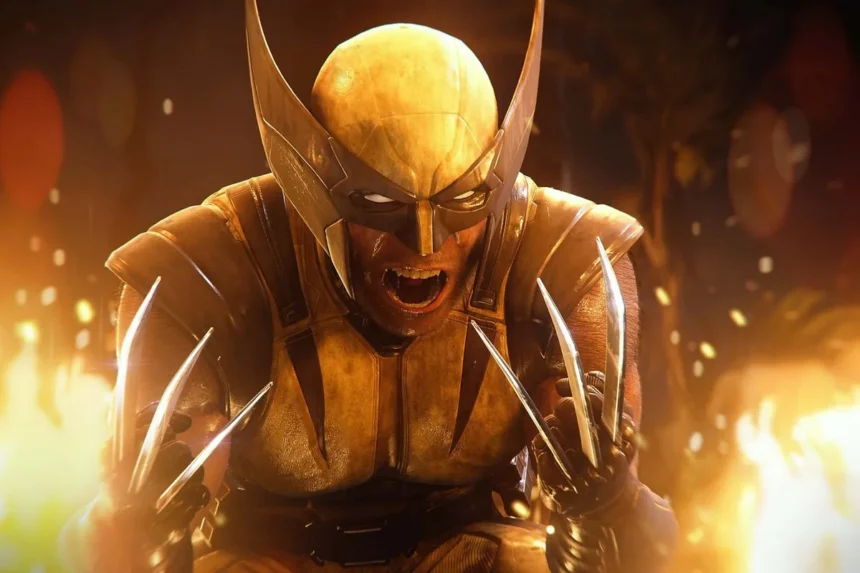
The game director for Insomniac Games’ upcoming Marvel’s Wolverine title, Mike Daly, has detailed a key design decision regarding Wolverine’s iconic healing factor. The mechanic was intentionally designed to encourage aggressive gameplay rather than passive regeneration, a choice Daly stated was necessary to maintain the game’s pacing and authentic feel.
Developing an Authentic Wolverine Experience
Insomniac Games, following the success of their Marvel’s Spider-Man series, is developing Marvel’s Wolverine for the PlayStation 5. Daly explained that the project began around the time Marvel’s Spider-Man: Miles Morales was concluding. The studio’s long-standing relationship with Marvel Games provided a foundation for exploring new projects, with Wolverine emerging as a standout character due to the team’s affection for him and the significant gameplay possibilities he presented.
“Wolverine really stood out,” Daly remarked. “Insomniac really loved the character. We were excited about the gameplay possibilities of it. It’s a beloved character, and so we knew it had a lot of fans who would be clamouring for such a thing.”
Unlike a direct transfer of assets from Spider-Man, developing Wolverine required a distinct approach. The primary lesson learned from the Spider-Man games, according to Daly, was the importance of infusing character into every aspect of the game. This principle guided the development of Marvel’s Wolverine, leading to conclusions about a mature tone, a higher level of violence, and the setting, all deemed essential for an authentic Wolverine narrative.
Combat Design: Embracing Wolverine’s Nature
Combat in Marvel’s Wolverine was conceived from the outset to be dramatically different from its Spider-Man counterpart. Daly highlighted the close-quarters intimacy, the number of simultaneous enemies and attacks, and Wolverine’s unique move set as elements that necessitated a ground-up development process.
“Getting a configuration that was right for Wolverine started from a point of ‘there is not going to be that much in common with combat with Spider-Man’,” Daly stated. “As you’ve seen from the build, it still feels dramatically different [to Spider-Man].”
The game actively pushes players to fight like Wolverine, eschewing ranged options and forcing engagement with his signature claws. This design philosophy extends to core abilities like his healing factor, rage, and enhanced senses. The goal was to ensure that performing well in the game meant embodying Wolverine’s most characteristic actions.
The Healing Factor Dilemma
A significant design challenge involved Wolverine’s healing factor. Daly explained that if the healing factor automatically replenished health over time, players would be incentivized to slow down combat to maximize regeneration. This, he noted, was “a problem, because we need healing factor, but we can’t have you slowing down the pace of combat.”
The solution was to tie the healing factor’s effectiveness to successful combat execution. “That was just an example of one of those things where we felt like we got it right, when his healing factor was super important to the game, but it incentivised aggressive play, so that you felt like Wolverine as you were making your decisions,” Daly elaborated. This approach ensures that players are rewarded for engaging in the visceral, fast-paced combat that defines the character.
Team X and Comic Inspirations
While Wolverine is often associated with the X-Men, the game features him as part of Team X, an antihero group including Mystique, Sabretooth, and Mister Sinister. Daly indicated that the inclusion of these complex characters, who share a history with Logan, was driven by the potential for nuanced personalities and dramatic contrast, offering rich storytelling opportunities.
Regarding comic inspirations, Daly mentioned that while the team aimed for a fresh and original story, the 1982 Wolverine standalone miniseries served as a personal source of inspiration. He found the depiction of Wolverine’s vulnerability, both emotional and physical, in settings like Tallembang, Madripoor, and Japan, particularly compelling. “That was an incarnation of the character that wore his heart on his sleeve, was worried about people, and came to the brink of death over and over again. It kept you on the edge of your seat, and it was just a great comic run,” he recalled.
Synergy with the Wider Marvel Universe
Daly addressed the perceived synergy between the game’s release and concurrent developments in the Marvel Cinematic Universe and broader Marvel media. He clarified that while Insomniac Games works closely with Marvel Games, specific coordination regarding release timing and cross-promotional efforts is managed by Marvel Games to ensure cohesive IP utilization.
“I wish I could help you there,” Daly said, “but that is the sort of thing where Marvel Games are partners that we work with. They know, we don’t necessarily need to know, and so we work together with them. And they will, from their end, make sure that the various projects that use their IP aren’t going to step on each other’s toes, and synergise where possible.”
With Marvel heavily investing in mutant characters, Insomniac’s reinvention of Wolverine is poised to reintroduce the iconic antihero to a global audience. The game is set to launch exclusively on PS5 on September 15.