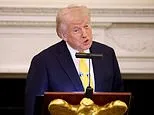
President Donald Trump sharply criticizes NATO allies as ‘cowards’ for declining to support efforts to reopen the Strait of Hormuz, despite their complaints about soaring oil prices.
Trump’s Fiery Social Media Post
Trump declares NATO a ‘paper tiger’ without U.S. backing in a Truth Social message. He notes that allies avoided joining the fight against a nuclear-armed Iran, which the U.S. and Israel have now won militarily with minimal risk to others. Yet, they now protest high oil prices caused by Iran’s de facto closure of the strait—a vital chokepoint for 20% of global oil and liquefied natural gas—without offering help for a straightforward military operation to clear it.
‘So easy for them to do, with so little risk. COWARDS, and we will REMEMBER!’ Trump warns.
Allies Reject Naval Involvement
Trump urges NATO partners and other U.S. allies to secure the waterway. European leaders, however, refuse to deploy naval escorts, citing safety risks and potential escalation.
Instead, UK Prime Minister Keir Starmer, alongside leaders from Japan, Germany, France, Italy, and the Netherlands, issues a joint statement calling on Iran to halt attacks on energy sites, civilian infrastructure, and shipping.
‘We call on Iran to cease immediately its threats, laying of mines, drone and missile attacks and other attempts to block the Strait to commercial shipping,’ the leaders state. ‘Such interference with international shipping and the disruption of global energy supply chains constitute a threat to international peace and security.’
The statement expresses readiness to support safe passage efforts and commits to stabilizing energy markets through International Energy Agency reserve releases, increased output from producers, and upholding freedom of navigation under international law. It highlights impacts on vulnerable populations worldwide.
Economic Fallout from Closure
Austrian researchers warn that prolonged closure could disrupt up to $1.2 trillion in exports. Short blockages of two weeks pose limited harm, but those exceeding four weeks trigger cascading supply chain failures.
The UK faces Europe’s highest exposure, importing $12 billion in goods annually via the strait, including $5.9 billion in Qatari LNG and propane. This vulnerability drives consumer price hikes with no quick substitutes available.