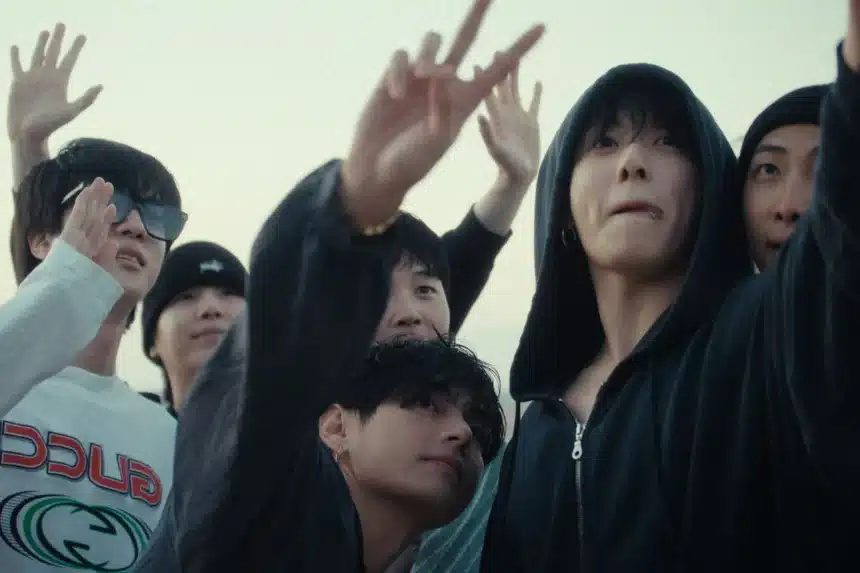
K-pop supergroup BTS reunites in full force after four years apart. The members—RM, Jin, Suga, J-Hope, Jimin, V, and Jung Kook—completed their mandatory military service on Friday. The next day, they took the stage for a concert in Seoul, streamed live on Netflix. The event attracted 18.4 million viewers and topped charts in over 70 countries.
The break occurred during their peak global fame, featuring multiple No. 1 Billboard Hot 100 singles and stadium tours that sold out instantly. Frontman RM explained at the time that the group needed space to reflect on their identity and pursue individual projects. During the hiatus, members released solo works while serving in the military. They regrouped in 2025 to produce Arirang, their first studio album since BE in 2020.
BTS: The Return, a Netflix documentary directed by Bao Nguyen, captures this process. It follows the group in Los Angeles as they resume full band activities. Here are six key revelations from the film.
The Significance of ‘Arirang’ and BTS’s Choice
The album title draws from a traditional Korean folk song symbolizing identity and resistance during times of displacement and colonial rule. One of the earliest recordings dates to 1896 at Howard University, where Korean students performed it on a wax cylinder. An animated teaser references this alongside modern international fans enjoying BTS’s Korean performances.
Lee Bo Young, executive creative director at Hybe (BTS’s label), shared this history with the group. She interpreted ‘Arirang’ as expressing ‘longing for the beautiful people we love,’ paralleling BTS’s bond with their fans, known as ARMY.
Debate Over the Title Track
While ‘Arirang’ inspired the album name, the group debated incorporating it into the title track. Concerns arose about balancing Korean heritage with appeal to non-Korean fans and avoiding overly patriotic vibes at home.
V questioned if sampling the folk song might seem like a gimmick: ‘From a Korean perspective, they might think, ‘Oh wow, these f***ers went all in on the patriotism there, didn’t they?’’ J-Hope and Jimin supported the idea, but RM felt it mismatched, comparing it to ‘bread, pork cutlets, and kimchi’ combined. The sample ultimately features prominently, encouraged by Hybe chairman Bang Si Hyuk. He urged them to envision global fans singing a Korean classic in stadiums, emphasizing their roots: ‘An act like BTS only comes around once every few decades, and there’s no denying you’re Korean.’ The final call rested with the members.
Push for Fewer English Lyrics
Members express unease with English lyrics. Rappers RM and Suga want to revise past tracks for more Korean content but face pushback from Hybe vice-president Nicole Kim, who stresses authenticity alongside global appeal.
Time constraints hinder English pronunciation practice. Jin wonders if translations fit the beats, RM critiques his lyrics as ‘awkward and off-putting’ in sessions, and Jimin calls them ‘clunky’ despite efforts.
The Relentless K-Pop Pace
Post-military, BTS skips rest and heads to Los Angeles for Arirang. This mirrors K-pop’s demanding schedule. J-Hope likens studio work to a ‘factory,’ Jimin notes they’re ‘rushing’ after absence, and RM recognizes their 12-year run as exceptionally long and ‘blessed’ in the industry.
Jin’s Limited Songwriting Role
Jin lacks writing credits on Arirang due to timing. Joining a day after his solo tour, Suga informed him the album was nearly complete. He departed early for solo commitments. RM, Suga, J-Hope, Jimin, V, and Jung Kook contribute writing, with RM on 13 of 14 tracks. Despite fan questions, Jin praises the songs as ‘absolute bangers’ and adapts intuitively after years together: ‘even without words.’
Military Service’s Lasting Impact
South Korea requires 21 months of service for men aged 18-35. The documentary shows haircuts, arrivals, and discharges. RM contrasts military routine (chronos—endless repetition) with creative LA time (kairos—meaningful moments). He playfully plays a military wake-up call on saxophone, prompting groans from the group.
BTS: The Return streams on Netflix starting March 27.