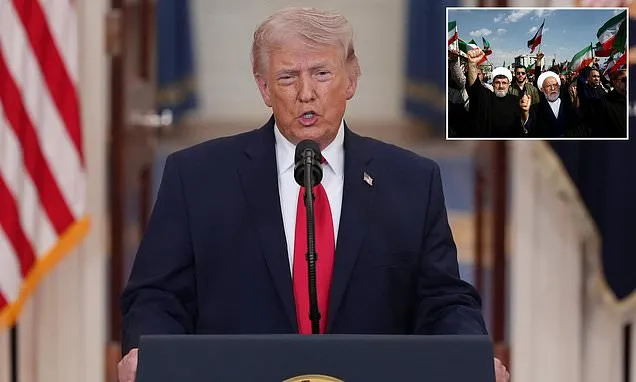
President Donald Trump delivered a national address from the White House, highlighting military successes in Operation Epic Fury against Iran one month after its launch. He began by praising NASA’s recent astronaut launch, noting the mission’s unprecedented distance beyond the moon.
Swift Military Gains Against Iran
U.S. forces have achieved decisive victories, eliminating Iran’s navy, devastating its air force, and neutralizing most regime leaders along with the Islamic Revolutionary Guard Corps’ command structure. Missile and drone capabilities are severely limited, and weapons factories face ongoing destruction. Trump described these as unprecedented losses for an enemy in such a short timeframe.
Venezuela Operation and Energy Independence
Trump commended troops for rapidly securing Venezuela, establishing partnerships in oil and gas production—home to the world’s second-largest reserves. This has rendered the U.S. independent from Middle Eastern oil while supporting allies.
Historical Context and Nuclear Threat
Trump reiterated his long-standing pledge to prevent Iran from acquiring nuclear weapons, citing the regime’s chants of “Death to America” and “Death to Israel” for 47 years. He referenced past attacks, including the Beirut Marine barracks bombing killing 241 Americans, roadside bombs against U.S. service members, the USS Cole incident, and recent Israeli atrocities on October 7. Domestically, Iranian protests resulted in 45,000 deaths.
Key prior actions included the elimination of General Qassem Soleimani, described as the architect of roadside bombs, and withdrawal from the Obama-era nuclear deal, which Trump called a disaster that provided Iran with $1.7 billion in cash.
Operation Midnight Hammer and Escalation
In June, B-2 bombers destroyed key nuclear facilities in Operation Midnight Hammer. Despite relocation efforts, U.S. strikes targeted missile stockpiles capable of reaching the U.S. and Europe. Objectives focus on dismantling Iran’s power projection: navy eradicated, air force crippled, missiles depleted, and industrial base annihilated.
Tribute to Fallen Service Members
Thirteen U.S. warriors lost their lives; Trump visited Dover Air Force Base twice to honor them and their families, who urged completion of the mission. Allies including Israel, Saudi Arabia, Qatar, UAE, Kuwait, and Bahrain receive U.S. support.
Gas Prices and Economic Strength
Rising gasoline prices stem from Iranian attacks on regional oil tankers. Trump highlighted U.S. economic resilience, with record investments, stock highs, and top global oil/gas production exceeding Saudi Arabia and Russia combined—bolstered by Venezuelan supplies. He advised oil-dependent nations to purchase U.S. energy or secure the Hormuz Strait.
Path Forward and Regime Dynamics
Core objectives near completion within weeks, with intense strikes planned. Regime change emerged organically as original leaders perished; the new group appears more moderate. Potential targets include power plants if no deal materializes, while oil infrastructure remains untouched to allow rebuilding chances. Nuclear sites stay under surveillance.
Trump compared the 32-day operation to longer historical conflicts, positioning it as an investment in future security. He envisioned a safer world free from Iranian nuclear threats, crediting U.S. military prowess.
The address concluded with blessings for U.S. armed forces and the nation.